Arturia steps up to the challenge of reviving the legendary Memory-Mogue with Memory V, a virtual instrument that promises both historical accuracy and modern creative muscle. This official overview walks through triple-oscillator voicing, a meticulously modeled ladder filter, Multi-Arp sequencing, and a wealth of modulation and effects options—all delivered via Arturia’s TAE tech. Whether in the DAW or on stage, the Memory V aims to be a playground for evolving textures, lush pads, and punchy leads. But as always, the real test is how these digital architectures translate into actual workflows and sound design freedom, and this video gives us a deep look under the hood.
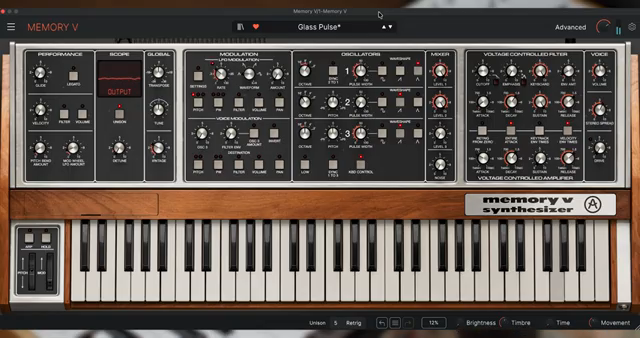
The Revival: A Digital Memory-Mogue for Studio and Stage
Arturia’s Memory V is introduced as a powerful software instrument, built to capture the essence of the rare Memory-Mogue synth—a coveted classic from the early ’80s. The video emphasizes Arturia’s TAE True Analog Emulation, which aims to replicate the analog depth and complex harmonic structure that made the original hardware so revered among collectors and sound designers. Rather than being tied to a single genre, the Memory-Mogue’s sound found its way into a variety of musical landscapes, and Memory V inherits this versatility.
A core message is that Memory V brings the unstable, maintenance-heavy charm of the original into a robust, recallable DAW environment. Total recall, expanded polyphony, and modulation options far surpassing the hardware are highlighted. The instrument is positioned as equally at home in the studio or in live performance, with workflow enhancements that modern producers expect.
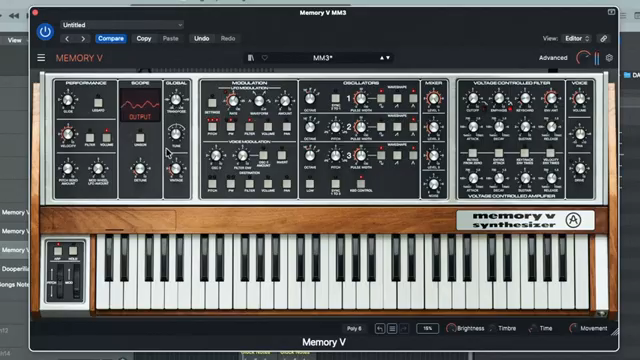
"Memory-V is a powerful virtual instrument built on Arturia's TAE True Analog Emulation technology."
© Screenshot/Quote: Arturiaofficial (YouTube)
Oscillator Architecture: Stacked for Harmonics, Tuned for Character
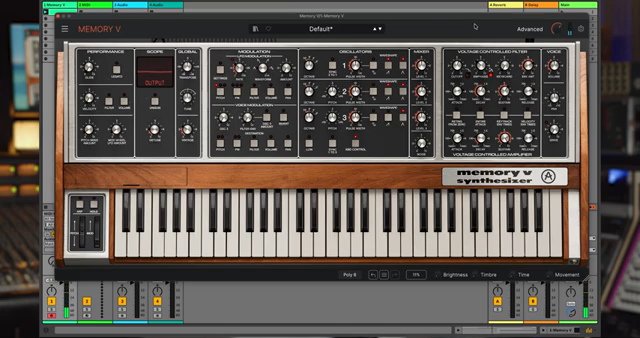
"Memory-V gives you three voltage-controlled oscillators per voice. That's up to 18 oscillators running simultaneously in full polyphony."
© Screenshot/Quote: Arturiaofficial (YouTube)
Memory V’s triple-oscillator design is a centerpiece, offering up to 18 oscillators in full polyphony. Each oscillator provides triangle, sawtooth, and pulse waveforms, with the ability to blend these within a single oscillator for denser harmonic output. The architecture encourages both traditional layering and more experimental interval tuning through octave selectors and fine pitch controls, offering a broad range of tonal possibilities.
Advanced modulation is woven into the core oscillator workflow. Hard sync and FM unlock a palette ranging from aggressive, overtone-rich leads to unpredictable, experimental textures. Sync reassigns oscillator cycles for harmonically complex results, while audio-rate FM from oscillator three can modulate pitch or pulse width on the others, extending the instrument’s sonic territory well beyond vintage norms.
Filter, Arp, and FX: The Versatile Heart of Memory V
The video devotes significant attention to the ladder filter, modeled after the classic Moog design, with options for both 24 dB and 12 dB slopes. Cutoff and resonance are presented as the main tonal controls, while a base compensation switch preserves low-end richness even at high resonance. Keyboard tracking and a dedicated ADSR envelope enable expressive articulation, from punchy basses to evolving pads. The amplifier envelope, per-voice drive, and pan settings further shape each note’s dynamics and spatiality, with drive adding harmonic grit reminiscent of the original hardware.
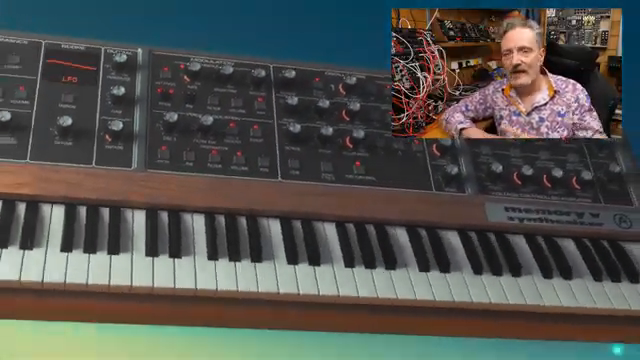
Memory V’s modulation system is multi-layered: a global LFO (with polyphonic retriggering), the ability for oscillator three to act as a modulator or as an LFO, and envelope routing all contribute to deep sound-sculpting possibilities. Polyphony modes extend up to 12 voices—a nod to modern workflows—while voice allocation and glide options allow for both authentic vintage behavior and contemporary expressiveness. Unison mode thickens the sound with detuning and stereo spread, and the “vintage” section introduces analog-style drift and imperfection, scaling from subtle movement to full-on instability.
The Multi-Arp is a major highlight, comprising four independent arpeggiators that can be combined for polymetric, interlocking patterns. This is visualized in real-time, making complex rhythmic sequencing accessible. The FX section is equally comprehensive, offering four chainable slots for everything from reverb and delay to compression, modulation, and bit crushing. Effects are fully reorderable, and their placement in the signal chain is clearly articulated, aligning with workflow expectations for both studio and live setups.
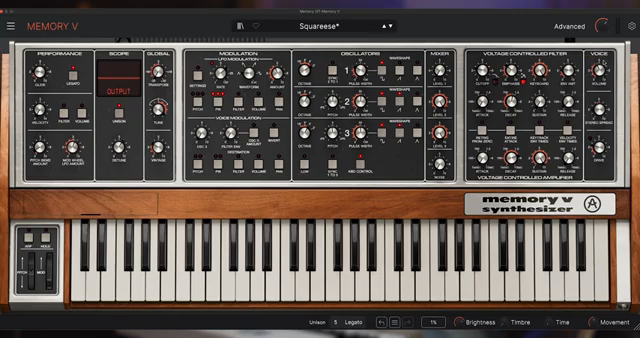
"The MultiARP is one of Memory V's most expressive features."
© Screenshot/Quote: Arturiaofficial (YouTube)
Workflow Macrocosm: Modulation and Macros for Dynamic Sound Design
Arturia leans into advanced modulation as a creative engine, with up to three modulator slots in the advanced panel, each assignable via drag-and-drop to almost any parameter. Modulation sources include envelopes, function generators, random sources, voice modulators, and sequencers, with color-coded rings for clear visual feedback. The function generator stands out as a multi-segment envelope editor, supporting complex shapes and up to 64 points for truly evolving modulation curves.
Macros are the keystone of Memory V’s performance workflow. Each macro can simultaneously control multiple parameters, with individual ranges and curves per assignment. This enables dramatic morphing between timbres or effects with a single gesture, whether mapped to a hardware controller or automated in the DAW. Arturia’s hardware integration is seamless, making these macros a bridge between studio experimentation and stage-ready control.
Presets as a Launchpad
"Explore the 300+ factory presets as starting points for your own sounds."
© Screenshot/Quote: Arturiaofficial (YouTube)
Closing out the video, Arturia encourages users to dive into the 300+ factory presets as inspiration and as starting points for their own sound design adventures. The breadth of these presets showcases the instrument’s range, and their availability right from the start lowers the barrier for both newcomers and seasoned synth users to explore Memory V’s capabilities in depth.
This article is also available in German. Read it here: https://synthmagazin.at/arturia-memory-v-digitales-erbe-analoge-seele/
More articles about these products:
Watch on YouTube:
Latest articles
Watch on YouTube:
Visit the channel:
https://www.youtube.com/ArturiaOfficial
https://www.youtube.com/ArturiaOfficial
Links from ArturiaOfficial:
website: https://www.arturia.com
instagram: https://instagram.com/arturia_official
twitter: https://twitter.com/ArturiaOfficial
soundcloud: https://soundcloud.com/arturia-official/albums
Sponsored links:
If you purchase via these links, we may earn a small commission – at no extra cost to you. The link opens an Amazon keyword search, and results may vary depending on availability.
Arturia Memory V
🔗 Check price on Amazon
🔗 Check price on Amazon