Alex Ball, synth historian and groovebox archaeologist, takes the Roland JP-8000 for a spin through trance history and digital wizardry. From the prototype rabbit hole to Super Saw mayhem, this deep-dive video isn’t just for nostalgia heads—it’s got enough sonic dirt and vintage drama to satisfy any synth junkie. And if your JP dies? Don’t worry, there’s a modern hack for that. Plug in, detune wide, and let’s get ravey.
17. July 2026
SPARKY
Alex Ball vs. the Roland JP-8000: Trance Weapon Unleashed
Boss VT-1, JE-8086, Roland JP-8000, Roland JP-8080, Roland MC-303
Digital Dawn in '96: Enter the JP-8000
Roland’s JP-8000 landed in 1996, right when the analog resurrection was starting to shake up dance floors and gear forums. The big story? Virtual analog—Roland’s way of serving up classic knob-mashing immediacy without the unreliable old circuits and menu hell. Alex Ball, ever the gear detective, lays out how the JP-8000 was Roland’s answer to Nord’s Lead and Korg’s Prophecy, but with a friendlier, hands-on interface that actually made sense to anyone who’d used a synth before.
This wasn’t just a nostalgia trip. Roland took the best bits of the past—like chunky sliders and real-time control—and mashed them together with digital trickery, offering up a machine that felt as inviting as a Jupiter but had new moves under the hood. It was the ‘90s Jupiter for a new school of club kids and bedroom producers, and Ball’s quick-fire walkthrough makes it clear: don’t let the blue-green chassis fool you, this thing was built for action, not just museum shelves.
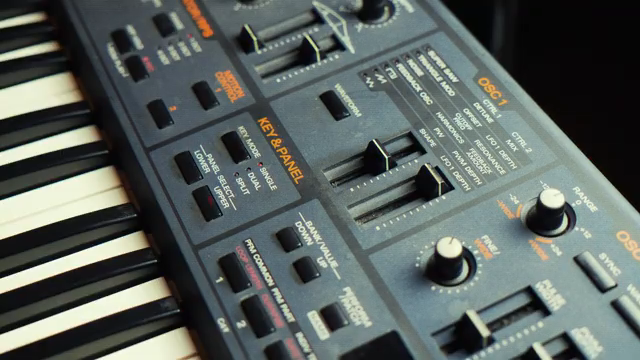
"The answer was not to start producing old machines again, but instead to combine the best of old with the best of new, and the solution was virtual analog."
© Screenshot/Quote: Alexballmusic (YouTube)
Super Saw and Friends: The Secret Sauce
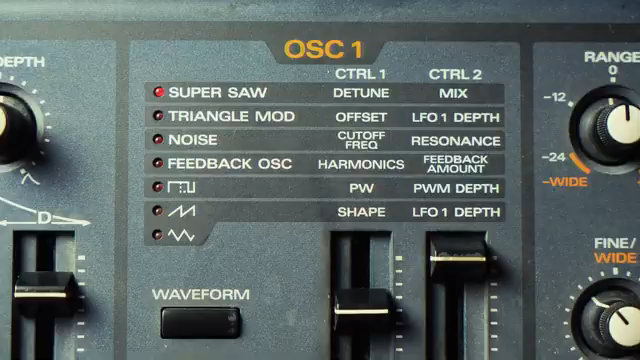
"One of these waveforms became almost genre-defining and has been adopted by pretty much every other synth company since."
© Screenshot/Quote: Alexballmusic (YouTube)
Here’s where the JP-8000 earns its rave stripes: Oscillator One’s Super Saw. Ball shows how this wave—really a stack of seven detuned saws—became the anthem generator for trance and beyond. But the JP isn’t a one-trick pony; you get triangles with mod, a feedback oscillator that flips to mono, and even a noise generator with a proper resonant filter. Real-time phrase sequencing (RPS) and recordable motion control are thrown in for the performance crowd, plus onboard effects that range from classic chorus to, well, a bass/treble section Ball politely calls ‘rather horrible.’
You can get club mayhem or gnarly modular weirdness, and the filter section even lets you pick between two and four pole modes—crucial, since, as Ball points out, the resonance can get nasty in a bad way. It’s a synth designed for quick, dirty, hands-on sound design. No endless menu diving, no sanity lost. And when Ball says, ‘what you see is largely what you get,’ that’s not a limitation—it’s a liberation.
Prototype Mysteries: Backstage with Roland
Just when you think it’s all presets and predictable history, Ball dives into the prototype saga. Forget eBay finds—this JP-8000 is a pre-release oddball, given to a Roland sound designer and packed with reversed controls and Japanese stickers. The video story goes deep, tracing the unit’s journey from secret lab to Ball’s studio via a cast of synth legends, factory preset designers, and even a disc full of early sounds.
We get a peek at the kind of inside stories that rarely escape the Roland vault: faxes about inactive controls, secret batch numbers, and destroyed prototypes. There’s even a cameo from Mark Lawrence, who swapped out Juno parts for the JP’s new sound on a 1996 club track—possibly the first commercial Super Saw drop. If you’re the type who lives for synth lore and unrepeatable gear drama, this is the bit you’ll want to watch with a notepad.
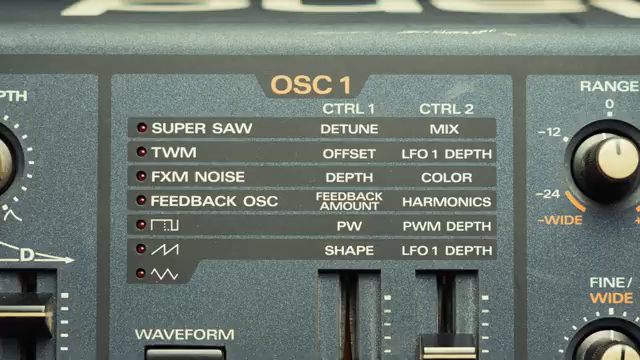
"There's no JP-8000 logo on the rear. In place of the standard serial number is this sticker that's partially in Japanese."
© Screenshot/Quote: Alexballmusic (YouTube)
JP in Action: Sound Demos and Genre Hopping
Ball doesn’t just talk—he jams. The video is loaded with sharp demo cuts, from trance leads that could headline any ’90s warehouse to gnarlier, less obvious textures the JP-8000 can cook up. You get a real sense of the synth’s range, from lush layers and face-melting leads to percussive weirdness. The hands-on controls mean these sounds aren’t just for the studio; they’re built for live tweaking and improvisation.
And if you think the Super Saw is the only trick up its sleeve, think again. Ball’s performance shows off the JP’s versatility in genres you might not expect—this is more than just a trance box. But honestly, no written review can do these sounds justice. If you want to feel the full wallop of detuned saws and modulated chaos, you’ll need to watch (and hear) the video for yourself. Trust me, your headphones will thank you.
Long Live the JP: Hardware, Hacks, and Revival
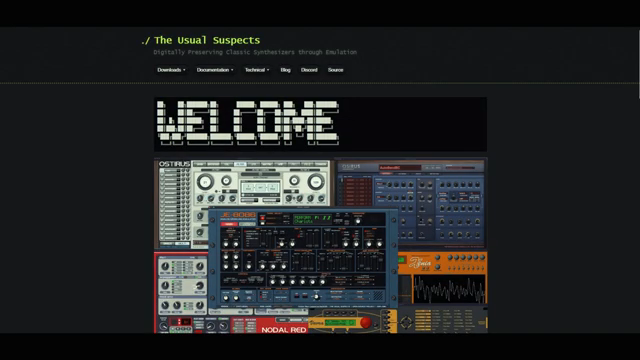
"So a collective of lunatics called the Usual Suspects reverse engineered the JP-8000."
© Screenshot/Quote: Alexballmusic (YouTube)
Think your old JP-8000’s busted and you’re out of luck? Not so fast. Thanks to a group of absolute maniacs known as the Usual Suspects, the JP-8000 has been reverse-engineered down to its logic cells, meaning you can now run the original firmware in an emulator. Sure, there are copyright hoops and you’ll miss the hardware’s DAC, but for most mortals, the sound is as close as you’ll get without raiding Roland HQ. Ball’s verdict: the legacy lives on, even if every last hardware unit bites the dust. For synth heads and hackers alike, that’s a win.
This article is also available in German. Read it here: https://synthmagazin.at/alex-ball-vs-der-roland-jp-8000-trance-waffe-entfesselt/
More articles about these products:
 Voltage Labs Drops In: Joris Voorn’s Studio Is a Hybrid Rave Bunker
 Tonepusher’s Industrial Synth Arsenal: Five Sounds That’ll Smash Your Speakers
 A Sonic Pilgrimage: Inside BT’s Cave with CROW HILL
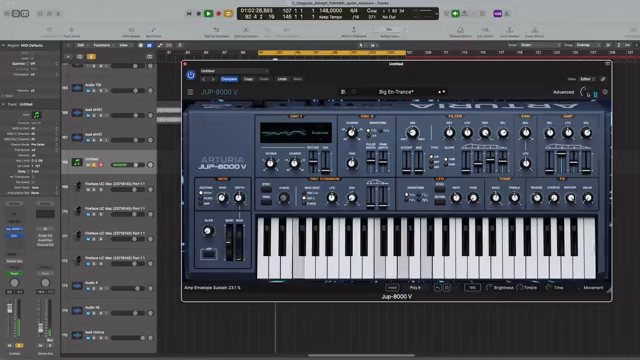 Arturia’s Jup-8000 V: Supersaw Alchemy and Workflow with Lorenzo Senni
 AudioPilz Ranks the Top 10 Synth Presets Ever!
Watch on YouTube:
Latest articles
Watch on YouTube:
Visit the channel:
https://www.youtube.com/AlexBallMusic
https://www.youtube.com/AlexBallMusic
Links from AlexBallMusic:
Patreon: https://patreon.com/AlexBallMusic
Bandcamp: https://alexball.bandcamp.com/releases
Instagram: https://instagram.com/alexballmusic
Facebook: https://facebook.com/alexballmusic
Alex Ball Music: https://alexballmusic.com
Sponsored links:
If you purchase via these links, we may earn a small commission – at no extra cost to you. The link opens an Amazon keyword search, and results may vary depending on availability.
Boss VT-1
🔗 Check price on Amazon
🔗 Check price on Amazon
JE-8086
🔗 Check price on Amazon
🔗 Check price on Amazon
Roland JP-8000
🔗 Check price on Amazon
🔗 Check price on Amazon
Roland JP-8080
🔗 Check price on Amazon
🔗 Check price on Amazon
Roland MC-303
🔗 Check price on Amazon
🔗 Check price on Amazon