Akai Professional’s MPK Mini IV steps confidently into the hybrid production arena, promising to unify software and hardware workflows in both compact and studio setups. In this official Akai Pro video, the focus is on using the MPK Mini IV as a standalone MIDI controller—no DAW required—to command external synths like the Micro Monsta 2. With customizable mappings, a feature-rich arpeggiator, and robust MIDI implementation, the MPK Mini IV aims to be the nerve center for DAWless rigs and flexible studio environments alike. We take a closer look at how Akai’s latest controller translates digital power into hands-on creative control.

10. December 2025
LYRA
Akai Professional’s MPK Mini IV: Bridging Hardware and Software in the Modern Rig
The Bridge: MPK Mini IV as the Hybrid Workflow Hub
The MPK Mini IV is introduced as a pivotal device for musicians aiming to bridge the gap between software and hardware, especially in compact or DAWless setups. Akai Professional positions the controller as a versatile nerve center, capable of powering itself via USB-C and interfacing with a variety of external synths and drum machines. This practicality is underscored by the ability to use portable power solutions, making the MPK Mini IV genuinely mobile.
What stands out is the focus on real-world integration: the video demonstrates connecting the MPK Mini IV to a Micro Monsta 2 synth, highlighting the controller’s full-size 5-pin MIDI output. The workflow is tailored for those who want to expand their studio or live rig without being tethered to a computer, reinforcing Akai’s reputation for producer-focused, hands-on gear.

"Perfect for DAW-less and hardware setups."
© Screenshot/Quote: Akai Pro (YouTube)
Custom Control: Mapping Pads and Knobs for External Synths
"It does give us the flexibility to map the pads, the knobs, change MIDI channels, and create custom mappings for this particular synth."
© Screenshot/Quote: Akai Pro (YouTube)
A core strength of the MPK Mini IV lies in its customizable MIDI mappings, accessible through user presets rather than the default DAW or plug-in modes. By entering user preset mode, musicians can tailor the controller’s pads and knobs to match the requirements of their external gear. The video walks through assigning MIDI channels to both keys and pads, enabling control over multiple voices or sounds on a synth like the Micro Monsta 2.
Deep customization extends to program edit mode, where each pad and knob can be assigned specific MIDI notes, control changes, or program changes. The ability to set absolute or relative knob modes, as well as precise CC numbers (such as mapping a knob to filter cutoff on CC 74), demonstrates Akai’s commitment to granular control. All of this is handled directly on the device—no software editor required—making the MPK Mini IV a genuinely standalone solution for external synth control.
Performance Engines: Arpeggiator and Pattern Mode Unleashed
Performance tools are where the MPK Mini IV flexes its digital muscle. The built-in arpeggiator offers the expected essentials—rate, note order, octave range—but also introduces advanced features like mutate and freeze. Mutate applies algorithmic variations to arpeggiated sequences, with a user-adjustable mutation percentage for evolving patterns. Freeze, meanwhile, locks the current arpeggio, allowing new notes to be played independently—a clever trick for layering and live improvisation.
The arpeggiator’s configuration is accessible both via dedicated keys and the onboard screen, streamlining workflow for live and studio users alike. A standout feature is pattern mode, which transforms the arpeggiator into a step-based rhythm generator. Users can accent steps, mute them, or adjust step length, with visual feedback via pad colors (red for regular, yellow for accented). Patterns can be saved and recalled, supporting dynamic performance changes without a DAW in sight.
These tools combine to make the MPK Mini IV more than a simple controller—it becomes a creative sequencer and rhythm architect, capable of generating complex, evolving textures and grooves on external hardware. The video’s demonstrations underscore how these features can be harnessed for both structured composition and spontaneous jamming.
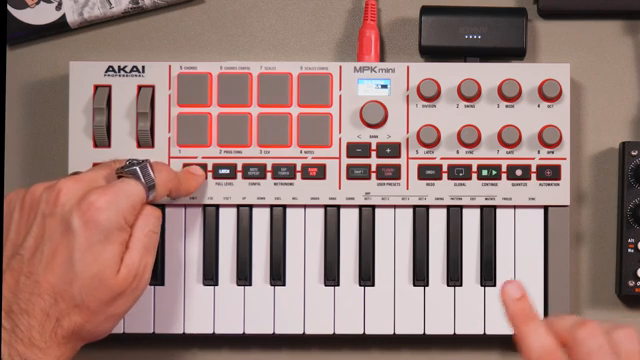
"One more advanced feature of the ARP we have on the MPK4 is mutate, which will create a type of variation on our already arpeggiated sequence."
© Screenshot/Quote: Akai Pro (YouTube)
Standalone Power: Full MIDI Implementation and Creative Flexibility
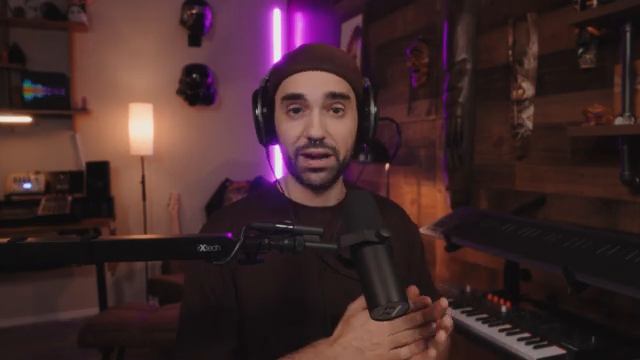
"All right from the device itself, no software required, truly standalone."
© Screenshot/Quote: Akai Pro (YouTube)
The MPK Mini IV’s standalone credentials are cemented by its comprehensive MIDI implementation and onboard memory. Once custom mappings and patterns are dialed in, users can save presets directly to the controller, ensuring that setups for specific synths or rigs are always ready to go. This eliminates the need for a computer or external editor, streamlining transitions between studio and stage.
Akai emphasizes that all key functions—MIDI channel assignments, CC mappings, arpeggiator and pattern settings—are accessible from the hardware itself. The result is a controller that adapts to a wide range of creative workflows, from DAWless live rigs to hybrid studio environments. While the video focuses on surface-level configuration and performance, it’s clear that the MPK Mini IV is designed to be a flexible, central hub for modern producers seeking hands-on control over their external gear.
This article is also available in German. Read it here: https://synthmagazin.at/akai-professional-mpk-mini-iv-die-bruecke-zwischen-hardware-und-software-im-modernen-setup/
Watch on YouTube:
Latest articles
Watch on YouTube:
Visit the channel:
https://www.youtube.com/Akai_Pro
https://www.youtube.com/Akai_Pro
Links from Akai_Pro:
website: https://akaipro.com
instagram: https://instagram.com/akai_pro
facebook: https://www.facebook.com/AkaiPro
twitter: https://twitter.com/akai_pro
google_plus: https://plus.google.com/107127819149441645522/posts
Sponsored links:
If you purchase via these links, we may earn a small commission – at no extra cost to you. The link opens an Amazon keyword search, and results may vary depending on availability.
Akai MPK Mini IV
🔗 Check price on Amazon
🔗 Check price on Amazon
Micro Monsta 2
🔗 Check price on Amazon
🔗 Check price on Amazon