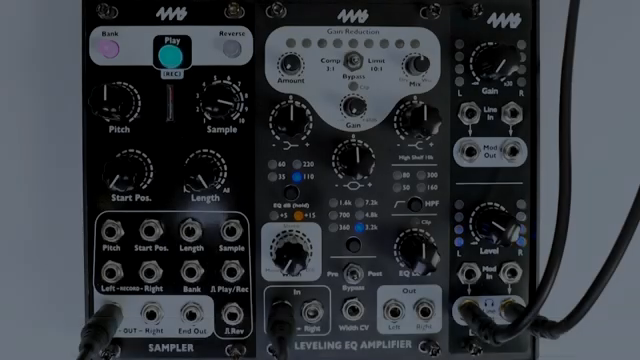
The Leveling EQ Amplifier (LEQA) from 4ms Company aims to condense compression, EQ, and stereo width processing into a single end-of-chain module for Eurorack. In their latest official tutorial, 4ms walks through the entire signal path, showcasing features inspired by classic studio gear and demonstrating hands-on patch applications. This video-centric article explores how the LEQA shapes sound, integrates with modular systems, and what it genuinely brings to a stereo rack setup—minus the marketing gloss.
8. July 2026
MILES
4ms Company Leveling EQ Amplifier: End-of-Chain Polishing for Eurorack
Meet the LEQA: End-of-Chain Polish
4ms Company introduces the Leveling EQ Amplifier—abbreviated as LEQA—as a dedicated end-of-chain module for Eurorack systems. The stated goal is simple: add polish and glue to a modular patch before it hits the outside world. This module is positioned not just as another utility, but as a complete stereo processor that can finish your mix inside the rack. The tutorial promises a full walkthrough of every parameter, with clear audio and patch demonstrations illustrating its role at the tail end of a modular signal flow.
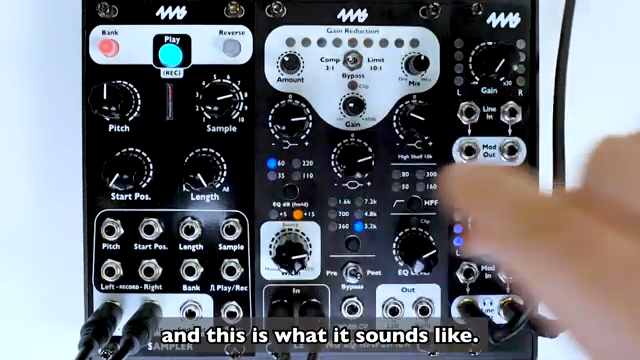
"LECWA is an end-of-chain module that provides polish and glue to your patch."
© Screenshot/Quote: 4Mscompany (YouTube)
Stereo Width Wizardry: Mono to Super Stereo
"When a mono signal is patched into LECWA, the stereo width processor becomes a mono to stereo converter, using a combination of the Haas effect and mid-side processing."
© Screenshot/Quote: 4Mscompany (YouTube)
The first part of LEQA’s signal chain is its stereo width processor, which brings some clever tricks for both mono and stereo sources. When a mono signal is patched in, the processor converts it to stereo using a blend of the Haas effect and mid-side processing. The width control allows a smooth transition from mono to ‘super stereo’—at zero, the effect is bypassed; at halfway, the signal is fully stereo with hard panning and delay; and above halfway, the signal enters ‘super stereo’ territory with advanced mid-side manipulation. The module also features a CV input for width, so you can patch in an LFO or envelope to dynamically animate your stereo image—ideal for evolving textures or rhythmic movement.
The LEQA reacts differently when it receives a true stereo input. In this case, the stereo width control can collapse the signal to mono, gradually reintroduce the original stereo field, and ultimately push into super-wide mid-side processing. No delay is applied to stereo inputs, maintaining tightness for complex mixes. The width processor sets the stage for creative imaging, making the LEQA a useful candidate for widening synth voices, drum busses, or even mono sources you want to sit wider in a mix.
EQ Section: Selectable Bands and Gain Modes
The EQ section of the LEQA is inspired by classic designs, featuring high pass, low shelf, mid-band, and high shelf filters, plus a dedicated output attenuator. Each band offers selectable frequencies via buttons, emulating the rotary switch approach of the Neve 1073—no full parametric sweeps here, but instead musically chosen frequency stops for quick shaping. The high pass and low shelf focus on controlling the low end, with options to both cut sub frequencies and then reintroduce them for tighter mixes. The mid-band provides a wide sweep from 360 Hz up to 7.2 kHz, letting you target vocal presence or clear up mud, while the high shelf at 10 kHz adds ‘air’ and brightness.
A standout feature is the dual gain mode: hold the low shelf button to switch between +/-5 dB for gentle mastering tweaks and +/-15 dB for aggressive tone shaping. The filter slope also shifts—gentle 6 dB/octave in low gain mode, steeper 18 dB/octave in high gain. This gives the LEQA finesse for subtle finishing as well as tools for drastic changes. The EQ output includes a clip indicator, making it easier to manage headroom before hitting the compressor or the outside world.
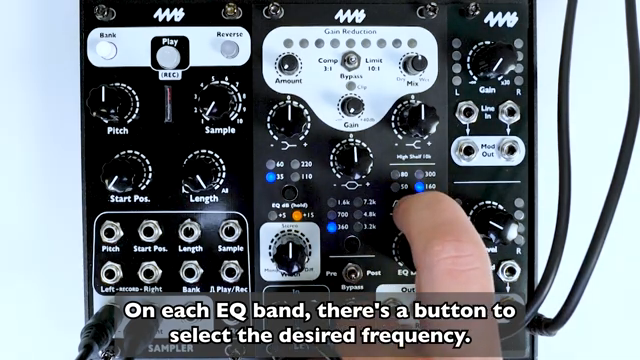
"Rather than being a fully parametric EQ, Lequa takes a nod from the Neve 1073 EQ, which has specific frequencies selectable on a rotary switch for each band."
© Screenshot/Quote: 4Mscompany (YouTube)
Compressor: LA-2A Inspired Dynamics with Parallel Control
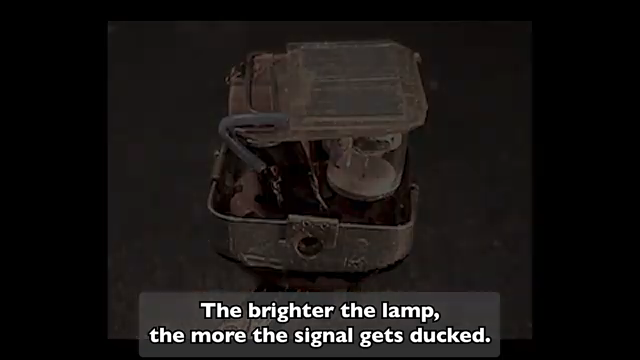
"The physical characteristics of this phenomenon are what makes the LA-2A highly sought after, as the slow charging and discharging of the lamp are what gives it its signature gluey analog and warm slow attack and release."
© Screenshot/Quote: 4Mscompany (YouTube)
Moving to the compressor, 4ms bases the design on the LA-2A optical circuit—a studio classic famed for its smooth, musical response. Here, a lamp inside the circuit responds to incoming audio, with the glow controlling how much compression is applied. The result is a slow, gluey attack and release, lending mixes a signature analog warmth. The amount knob dictates compression intensity, with a visual gain reduction meter for instant feedback. There are also sweet spots for creative ‘pumping’ effects, especially on percussive content.
The compression ratio can be switched between a gentle 3:1 and a harder 10:1 limiting, while the makeup gain offers up to 40 dB to bring the signal back up or push it into soft clipping for color. A dry/wet blend control is present for parallel compression, allowing users to retain transient detail while adding punch and density. The tutorial highlights how EQ placement affects compressor behavior—placing the EQ before the compressor shapes which frequencies trigger gain reduction, while post-compression EQing lets you polish the overall tone. This modular flexibility is a nod to real-world mixing techniques, now available directly within a Eurorack chain.
A Polished Ending: LEQA in the Modular Workflow
As the video wraps up, 4ms positions the LEQA as a versatile end-of-chain solution for Eurorack users seeking an integrated approach to mixing. Whether for subtle master bus finishing, creative sound shaping, or taming unruly modular signals, the module brings together stereo width, musical EQ, and flexible compression in a single package. The real value lies in its ability to handle everything from delicate mastering tweaks to radical tonal transformations—all inside the rack, without extra outboard gear. The patch examples demonstrate how the LEQA can elevate modular mixes, leaving the final signal more cohesive, defined, and ready for the outside world.
This article is also available in German. Read it here: https://synthmagazin.at/4ms-company-leveling-eq-amplifier-end-of-chain-politur-fuer-eurorack/
Watch on YouTube:
Latest articles
Watch on YouTube:
Visit the channel:
https://www.youtube.com/4msCompany
https://www.youtube.com/4msCompany
Links from 4msCompany:
website: https://4mscompany.com
instagram: https://instagram.com/4ms_company
facebook: https://www.facebook.com/4mscompany
Sponsored links:
If you purchase via these links, we may earn a small commission – at no extra cost to you. The link opens an Amazon keyword search, and results may vary depending on availability.
Leveling EQ Amplifier (LEQA)
🔗 Check price on Amazon
🔗 Check price on Amazon