What happens when a multi-instrumentalist and piano technician gets his hands on Yamaha’s Montage M7? Jay Esplana shares his personal rituals, favorite features, and how the MODX M and Montage M integrate into his workflow. Yamaha Synths Official brings us a peek at real-world stage and studio habits, from aftertouch and keyboard hold tricks to that infamous improvised sustain pedal moment. This isn’t just a feature rundown – it’s a tour through the architecture of musical expression and the nuances that matter most to a working player.
3. September 2026
LYRA
Yamaha Synths Official: Jay Esplana on Montage M7, Expression, and Performance Workflow
Finding the Musical Moment
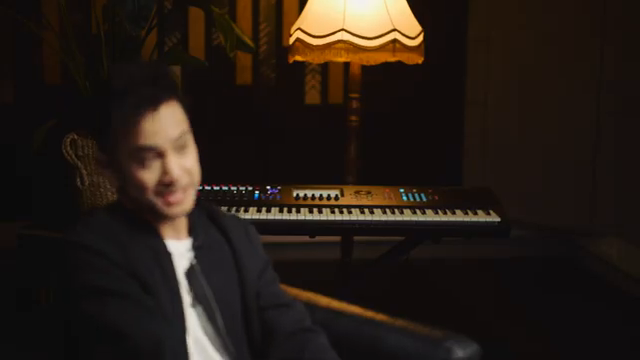
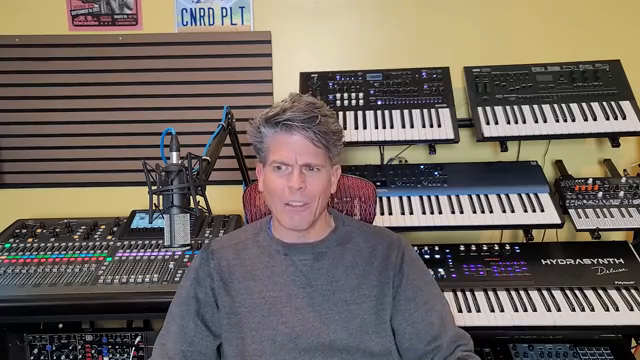
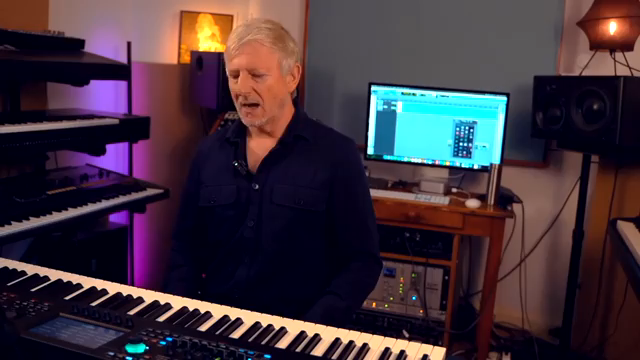
Jay Esplana opens the video with a reflection on the unique moments of self-awareness and flow that define meaningful stage performance. He describes those rare times when everything slows down, and musicians step outside themselves, savoring the realization that they’re in the middle of something special. This isn’t just sentimentality: for Jay, it’s a regular touchstone, something he deliberately aims to notice and appreciate more often.
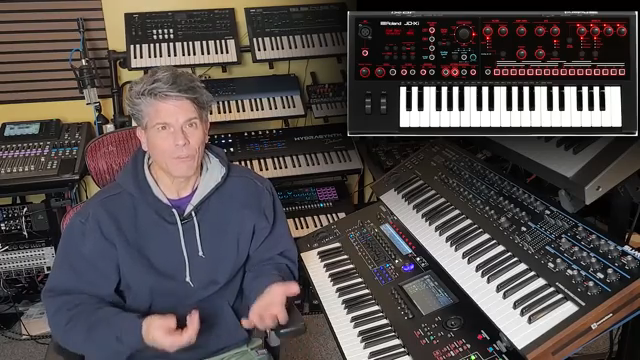
Introducing himself as a multi-instrumentalist, piano technician, and musical director, Jay sketches out a life immersed in music from multiple angles. His daily work encompasses playing piano, keyboards, bass, drums, and singing, as well as technical care for acoustic pianos. He emphasizes a methodical approach to exploring new instruments, always searching for a patch or sound that immediately feels musical before diving into deeper edits or tweaks.

"It's that moment in the middle of your playing where you have a third-person view of yourself."
© Screenshot/Quote: Yamahasynthsofficial (YouTube)
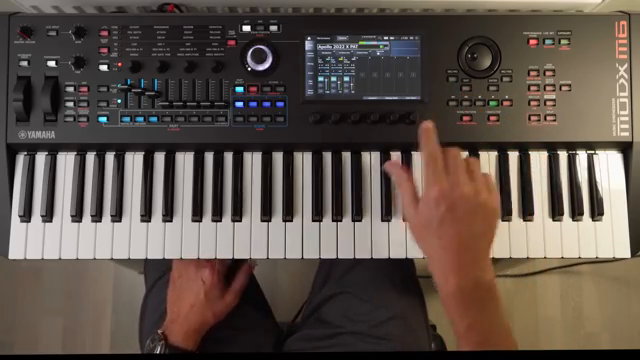
MODX M and Montage M: Seamless Workflow
"I can go from this keyboard to that with the same USB stick, zero friction."
© Screenshot/Quote: Yamahasynthsofficial (YouTube)
Jay highlights the effortless transition between Yamaha’s MODX M and Montage M keyboards in his live setup. He praises the compatibility and the ability to move between the two instruments with nothing more than a shared USB stick, describing the process as ‘zero friction.’
For him, this integration isn’t just about convenience—it’s about inheriting a consistent palette of high-quality sounds and expressive capabilities across both devices. The continuity in workflow lets him focus on performance, knowing that the instruments communicate smoothly and reliably, which is critical for a working musician moving between different stages and musical contexts.
Montage M7: Sound Engines and Expressive Hardware
The video spotlights the Montage M7’s trio of sound engines: AWM2 for sample-based realism, FM-X for frequency modulation synthesis, and AN-X for analog-modelled timbres. This multi-engine architecture offers a broad sonic palette, allowing musicians to traverse acoustic emulation and digital synthesis in a single instrument.
Jay mentions the value of these engines in shaping his sound, but what gets equal attention is the real-time control and expressive FSX keybed. These hardware elements are not just technical features—they directly influence how a player interacts with, and responds to, the instrument in live and studio situations.
Aftertouch and Keyboard Hold: Expressive Tools in Focus
Among his favorite features, Jay singles out aftertouch on the Montage M as transformative. He describes the tactile feedback and responsiveness as an immediate invitation to interact more deeply with the instrument’s sounds, contrasting it with his experience on the MODX M. The keyboard seems to ‘respond’ to his touch, opening up new expressive possibilities on the fly.
He also points to the keyboard hold function as an unsung hero—especially when he finds himself without a sustain pedal. For Jay, it’s not just a backup; it’s a performance tool that can unlock creative approaches and get him through unexpected hurdles on stage.

"As well as the keyboard hold function, that thing is really sneaky. That thing's a weapon, a secret weapon."
© Screenshot/Quote: Yamahasynthsofficial (YouTube)
Improvisation and the Search for Musicality
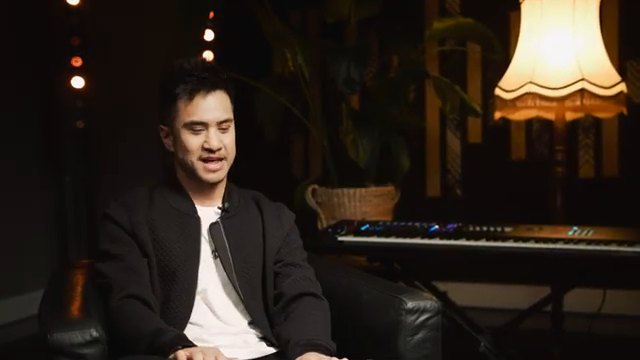
"You can hear the saxes, you can hear the trombones and you can hear the mouthpiece of the trumpet."
© Screenshot/Quote: Yamahasynthsofficial (YouTube)
Jay shares a memorable story about improvising a sustain pedal with a metal money clip and quarter-inch cable during a mountain gig, illustrating the resourcefulness musicians sometimes need. This anecdote underlines his philosophy: even technical setbacks can become creative opportunities with the right mindset.
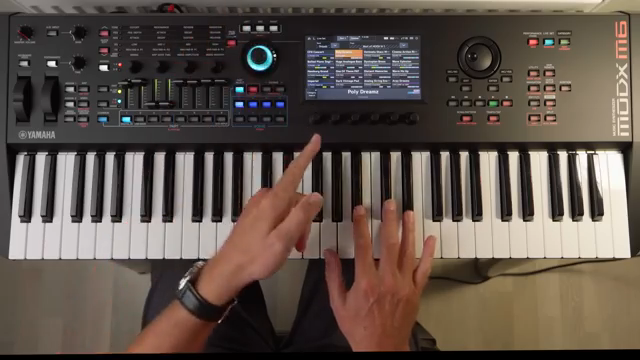
His approach to a new synth always starts with seeking out a patch that feels genuinely musical—often brass, drums, or strings—before tweaking parameters. He likens this to tasting food before seasoning, advocating for a patient, listening-first workflow that respects the instrument’s inherent character.
Jay’s favorite patches, especially the brass sounds carried over from Motif to the latest Yamaha keyboards, exemplify this search for authenticity. The expressive detail in sounds like Sforzando brass matters to him: it’s about hearing not just notes, but the personalities of different horn players, the nuances that bring patches to life and inspire performance.
This article is also available in German. Read it here: https://synthmagazin.at/yamaha-synths-official-jay-esplana-ueber-montage-m7-ausdruck-und-performance-workflow/
More articles about these products:
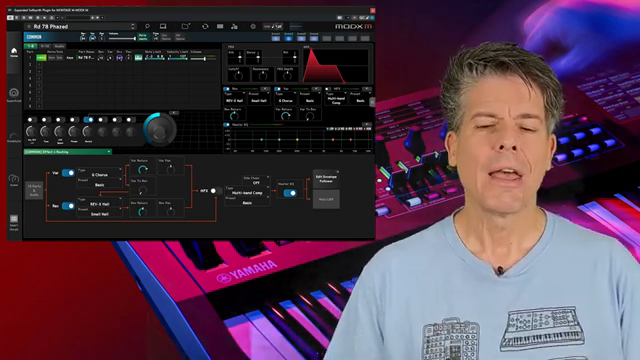 Scott’s Synth Stuff Dives Into Yamaha MODX M OS 3.0: Feature Parity or Just Hype?
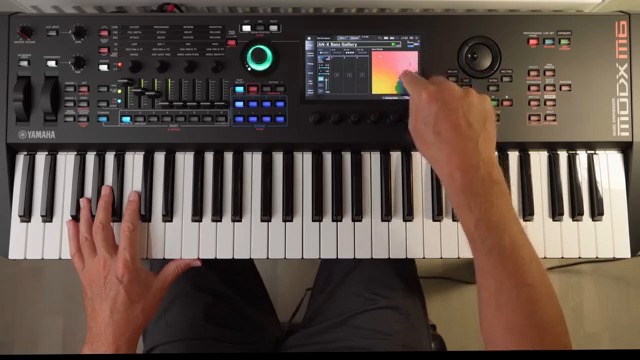 Woody Piano Shack Unleashes the Yamaha MODX M: 16 Sounds, One Sonic Street Weapon
 Woody Piano Shack Unleashes the MODX M: A Sound Demo That Slaps
 Scott’s Synth Stuff: A Bodega of 2025’s Sickest Synths
 Woody Piano Shack Unleashes the Yamaha MODX M: A Sonic Street Weapon Demo
 Scott’s Synth Stuff Storms Sweetwater: 2025’s Top 20 Synths Get the Rave Bunker Treatment
 MattJohnsonskeyspace: Unlocking the Secrets of the Yamaha MODX M
Watch on YouTube:
Latest articles
Watch on YouTube:
Visit the channel:
https://www.youtube.com/YamahaSynthsOfficial
https://www.youtube.com/YamahaSynthsOfficial
Links from YamahaSynthsOfficial:
instagram: https://instagram.com/yamahasynths_official
facebook: https://www.facebook.com/yamahasynths
twitter: https://twitter.com/YamahaSynths
website: https://yamahasynth.com
Sponsored links:
If you purchase via these links, we may earn a small commission – at no extra cost to you. The link opens an Amazon keyword search, and results may vary depending on availability.
ESP plugin
🔗 Check price on Amazon
🔗 Check price on Amazon
Yamaha MODX-M
🔗 Check price on Amazon
🔗 Check price on Amazon
Yamaha Montage M7
🔗 Check price on Amazon
🔗 Check price on Amazon