Dive deep into XNBeatsMusic’s exploration of the Behringer Proton’s patchbay—a synth that could make even your grandma sound like a 90s rave god. In this gritty guide, oscillators get twisted, waveforms dance like they’ve had one too many pints, and modulations are rough enough to brush off the cobwebs from your speakers. This isn’t just a tutorial; it’s an invitation to join the chaos and unleash the beast within your synth rig.

Welcome to the Proton Playground
XNBeatsMusic kicks things off at the Proton’s patchbay, promising a journey that’ll explain each input and output one by one. It’s all about harnessing the oscillators’ power, oscillating between often-overlooked details. The fundamental idea is to use modulation sources like an LFO to manipulate oscillator pitch. Connect an LFO to an oscillator, and you’ve started writing music that toggles between the sublime and the chaotic. This interaction isn’t typical in every synth, as Proton provides inputs for all its oscillators, offering an expansive sonic canvas. Mixer blocks allow output sounds before reaching the filters, painting a raw picture of oscillation untouched by modulation. Despite the video’s relaxed start, the potential here for sonic chaos is tremendous, foreshadowing the depths this guide will explore.
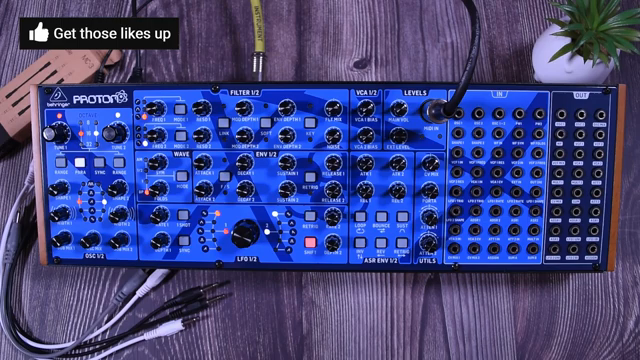
"If you like what I do, please like the video..."
© Screenshot/Quote: Xnbeatsmusic (YouTube)
Attenuators: The Calm Before the Storm
"The idea of the attenuators is to, you know, have control."
© Screenshot/Quote: Xnbeatsmusic (YouTube)
Now entering attenuator territory, it’s like finding the volume knob in your favorite dive bar that manages the rowdy crowd. XNBeatsMusic elevates the Proton’s design by letting modulations find their proper depth before running wild. Attenuators act as the unsung heroes, stopping the modulation from descending into uncontrollable madness. The Proton’s attenuators play a vital role by simply allowing more controlled modulations, much like a sound engineer keeping rowdy punk enthusiasts at bay during a gig.
By using attenuators, you can adjust the intensity of the LFO on your oscillators, bringing in a whole new level of refinement. This approach gives you an opportunity to blend sounds subtly, or if you fancy, crank it up to eleven and let the waves crash like the North Sea. The art of managing modulation within the Proton isn’t just about finding a clean sound; it’s about knowing when to let the chaos through. It’s where restraint meets rebellion—a very British affair. Through careful adjustment, printed-out patch diagrams might become relics of the past as you embrace the intuitive as your guide. XNBeatsMusic underscores how these nuances make the Proton a versatile partner in crime for any synth nut’s arsenal.
Exploring the VCF Jungle
Diving into the filter cavity, XNBeatsMusic explains how the VCF In’s and Out’s work, revealing layers of sound just waiting to burst forth. Picture it like a dense jungle where every tweak of the VCF frequency is a machete cut through a path of sonic underbrush. Each oscillator signal that gets filtered facilitates discovering previously hidden corners of your audio landscape, as if swinging from vine to vine of endless sound potentials. The Proton isn’t just a synth that controls the chaos; it’s a device that channels it.
Using an oscillator to modulate the VCF resonance is akin to teasing out the purring growl of a Jaguar—a dynamic manipulation that XNBeatsMusic shows off with aplomb. Despite the complexity, the resonant peaks cutting through give the synth a lively character, where noises are both wild and tamed in a push-pull dance. Moving on to the VCF1 and VCF2, the Proton allows for dual-filter engagements that can carve your voices into pieces. Freedom is in the form of being able to modulate frequencies from outlandish growls to subtle whispers. With details cascading through the Proton’s circuitry like a relentless storm, your soundscape becomes ripe for exploration. This rebellious exploration demands an ear not afraid of the bumpy ride.

"...maybe you can take a different source, like maybe a different synthesizer, and have it go through the filters."
© Screenshot/Quote: Xnbeatsmusic (YouTube)
Waves of Revolution: The Wave Folder
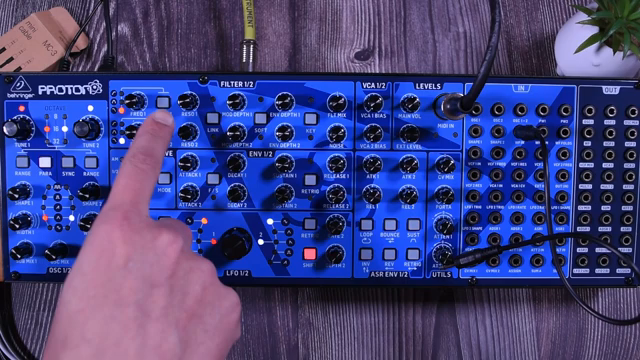
"...throwing it in a blender, and letting the bits fall where they may."
© Screenshot/Quote: Xnbeatsmusic (YouTube)
As if the Proton wasn’t wild enough, XNBeatsMusic throws the wave folder into the mix. Imagine taking a perfectly good signal, throwing it in a blender, and letting the bits fall where they may. The wave folder is where you really start turning heads, capturing and twisting audio waves until they’re barely recognisable. What enters as a polite ‘hello’ leaves as a raucous ‘OI!’ smashing against eardrums. This is the place where the Proton starts sounding a bit like a toaster in a full existential crisis.
With separate inputs for each oscillator, the wave folding on the Proton introduces tantalising distortion. It bends and folds the signal into shapes that nature never intended, creating harsh angular sounds with raw, passionate texture. The ability to modulate the folding means waveforms jerk through audio space, rattling teeth and soul alike. XNBeatsMusic presents this stage as the Proton’s wildest ride yet, a transformation reminiscent of a discordant punk gig where precision meets cacophony in glorious disharmony. Here is where the creative use of the Proton becomes atmospheric-worthy, turning simple tones into ghosts haunting every corner of the mix, with sharp edges and unabashed roughness.
Mixing it Up: CV and Shape Control
Beyond the chaos lies the Proton’s CV mix and shape control prowess. XNBeatsMusic shows how blending CV sources gives life to eclectic modulations, making the Proton akin to a mad scientist’s lab where previously disparate parts meld into complex harmony—or delightful chaos. The CV Mix enables musicians to blend two sources into one, a sonic Dr. Jekyll and Mr. Hyde scenario where the knobs decide which personality dominates. This exploratory territory offers sound sculpting that’s dangerously unpredictable but thoroughly captivating.
Shape control is where waveforms bend under your fingertips. Adjusting the oscillator shapes, you get a landscape that shifts like a seismograph on full tilt. It’s an exercise in balance, where decisions either lead to serene soundscapes or unruly turbulence. Utilising LFOs to change the rate or shape gives the Proton yet another dimension of control. XNBeatsMusic guides one through these facets with the precision of a craftsman and the cheek of someone who doesn’t mind getting their hands dirty. This section highlights how the Proton’s shape and CV controls aren’t just about modulating sound; they’re about crafting a narrative, flicking between soft poetry and thunderous rebellion like a master composer.
The Enveloping Elegance of Sum and Mult
XNBeatsMusic next tackles the Sum and Mult sections of the Proton, adding layers to sounds that are as delicately interwoven as a patchwork quilt—or as chaotically unstitched. The Sum feature allows two sources to be united into a single output, acting like the dodgy bloke in a pub who knows how to blend the perfect cocktail. Whether you’re blending LFOs with ADSRs, or throwing in an entirely new spice to the mix, the possibilities are boundless.
The Mult section, a melodic hydra with one input and multiple outputs, speaks to versatility and sharing. Imagine sending your favourite modulation source on a night out, ensuring it visits all the must-see places, from resonance peaks to pulse width modulations. Each output provides new life to patches, multiplying potential rather than restricting it. XNBeatsMusic demonstrates how Sum and Mult facilitate an explorative mindset, revealing the Proton’s pirate-minded spirit—ever ready to cut loose and ransack traditional sound expectations. These features embody the idea that with the Proton, it’s a perpetual Saturday night, and the mods are always up for a good time.
Concluding the Chaos: VCA and Assign Prowess
Drawing towards a close, XNBeatsMusic delves into the final elements: the VCA and assignable options of the Proton. The VCA is where the volume’s authority is asserted, with the whole rig responding to dynamic envelopes. It manages the Proton’s riotous sound like a club bouncer deciding who makes it into the VIP section of the audio party. When discussing the assign options, XNBeatsMusic uncovers a treasure trove of modular flexibility, exemplifying how you can patch any control voltage to this synth’s cerebral core.
Utilising assignment choices, you control every nuance—like plucking notes out of a chaotic whirl. XNBeatsMusic deep dives into this labyrinth of possibilities, showing how you can map movements to either a wall of lush noise or a daring glitch-filled recital. The Proton’s assignable in-and-out ports allow it to become infinitely more than the sum of its parts, ready to weave intricate musical tapestries or abrupt sonic graffiti. The guide wraps up, leaving viewers with the potential to either restore order or embrace the bedlam—the choice, enabled by this formidable synth, is astoundingly liberating.
This article is also available in German. Read it here: https://synthmagazin.at/xnbeatsmusics-behringer-proton-das-patchbay-pandemonium/
Watch on YouTube:
Latest articles
Watch on YouTube:
Visit the channel:
https://www.youtube.com/XNBeatsMusic
https://www.youtube.com/XNBeatsMusic
Links from XNBeatsMusic:
instagram: https://instagram.com/xnb.synths.music
Sponsored links:
If you purchase via these links, we may earn a small commission – at no extra cost to you. The link opens an Amazon keyword search, and results may vary depending on availability.
Behringer Proton
🔗 Check price on Amazon
🔗 Check price on Amazon