WaldorfMusicChannel’s latest deep dive unpacks the Iridium MK2 Desktop Synthesizer, a flagship multi-engine powerhouse that pushes the boundaries of digital sound design. CTO Rolf Wöhrmann guides us through a landscape of polyphonic arpeggiation, advanced layering, and the innovative SEEDS synthesis method, all underpinned by a robust hardware upgrade. With features like microvariation-driven flavor controls, a mutator for creative randomization, and per-note parameter locks, the MK2 is positioned as a serious tool for both studio architects and live performance explorers. This video is a must-watch for anyone interested in how modern digital synths can morph, mutate, and personalize sound at every level.
6. March 2026
LYRA
WaldorfMusicChannel’s Iridium MK2: A Deep Dive into Digital Synthesis Architecture
Iridium MK2: Digital Powerhouse, Multi-Engine Mindset
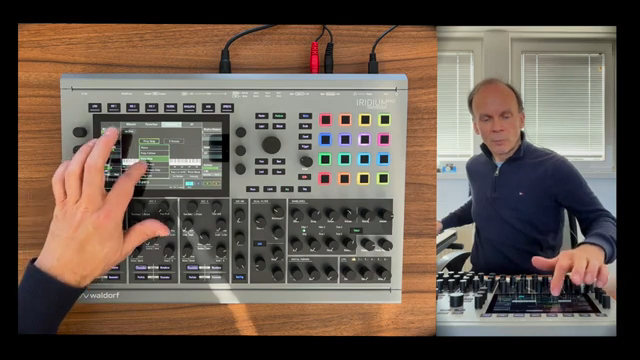
The Iridium MK2 Desktop Synthesizer arrives as Waldorf’s latest evolution in their digital lineage, building on the foundation of the original Iridium with a suite of new features and a significant hardware upgrade. CTO Rolf Wöhrmann introduces the MK2 as a multi-engine instrument, emphasizing its expanded RAM and flash storage, which directly enable more complex synthesis capabilities and deeper sound design.
From the outset, the MK2 is positioned not just as an incremental update but as a leap in workflow and sonic potential. The video frames the instrument as a platform for advanced synthesis, highlighting its ability to host multiple engines and a host of performance-oriented features. Waldorf’s focus on architectural flexibility is evident, setting the stage for a detailed exploration of what makes the MK2 a serious contender for digital synth enthusiasts.
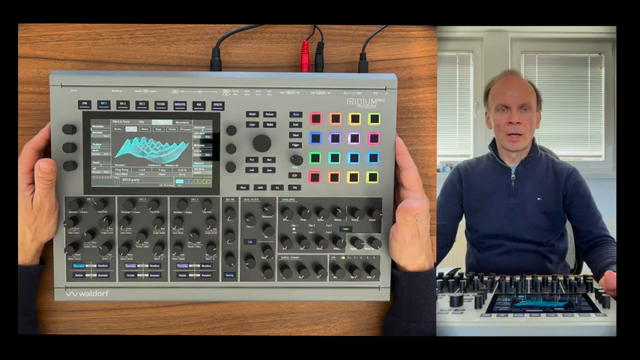
"It's a multi-engine, advanced capability synthesizer with many, many features and with the MK2 we added more."
© Screenshot/Quote: Waldorfmusicchannel (YouTube)
Polyphonic Arpeggiator, Four Layers, and SEEDS: The Core Innovations
"With polytrans we are doing more octave transpositions in the different voices."
© Screenshot/Quote: Waldorfmusicchannel (YouTube)
The deep dive begins with the new polyphonic arpeggiator, a feature that transcends traditional single-note arpeggiation by introducing multiple polyphonic modes. Users can select how many voices play simultaneously, creating richer, more complex arpeggiated textures, including polyrhythmic and counterpoint-like structures. Modes such as poly follow, poly skip, polytrans, and polyleg allow for intricate rhythmic and harmonic interplay, all easily accessible from the front panel.
Layering is another cornerstone of the MK2’s expanded architecture. With four independent sound layers—up from two in the original—users can stack, split, or rotate sounds using stack, round-robin, and random-robin modes. Each layer can host its own patch, and the workflow for loading and combining layers is streamlined, allowing for rapid experimentation and multi-timbral setups. The round-robin and random-robin modes, in particular, enable poly-timbral performances where each note can trigger a different layer, vastly expanding the instrument’s expressive range.
Perhaps the most forward-thinking addition is the SEEDS synthesis method. SEEDS introduces the concept of a timbral journey, where each oscillator can traverse up to 12 waypoints, each representing a different synthesis type or parameter set. This meta-synthesis approach allows for dynamic morphing between additive, wavetable, FM, ring modulation, and noise-based sounds, all within a single oscillator path. The result is a sound engine capable of evolving textures and complex transitions, with each waypoint fully editable and modulatable.
Flavor: Microvariations for Livelier Soundscapes
Waldorf borrows the flavor parameter from their Proteus line and takes it further in the Iridium MK2, introducing microvariations that inject subtle (or not-so-subtle) changes into repeated notes. The video demonstrates how increasing the flavor amount transforms sterile, repetitive sequences into lively, organic performances by varying timbre, filter cutoff, envelope timing, pitch, volume, and stereo panning.
Crucially, the MK2 offers granular control over which aspects of the sound are affected by flavor, with a dedicated screen for assigning and adjusting the influence on each oscillator and parameter. These settings are stored per preset, allowing users to define exactly how much unpredictability or humanization is baked into each patch. It’s a workflow-centric feature that bridges the gap between digital precision and analog-style imperfection.
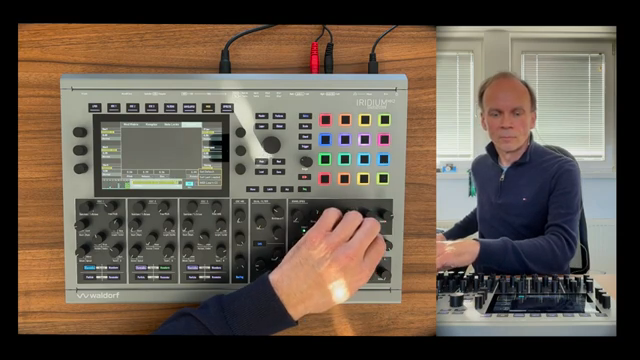
"All these individual flavor settings and the overall flavor settings are stored with the preset so for each of the preset you can define what aspect of the patch is controlled by the flavor and by what amount, that's very special for the Iridium desktop MK2."
© Screenshot/Quote: Waldorfmusicchannel (YouTube)
Mutator and Per-Note Parameter Locks: Creative Randomization and Precision Control
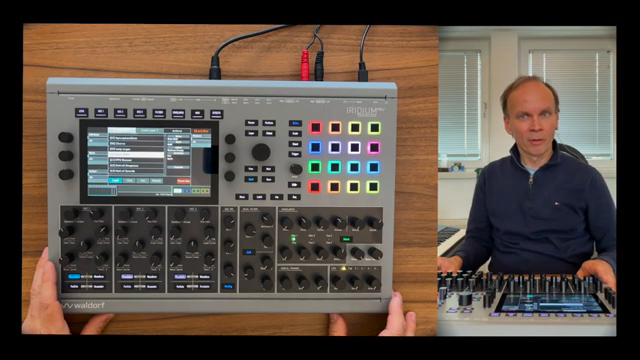
"This feature was developed in collaboration with Richard E. Range, aka Afex Twin, who is a long-term Iridium Desktop user."
© Screenshot/Quote: Waldorfmusicchannel (YouTube)
The Mutator is Waldorf’s answer to creative block: a patch randomizer that can mutate individual sections or entire sounds at the user’s discretion. The video shows how users can dial in the mutation amount, undo unwanted changes, and selectively randomize oscillators, pitch, or other parameters. This tool encourages happy accidents and rapid exploration, with the safety net of easy undos and resets.
Per-note parameter locks, developed in collaboration with Aphex Twin, bring a new dimension to performance and sound design. Unlike traditional step sequencer locks, these allow users to assign unique parameter changes to individual notes or keys. The workflow is intuitive: enter record mode, hold a note, tweak a parameter, and that change is stored for just that note. The video demonstrates applying different synthesis types, effect settings, and modulation per key, all visually tracked in the note log section. This enables complex, evolving patches where each note can have its own sonic identity.
Both features are designed to foster experimentation and deep customization. The Mutator offers a playful, risk-free way to break out of creative ruts, while per-note parameter locks provide surgical control over every aspect of a performance or composition. Together, they exemplify Waldorf’s commitment to empowering users with both randomness and precision.
From Studio to Stage: Integrating MK2’s Features into Real-World Workflows
The video closes by emphasizing how these innovations come together in the context of real music-making. The layering system, SEEDS synthesis, microvariations, and per-note parameter locks are not just technical novelties—they’re tools designed to inspire new soundscapes and performance techniques, whether in the studio or on stage.
Waldorf’s presentation makes it clear that the Iridium MK2 is built for versatility. The workflow enhancements and deep modulation options support both spontaneous live improvisation and meticulous studio programming. While the video focuses on feature demonstration rather than integration with DAWs or external hardware, it’s evident that the MK2’s architecture is aimed at users who demand both depth and immediacy in their instruments.
This article is also available in German. Read it here: https://synthmagazin.at/waldorfmusicchannel-und-das-iridium-mk2-ein-deep-dive-in-digitale-synthese-architektur/
Watch on YouTube:
Latest articles
Watch on YouTube:
Visit the channel:
https://www.youtube.com/WaldorfMusicChannel
https://www.youtube.com/WaldorfMusicChannel
Links from WaldorfMusicChannel:
website: https://waldorfmusic.com
product_quantum_mk2: https://waldorfmusic.com/quantum-mk2
facebook: https://www.facebook.com/WaldorfMusic
twitter: https://twitter.com/WaldorfGmbH
Sponsored links:
If you purchase via these links, we may earn a small commission – at no extra cost to you. The link opens an Amazon keyword search, and results may vary depending on availability.
Iridium MK2 Desktop Synthesizer
🔗 Check price on Amazon
🔗 Check price on Amazon