Waldorf ventures into new territory with the Protein Synthesizer, reimagining wavetable DNA – and musotalk brings us the key answers straight from the chief developer. In a podcast roundtable full of nerdy talk, ironic asides, and technical deep dives, the patch-origami unfolds between classic Microwave architecture and modern performance features. If you want to know how musical mistakes become sonic spice and why drift is suddenly a feature, you shouldn’t miss this machine room. For sound architects, chaos aesthetes, and anyone who prefers their sounds layered rather than boxed.
28. November 2025
RAUMKLANG
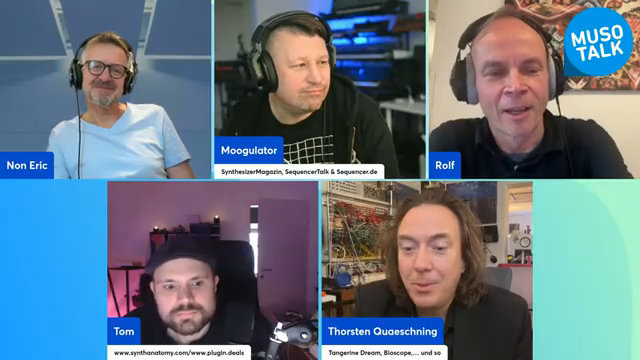
Waldorf Protein: Sonic Architecture in Your Pocket – musotalk in Conversation with Rolf Wöhrmann
Waldorf Iridium, Waldorf Microwave 1, Waldorf Protein, Waldorf Quantum
Wavetable Origami: Protein Between Tradition and Modernity
The Waldorf Protein Synthesizer presents itself as a compact sound laboratory, merging classic wavetable technology with contemporary production demands. Musotalk opens the round with a mix of ironic distance and genuine enthusiasm: this is not just another clone, but an instrument that consciously positions itself between worlds. The initial sound examples already reveal that the sound folds like origami from tension and noise – rich in overtones, deep in bass, and with a dash of digital sharpness.
At the heart is the question of how far such a device can go in today’s studio and live environments. The podcast round, led by musotalk and Waldorf chief developer Rolf Wöhrmann, makes it clear that the Protein is built not only for purists but also for performance-oriented sound designers. The operation remains direct, the sound palette surprisingly broad. Those hoping for workflow fetishism will be disappointed – but for chaos aesthetes and sound architects, a new machine room opens up.
Microwave DNA Reloaded: Modulation and Effects as Patch Geometry
The development of the Protein is based on the reconstructed architecture of the legendary Microwave 1, albeit without the original ASIC chip. Instead, its behavior was recreated in software, bit for bit – a machine ethic that stands for both precision and musical imperfection. Rolf Wöhrmann explains that the two wavetable oscillators operate exactly like the Microwave, while the filters and envelopes have evolved. Especially the modulation matrix with eight slots, three full-featured envelopes, and modern LFOs sets the Protein apart from its historical predecessors.
Effects are not just an add-on but an integral part of the sound architecture: two effect slots, sourced from the Iridium catalog, allow a wide range of modulation, delay, reverb, and saturation. Chord function, arpeggiator, and step sequencer round off the package. The control panel remains clear despite the complexity, even though more than 150 parameters lurk under the hood. Anyone wanting to dive deeper will have to embrace nested patch geometries and accept a compromise or two in direct accessibility – patience and an ear for the unpredictable are essential here.
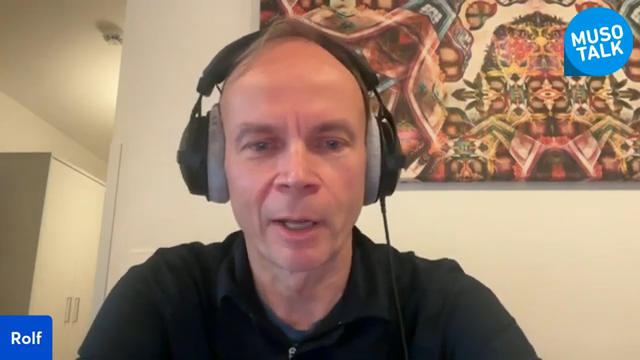
"We measured everything and checked it with logic analyzers. What comes out is exactly what comes out of the chip."
("Wir haben das alles gemessen und mit Logic-Analysern überprüft. Da kommt wirklich genau das raus, was aus dem Chip rauskommt.")© Screenshot/Quote: Musotalk (YouTube)
Layer Magic and Multitimbrality: A Tool for Live Architects
"It's very flight-friendly. And as emotional support, like a dog, you always have a synth with you."
("Ist also sehr flugtauglich. Und als emotional support, wie so ein Hund, hat man halt immer einen Stinti dabei.")© Screenshot/Quote: Musotalk (YouTube)
The Protein offers a layering and multitimbral architecture that makes it particularly suited for complex live performances. Up to four layers can be loaded in parallel and either stacked, split, or played alternately via round robin. This opens up new sonic spaces not just in the studio but especially on stage: chords with different voices, quick layer switches, and flexible MIDI splits are possible with just a few moves. The eight-voice polyphony may seem modest on paper, but thanks to the layer logic and clever voice allocation, a flexible setup emerges that holds its own even in carry-on size.
The podcast makes it clear that this multitimbrality is not just a technical gimmick but a real performance feature. Those who master airshows in Malta or spontaneous setups in tight spaces will find a reliable companion in the Protein. The limitation to a single stereo output and USB-MIDI without audio interface is addressed openly – here the machine ethic is evident: focus on the essentials instead of feature overkill. For live players and sound tinkerers, it’s a tool that integrates seamlessly into a wide variety of setups.
Flavor Parameter: Microvariation as Musical Spice
A unique selling point of the Protein is the “Flavor” parameter, which introduces subtle microvariations and drift into the sound generation. Inspired by the quirks of the old Microwave architecture, this control simulates the slight steps and inaccuracies that arose from limited processing power and imprecise timing algorithms. Rolf Wöhrmann explains how these musical “mistakes” were deliberately recreated and made adjustable beyond the original. Turning up the Flavor knob yields a lively, organic sound structure – mathematically incorrect, but musically all the more appealing.
This form of humanization is more than just random noise: it follows the patterns and characteristics of its historical predecessors, bringing a touch of electronic music history into the present. Especially with sequences or repeated notes, the difference becomes noticeable – the sound stays fresh, the ear never tires. If you want to know how musical imperfection can be used as a creative resource, you shouldn’t miss the sound examples in the video. Here, machine ethics and human touch prove to be no contradiction.
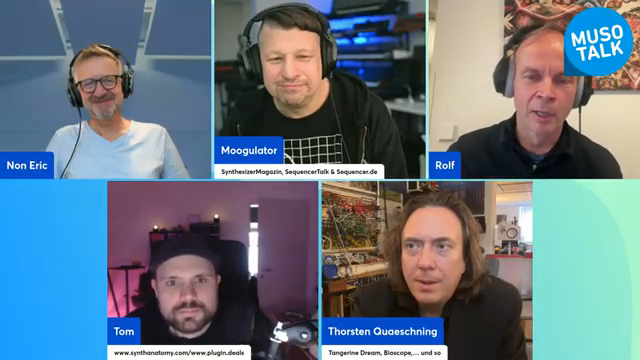
"It adds an extra spice, so to speak. We've recreated that in the Protein as well."
("Es bringt nochmal so einen extra Gewürz rein, sage ich mal so. Das haben wir nachgebaut, auch im Protein.")© Screenshot/Quote: Musotalk (YouTube)
Updates, the Future, and the Next Patch Generation
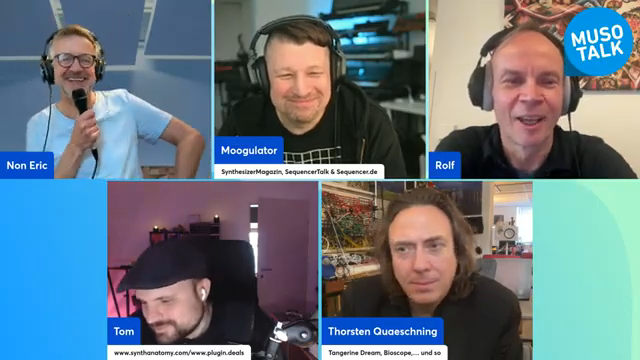
"It's not there yet, but it will get updates, including feature updates."
("Gibt es das noch nicht, aber er wird auch Updates bekommen, auch Feature Updates bekommen.")© Screenshot/Quote: Musotalk (YouTube)
Rolf Wöhrmann concludes with an outlook on the future development of the Waldorf series. The Protein is not an isolated product but the beginning of a new family of compact devices. Updates with new features are firmly planned, as is the possibility of editors or user wavetables in the future. Pricing remains deliberately accessible, without sacrificing machine ethics. So anyone hoping for the next generation of patch geometries and sonic spaces can stay curious – the Waldorf workshop is far from standing still.
Translated from German. Read the original here: https://synthmagazin.at/waldorf-protein-klangarchitektur-im-taschenformat-musotalk-im-gespraech-mit-rolf-woehrmann/