Step into the magnetic resonance of Martin Stürtzer’s studio, where the Waldorf Protein becomes more than circuitry—it’s a vessel for spectral storytelling. In this immersive walkthrough, Stürtzer guides us through the Protein’s compact form, revealing a synthesizer that exhales fog and fractured light. We drift through custom patches, each blooming with harmonic ghosts and shimmering aliasing, before plunging into the tactile depths of sound design. For those who crave new textures and the thrill of discovery, this journey with the Protein is a nebula worth exploring—best experienced with headphones and an open mind.

28. November 2025
LUMINA
Waldorf Protein: Sonic Alchemy with Martin Stürtzer
A Compact Portal to Deep Sound
The Waldorf Protein arrives as a small, enigmatic box—its physical presence understated, yet its potential vast. Martin Stürtzer introduces us to this instrument, noting its firm stance on the desk and familiar tactile elements borrowed from other synth realms. The display, reminiscent of the MiniFreak’s, glows with promise, while connections on the back whisper of both tradition and modernity: stereo outs, USB-C for power and MIDI, and those ever-contentious mini-jacks.
This is not just a shrunken Iridium, as Stürtzer quickly dispels. Instead, the Protein is modeled after the microwave plug-in, inviting us to recalibrate our expectations. Its design choices—compact yet deliberate—suggest a machine built for explorers who value both immediacy and depth. Here, the boundaries between analog warmth and digital edge blur, setting the stage for sonic adventures that reach far beyond its modest footprint.
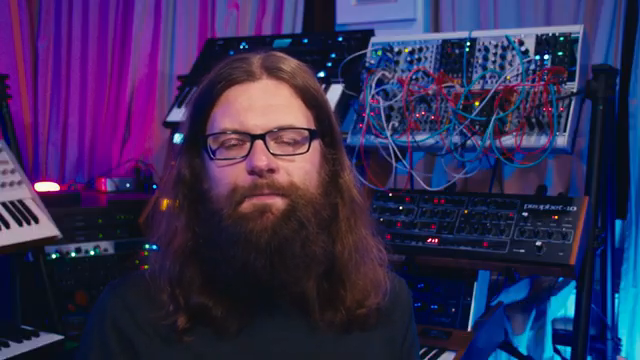
"In this video, I will walk you through the features and design a new patch from scratch to show you the workflow on this little machine."
© Screenshot/Quote: Martinstuertzer (YouTube)
Aliasing Ghosts and Harmonic Riches
"To me, this is much more musical, because those aliasing noises are not so static."
© Screenshot/Quote: Martinstuertzer (YouTube)
Stürtzer’s custom patches reveal the Protein’s unique voice: a landscape where aliasing isn’t a flaw, but a spectral character. Through careful comparison with the Iridium, we hear how the Protein’s higher registers shimmer with movement, the aliasing artifacts swirling like nebula dust rather than static noise. The Iridium, by contrast, offers a smoother, almost glassy surface—beautiful, but less haunted.
It’s in these subtle imperfections that the Protein finds its soul. The aliasing is alive, never static, lending each note a sense of motion and unpredictability. For ambient composers and sound designers, this is fertile ground: a place where tonal richness and digital grit coexist, each patch a story unfolding in shimmering overtones and spectral shadows.
Sonic Architecture: Building a Pad from Silence
With a fresh preset, Stürtzer invites us into the Protein’s workflow—an intuitive dance between tactile control and digital precision. Four layers await, each a canvas for oscillators to paint with classic wavetables, their spectra blooming with overtone color. The display follows each gesture, making navigation feel like a conversation rather than a chore. While some may long for dedicated envelope controls, the Protein’s takeover mode and relative smoothing ensure that parameter jumps become rare ghosts, not jarring interruptions.
As the pad takes shape, envelopes stretch and release, sculpting sound like slow-moving weather across a digital landscape. The filter softens edges, envelopes animate the wavetable position, and modulation—via two LFOs—breathes life into pitch and panorama. Each tweak is a brushstroke, each modulation a ripple in the sonic fabric. The Protein’s architecture encourages experimentation, rewarding those who listen deeply to the interplay of layers and movement.
Effects become the final mist: delay and reverb, serially chained, expand the pad into a cathedral of echoes. Here, the Protein’s effects section is both a playground and a puzzle—intuitive in some ways, less so in others. Yet the result is undeniable: a sound that drifts, shimmers, and dissolves, inviting us to lose ourselves in its magnetic resonance. The full impact, of course, is best felt in the video itself, where every nuance and modulation blooms in real time.

"It has only a few knobs and a very small display, so the question is, is it really convenient and easy to use and how can you program a completely new patch from scratch?"
© Screenshot/Quote: Martinstuertzer (YouTube)
Protein vs. Iridium: Divergent Sonic Paths
Throughout the walkthrough, Stürtzer draws subtle lines between the Protein and its sibling, the Iridium. While both share a wavetable heritage, their sonic identities diverge. The Iridium’s sound is polished, its aliasing tamed and its transitions smooth—a mirror lake reflecting every detail. The Protein, in contrast, embraces the wildness of digital artifacts, channeling the spirit of the original microwave and PPG wave machines.
This difference is more than technical; it’s philosophical. The Protein invites us to find beauty in imperfection, to explore textures that shimmer with unpredictability. For those seeking pristine clarity, the Iridium remains a beacon. But for sonic storytellers drawn to spectral ghosts and harmonic turbulence, the Protein offers a new narrative—one that rewards curiosity and risk.
An Invitation to Sonic Exploration

"If you have any questions about the protein or ideas what I should talk about and show you with the synthesizer, just let me know in the comments and have a good day."
© Screenshot/Quote: Martinstuertzer (YouTube)
As the video draws to a close, Stürtzer leaves us with an open door. The Protein, he suggests, is not just a tool but a companion for those willing to venture beyond the obvious. Its compact form belies a universe of sound, waiting for hands and ears eager to sculpt, drift, and discover. For anyone seeking to add new colors to their sonic palette, the Protein is a nebula worth drifting into.
This article is also available in German. Read it here: https://synthmagazin.at/waldorf-protein-klangalchemie-mit-martin-stuertzer/
Watch on YouTube:
Latest articles
Watch on YouTube:
Visit the channel:
https://www.youtube.com/MartinStuertzer
https://www.youtube.com/MartinStuertzer
Links from MartinStuertzer:
Homepage: https://martinstuertzer.de
Bandcamp: https://phelios.bandcamp.com
Instagram: https://instagram.com/martin_stuertzer
My stuff at Thomann: https://thmn.to/thocf/i8xb8v3845
Sponsored links:
If you purchase via these links, we may earn a small commission – at no extra cost to you. The link opens an Amazon keyword search, and results may vary depending on availability.
Waldorf Iridium
🔗 Check price on Amazon
🔗 Check price on Amazon
Waldorf Protein
🔗 Check price on Amazon
🔗 Check price on Amazon