Voltage Labs invites us to trace minimal music’s spectral arc, from the flickering pulse of 1960s New York to the data-driven echoes of today. This is not just a history lesson—it’s a meditation on repetition, restraint, and the way a single motif can bloom into a universe. The video’s narrative floats through time and genre, where each artist leaves behind resonances like fog on glass. Here, we listen for the ghosts between the notes, and discover how less becomes everything.
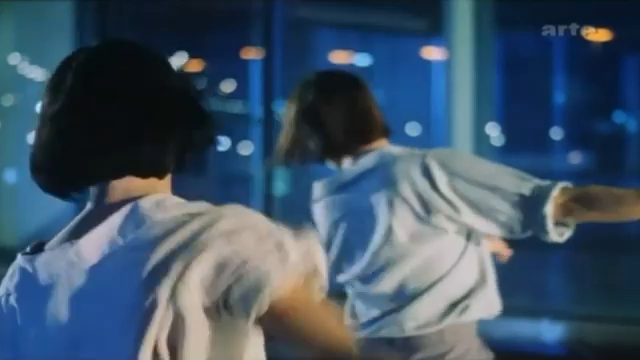
Origins: From Serial Density to the Pulse
The seed of minimal music germinated in the tangled undergrowth of 1960s avant-garde. Western classical composers, entangled in the dense mathematics of serialism, found themselves composing blueprints rather than living soundscapes—music more for the eyes than the ear. Amid this complexity, a handful of Americans turned away from the labyrinth, stripping away ornament and drama, and conjured a new kind of ritual: the unwavering pulse.
Terry Riley’s “In C” became a shimmering nebula, built not of crescendos but of repeated fragments, each musician looping phrases until the air itself seemed to vibrate. Here, performers transformed into living sequencers, human hardware echoing before the dawn of digital machines. Minimalism’s birth was less a revolution than a slow exhalation, a communal cloud where sound became space and time stretched like light through fog.
"This is the story of how less came everything."
© Screenshot/Quote: Voltage Labs (YouTube)
Repetition as Revelation: Reich and Kraftwerk
"Transferring the job of being the composer into the brain of the listener."
© Screenshot/Quote: Voltage Labs (YouTube)
Where Riley conjured clouds, Steve Reich found beauty in drift and error. His experiments with tape loops birthed sonic moiré patterns—simple forms shifting, phasing, spiraling into complexity as they slipped out of sync. The listener, no longer a passive observer, became a co-composer, the mind painting new shapes from familiar fragments. What appears obvious at first becomes a hall of mirrors, every repetition breeding difference.
Across the Atlantic, Kraftwerk seized these pulses and ran them through the circuitry of oscillators. Their relentless four-to-the-floor beats, stripped of swing and saturated with machine precision, turned repetition into a hypnotic engine—a factory line of sound. Minimalism left the academy and entered the bloodstream of popular music, its astral pulse echoing through both dance floors and dreamscapes.
Shapeshifting: Minimalism’s Genre Migration
Minimal music’s DNA proved endlessly mutable, threading itself through ambient’s cathedral hush and techno’s skeletal frameworks. Brian Eno dissolved melody and rhythm into architecture, letting loops and textures define the shape of air rather than the edge of a song. His restraint became a modern shorthand—a way to summon tension from texture, to create space without spectacle.
Detroit’s Robert Hood channeled this ethos into the crucible of techno, distilling tracks to their hypnotic bones. A single drum machine, a looping synth: these tools became portals to trance, each repetition a deeper spiral into focus. In Berlin, Perlon label artists like Ricardo Villalobos stretched house into elastic, organic grooves, while the Wighnomy Brothers and Akufen sculpted minimalism’s language into new dialects. What began as a niche experiment rippled outward, reshaping entire genres.
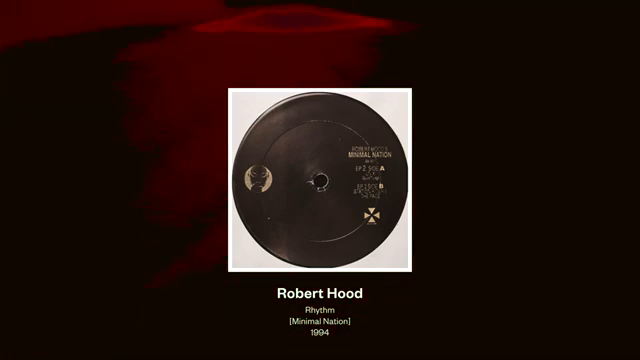
"Using a single drum machine and a synth loop, he aimed for pure hypnosis."
© Screenshot/Quote: Voltage Labs (YouTube)
Data, Texture, and the New Minimalists
Minimalism’s frontier is now digital, with artists like Ryoji Ikeda treating raw data as the very substance of sound. His work, such as “Data Matrix,” pares music to pure sine waves and the hiss of white noise—zeros and ones woven into sonic fabric. Texture becomes the message, and information pulses like a coded heartbeat.
In this new realm, grooves stretch and shimmer, sometimes almost vanishing into silence. Villalobos’s elastic rhythms and Ikeda’s data symphonies remind us that minimalism is not just about less, but about the resonance of what remains. The boundaries keep dissolving, sound forever on the cusp of erasure, yet always returning as a ghost in the machine.
Minimalism’s Secret: Profundity in Restraint
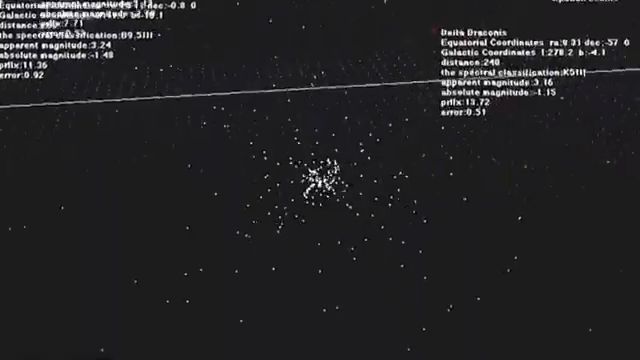
"Ultimately, minimalism was a shift from the individual."
© Screenshot/Quote: Voltage Labs (YouTube)
At its core, minimalism whispers that you don’t need a thousand notes to conjure meaning. When sound is stripped bare, each remaining gesture becomes luminous, inviting the listener to drift inside and find new worlds between the repetitions. The simplicity is not emptiness, but a field of possibility—a silence charged with intent.
Voltage Labs captures this essence beautifully, suggesting that the real story is found not in complexity, but in how simplicity invites us to listen deeper. The video blooms with resonances that words can only gesture toward. To truly feel minimalism’s magnetic pull, one must let these pulses and patterns wash over, hearing everything begin with almost nothing.
This article is also available in German. Read it here: https://synthmagazin.at/voltage-labs-die-geister-des-minimalismus-und-endlose-pulse/
Watch on YouTube:
Latest articles
Watch on YouTube:
Visit the channel:
https://www.youtube.com/voltage_labs
https://www.youtube.com/voltage_labs
Links from voltage_labs:
instagram: https://www.instagram.com/voltage.labs