Step into the swirling fog of pure sound, where chaos and beauty entwine. Underdog Electronic Music School guides us through the no-input mixer technique—a practice that is less about control and more about surrender. Here, mixers become living organisms, and feedback loops bloom into unpredictable sonic landscapes. This is not just a tutorial, but an invitation to drift inside the nebula of nonlinear sound, where listening becomes meditation and every knob twist is a brushstroke on the canvas of the unknown.
25. November 2025
LUMINA
Underdog Electronic Music School: Surrendering to the Sonic Garden of No-Input Mixing
Into the Nebula: The Philosophy of No-Input Mixing
The journey begins not with a patch cable, but with a question: what if we let go of intention and simply listen? Underdog Electronic Music School opens the portal to the no-input mixer technique, inspired by the explorations of Toshimaru Nakamura. Here, the mixing board is not a passive vessel but a living, breathing entity—one that exhales unpredictability and invites us to surrender. The artist becomes a witness, not a master, as the machine’s nonlinear heart pulses with strange, magnetic resonance.
This approach is steeped in a philosophy of letting go, echoing the ambient meditations of Brian Eno and the deep listening practices of Pauline Oliveros. The act of creating with a no-input mixer is less about expressing emotion and more about dissolving into the sound itself, like walking through a forest where every leaf is a frequency and every shadow a modulation. The technique asks us to listen deeply, to open our senses without the burden of meaning, and to accept the machine’s willful chaos.
In this space, music becomes meditation. The boundaries between creator and instrument blur, and the act of listening transforms into an act of contemplation. The no-input mixer is not a tool for perfection, but a companion on a journey through the wilds of sonic possibility. We are invited to drift, to surrender, and to find beauty in the unpredictable bloom of feedback.

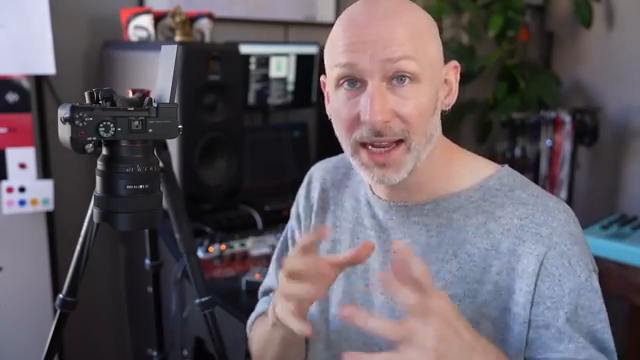
"It is a sort of a form of discipline of surrendering yourself to the machine."
© Screenshot/Quote: Oscarunderdog (YouTube)
Beauty in the Storm: Embracing Chaos and Sonic Surprise
"Think of it like a storm in a bottle and you only let a little bit out into your ears."
© Screenshot/Quote: Oscarunderdog (YouTube)
The no-input mixer does not whisper; it howls and shimmers, conjuring a storm in a bottle. Underdog Electronic Music School describes the experience as both exhilarating and humbling—a dance with a system that can erupt from silence to thunder in the blink of an eye. The feedback loops, once set in motion, become a landscape of shifting textures, where each adjustment births new and unexpected forms. This is a soundscape that refuses to be tamed, inviting us to marvel at its wildness.
Every twist of a knob is a step into the unknown. The mixer’s chaotic system reacts to the smallest gesture, creating periodic cycles and evolving pitches that defy prediction. There is a sense of cohabitation with the machine, as if the artist and the mixer are two gardeners tending an unruly sonic garden. Sometimes, a catastrophic shift occurs—a tipping point that births a new universe of sound, leaving us to explore its alien terrain. The unpredictability is not a flaw but a feature, a reminder that beauty often emerges from the edge of control.
In this realm, patience is rewarded. The more time spent inside the storm, the deeper the connection to its hidden harmonies and fluttering overtones. The process is not about quick gratification, but about losing oneself in the endless play of resonance and decay. Each session is a meditation on chaos, an invitation to listen for the subtle birdsong within the tempest. The mixer, in its unpredictability, becomes a mirror for our own willingness to embrace the unknown.
Guarding the Gates: Safety in Sonic Exploration
Before venturing further into the feedback labyrinth, Underdog Electronic Music School issues a vital warning: protect your ears. The no-input mixer’s capacity for sudden, overwhelming volume is not to be underestimated. Like standing at the edge of a storm, one must respect the system’s potential for violence. A limiter becomes a shield, and the volume knob a lifeline—these are the tools that keep the explorer safe from the mixer’s merciless surges.
The video emphasizes the importance of restraint. Even when the soundscape grows quiet, the temptation to raise the volume must be resisted, for the system can leap from a whisper to a roar without warning. Monitoring levels with care, using headphones at the lowest possible setting, and never letting curiosity override caution are the mantras of this practice. The mixer’s beauty is matched only by its danger, and wisdom lies in knowing when to step back from the brink.
This is not a warning to instill fear, but to cultivate respect. The act of listening becomes an act of self-preservation, a reminder that the most profound sonic journeys require both bravery and humility. By honoring these precautions, we ensure that the garden of sound remains a place of wonder, not harm.
Hands in the Soil: Crafting Chaos with the No-Input Mixer
Setting up the no-input mixer is an act of sonic gardening—each cable a root, each knob a branch reaching toward the unknown. Underdog Electronic Music School guides us through the process with a sense of wonder and play. The mixer stands empty, its inputs untouched, yet its send and return channels become the arteries of a living system. By connecting send outs to returns, feedback blooms instantly, and chaos takes root.
The first encounter is with a single channel, where even the smallest adjustment to volume or EQ sends ripples through the system. The sound is alive, shifting from silence to periodic cycles, its pitch and texture evolving in ways that defy logic. The creator does not pretend to understand every nuance—instead, they embrace the mystery, nurturing the emergent flowers of sound as they appear. The system is dynamic, nonlinear, and sometimes catastrophic, leaping into new sonic universes with the flick of a switch.
Adding a second channel multiplies the complexity, transforming the mixer into a true ecosystem. The channels interact, sending signals back and forth, creating stereo illusions and unexpected overtones. The artist becomes a caretaker, tending to the garden’s unpredictable growth, coaxing out moments of beauty and learning to coexist with the creature they have awakened. Each session is unique, unrepeatable—a fleeting constellation of sound that can only be captured by recording.
The demonstration reveals the joy of patience and deep listening. The mixer’s output is crisp like rain, full like a chord, and always evolving. Introducing effects into the signal chain adds new dimensions, but the heart of the practice remains in the careful, attentive manipulation of feedback. The no-input mixer is a reminder that the richest sonic stories are those we discover, not those we dictate. Here, we are gardeners, not gods, and the garden will always outlast the gardener.

"Your job is like a gardener to walk through the garden and notice interesting flowers that are growing and then to nurture those flowers or to just tend to them because you can't fully control this."
© Screenshot/Quote: Oscarunderdog (YouTube)
Digital Echoes: Recreating NIMB in Ableton Live
The analog garden finds its digital twin as Underdog Electronic Music School brings the no-input mixer technique into Ableton Live. The process mirrors the hardware ritual: return channels are set to feed back onto themselves, creating a virtual storm within the DAW. The same warnings apply—digital feedback can be just as fierce, and a limiter is essential to keep the tempest at bay.
In this digital landscape, the absence of a noise floor means that the system requires a spark to ignite. A touch of vinyl distortion or a fleeting effect can set the feedback in motion, birthing a new world of sound. The artist demonstrates how EQ and other effects sculpt the feedback, shifting the center of gravity and coaxing harmonics from the digital ether. The process is tactile, immersive, and every bit as unpredictable as its analog counterpart.
The joy of digital NIMB lies in its abundance of options, yet the creator cautions against overwhelming the system with too many elements. Depth is found in simplicity, in the careful exploration of a few chosen tools. The digital mixer becomes a playground for sonic alchemy, where each experiment is a chance to discover new textures and rhythms. The boundaries between hardware and software dissolve, and the spirit of surrender remains at the heart of the practice.
Sonic Surrender: Reflections on the Meditative Journey

"The garden will outlast the gardener."
© Screenshot/Quote: Oscarunderdog (YouTube)
As the video draws to a close, Underdog Electronic Music School invites us to reflect on the deeper meanings woven into the fabric of no-input mixing. The chaotic system becomes a metaphor for life itself—a web of feedback, inflection points, and unpredictable outcomes. The act of listening, of surrendering to the machine, is a meditation on acceptance and impermanence. We are reminded that the garden of sound, like the universe, will outlast us all.
Recording the fleeting moments of beauty becomes an act of preservation, a way to archive the ephemeral ghosts that drift through the feedback. The creator likens the process to witnessing the universe talk to itself, with the artist as a humble gardener tending to a plot that will continue to bloom long after they have left. The mixer is not just a tool, but a portal to contemplation—a space where sound and silence, chaos and order, exist in perpetual dialogue.
In this final meditation, we are encouraged to follow the rabbit hole wherever it leads, to seek out new artists and ideas that challenge our understanding of music. The no-input mixer is not just a technique, but a philosophy—a way of being present with sound, of surrendering to the unknown, and of finding meaning in the act of listening itself.
This article is also available in German. Read it here: https://synthmagazin.at/underdog-electronic-music-school-hingabe-im-klanggarten-des-no-input-mixings/
Watch on YouTube:
Latest articles
Watch on YouTube:
Visit the channel:
https://www.youtube.com/OscarUnderdog
https://www.youtube.com/OscarUnderdog
Links from OscarUnderdog:
underdog.brussels: https://underdog.brussels
Underdog instagram: https://instagram.com/oscarunderdog
Underdog facebook: https://facebook.com/underdogbrussels
Sponsored links:
If you purchase via these links, we may earn a small commission – at no extra cost to you. The link opens an Amazon keyword search, and results may vary depending on availability.
Ableton Live
🔗 Check price on Amazon
🔗 Check price on Amazon
Mixing Board
🔗 Check price on Amazon
🔗 Check price on Amazon