Dive headfirst into the grungy revolution of industrial soundscapes with Tonepusher as your guide. Unearth the unsung heroes of the synth world that powered legendary tracks and shaped a genre, all while basking in Tonepusher’s no-nonsense delivery. From the Moog Source to the thunderous Roland JD-800, explore the gear that combines the ferocity of punk with the precision of synthesis.
19. April 2025
JET
Tonepusher’s Industrial Synth Arsenal Unleashed
Moog Source, Nord Modular, Novation Bass Station, Roland JD-800, Roland Juno-60
Moog Source: The Game-Changer with Buttons
The industrial soundscape owes much to the Moog Source, a machine way ahead of its time back in the ’80s. Tonepusher guides us through its transformative prowess, detailing how the Moog Source was one of the first synths offering patch memory storage. With the ability to save settings on cassette, it brought a tech edge to the raw, live chaos of the punk scene. However, replacing the traditional knobs with flat membrane buttons was akin to swapping pints for cocktails at a punk gig—just wrong. Many industrial pioneers, including Frontline Assembly, Skinny Puppy, and Ministry, leaned heavily on this synth to create their legendary sounds. It’s this gritty versatility that the Source is celebrated for, from Front 242’s “Operating Tracks” to the thudding bassline of New Order’s “Blue Monday.”

"It was one of the first synths to offer patch memory storage, which made life so much easier."
© Screenshot/Quote: Tonepusher (YouTube)
Nord Modular: The Digital Revolution
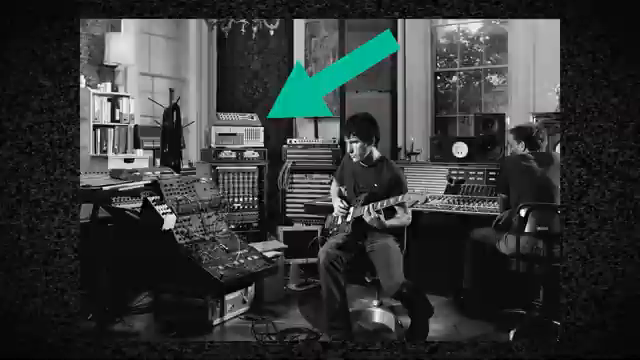
"A lot of the processing and drum sounds were actually done on the Nord Modular, which Trent is really good at programming."
© Screenshot/Quote: Tonepusher (YouTube)
Swerving into the ’90s, Tonepusher introduces us to the Nord Modular, an innovative beast in the digital synth world. When Clavia launched this digital modular synthesizer in ’97, it was like tossing a Molotov cocktail into the synth industry. Gone was the need for bulky knobs, replaced by the ability to edit sounds on your computer, a novelty akin to seeing the future in a crystal ball back then. By 2004, the Nord Modular G2 stormed the scenes with enhanced power and built-in effects, bringing reverb and delay that could blow the doors off any underground club. It’s no wonder this synth found favour with industrial titans like Nine Inch Nails and Front 242. Charlie Clouser of Nine Inch Nails fame extols its virtues for creating unparalleled processing and drum sounds, fitting well within their thunderous arsenal.
Novation Bass Station: The Analog Renegade
Step into the gritty world of the Novation Bass Station, an analog champion first hitting the scene in ’83. Tonepusher elaborates on how this synth carved a niche amidst a digital revolution, its distinct character reminiscent of DIY punk ethos. Known for its TB-303 mimicry, it provided an affordable analog option for countless industrial acts, including KMFDM, which used it both live and in studio recordings. Charlie Clouser’s work with Nine Inch Nails on ‘The Wretched’ showcases its versatility. However, it’s on “White Zombie’s, ‘More Human Than Human’” where the Bass Station truly steals the show, underpinning the track with an iconic filtered bass loop that would fit right at home rattling the windows of a dilapidated club.
Roland Juno-60: Chorus-Drenched Classic
Tonepusher celebrates the Roland Juno-60, a synth that screams 80s nostalgia while remaining a cornerstone of industrial soundscapes. Launched as a budget alternative, this synth became an instant classic, credited for its lush built-in chorus and widespread use in pop music. However, industrial legends like Cabaret Voltaire and Ministry found depth and darkness in its capabilities, infusing their tracks with its rich sonic layers. Its appeal continues to endure as it turns up on seminal records, a testament to its timeless sound. The Juno-60 proves just how wrong assumptions about ‘budget’ gear can be, when in the right hands, it rivals even the ‘prestigious’ instruments.
"The keyboard I've been using recently I bought in '83 when recording the crackdown, the Roland Juno 60."
© Screenshot/Quote: Tonepusher (YouTube)
Roland JD-800: Sliders Galore
"The JD-800 was used by Nine Inch Nails, of course."
© Screenshot/Quote: Tonepusher (YouTube)
Rounding off Tonepusher’s rundown is the Roland JD-800, a direct response to fiddly synths that left musicians pulling their hair out. Bringing sliders back into fashion, this synth offered a tactile interface similar to classic analog machines while boasting a robust digital sound engine. It captivated artists who preferred a hands-on approach, reminiscent of the spontaneous energy of a live gig. Widely appreciated for its sumptuous and aggressive tones, the JD-800 found its way into the hands of Nine Inch Nails and Wumpscut, becoming instrumental in defining the dark, moody textures of the genre. An absolute visual and auditory juggernaut from Roland’s prestigious lineage.
This article is also available in German. Read it here: https://synthmagazin.at/tonepushers-industrielle-synth-arsenal-entfesselt/
Watch on YouTube:
Latest articles
Watch on YouTube:
Visit the channel:
https://www.youtube.com/Tonepusher
https://www.youtube.com/Tonepusher
Links from Tonepusher:
Sponsored links:
If you purchase via these links, we may earn a small commission – at no extra cost to you. The link opens an Amazon keyword search, and results may vary depending on availability.
Moog Source
🔗 Check price on Amazon
🔗 Check price on Amazon
Nord Modular
🔗 Check price on Amazon
🔗 Check price on Amazon
Novation Bass Station
🔗 Check price on Amazon
🔗 Check price on Amazon
Roland JD-800
🔗 Check price on Amazon
🔗 Check price on Amazon
Roland Juno-60
🔗 Check price on Amazon
🔗 Check price on Amazon