Step into the magnetic haze of industrial memory, as Tonepusher unravels the spectral drum textures of Nine Inch Nails’ ‘Pretty Hate Machine.’ This video is a journey through sampled fragments, lo-fi grit, and the haunted machinery that shaped a generation’s pulse. With a poetic eye for detail, Tonepusher reveals how Trent Reznor’s creative alliances and the E-mu Emax’s peculiar circuitry conjured beats that feel both mechanical and deeply human. For those who seek to drift inside the sound, this exploration is a map to the album’s fractured light and rhythmic shadows.
13. December 2025
LUMINA
Tonepusher Illuminates the Sonic Ghosts of ‘Pretty Hate Machine’
Akai S950, Behringer LM Drum, E-mu Emax, Isla Instruments S2400, Rosum SP1200, Sonicware Liven Lo-Fi 12
Fragments from the Machine: Origins of an Iconic Pulse
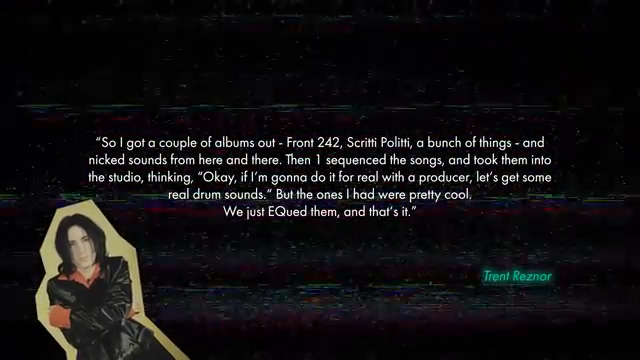
The drum sounds of Nine Inch Nails’ ‘Pretty Hate Machine’ do not emerge from a sterile laboratory of drum machines, but from a swirling nebula of borrowed fragments. Tonepusher guides us through the album’s secret tapestry, where each snare and kick is a ghost lifted from other artists’ records. This is not mere imitation, but a deliberate act of sonic collage—Public Enemy, Jane’s Addiction, Prince, Front 242, and even Skriti Politi all become spectral voices in Reznor’s industrial choir.
Rather than relying on the factory presets of his Emu Emax, Reznor sought out textures that shimmered with imperfection and history. The result is a drum palette that feels lived-in, each hit carrying the fingerprints of its origin. The process is as much about curation as creation, and Tonepusher’s narrative reminds us that these iconic beats are stitched together from the world’s discarded echoes.

"The iconic drums from Nine Inch Nails' 'Pretty Hate Machine' didn't come from drum machines, but from other artists' records."
© Screenshot/Quote: Tonepusher (YouTube)
Alchemy of Collaboration: Producers as Sonic Architects
"I personally think that the producers had a massive impact on the sounds chosen and the final result."
© Screenshot/Quote: Tonepusher (YouTube)
Trent Reznor’s genius is not isolation, but communion. Tonepusher highlights how the album’s industrial texture was forged in the crucible of collaboration, with producers like Adrian Sherwood, Keith LeBlanc, and John Fryer acting as alchemists, transforming raw samples into something elemental. Their fingerprints are audible in the album’s final form—beats and textures borrowed from their earlier projects, now woven into the NIN tapestry.
The process was not without tension. Early demos, more synth-laden and less abrasive, gave way to a final mix that startled even the record label. Yet, in the rush of a 20-day recording sprint, energy and imperfection were preserved, lending the album its human resonance. Tonepusher’s retelling reveals how the interplay of vision and outside influence shaped a sound that feels both engineered and alive.
E-mu Emax: The Heartbeat’s Gritty Prism
At the center of this industrial constellation lies the E-mu Emax, a sampler whose circuitry breathes grit into every beat. Tonepusher illuminates how the Emax’s 12-bit sampling, with its peculiar companding system, imparts a magnetic saturation—a kind of sonic patina that modern digital tools struggle to emulate. The Emax doesn’t just record; it transforms, compressing and expanding sound until it glows with grainy energy.
This is the secret ingredient: samples pitched down, bathed in the Emax’s lo-fi resonance, emerge with a buzz and warmth that define the album’s pulse. While other samplers, like the Akai S950, offer clarity, it’s the Emax’s imperfections that give the drums their haunted character. Tonepusher’s exploration is a reminder that sometimes, the machine’s flaws are its greatest gifts.
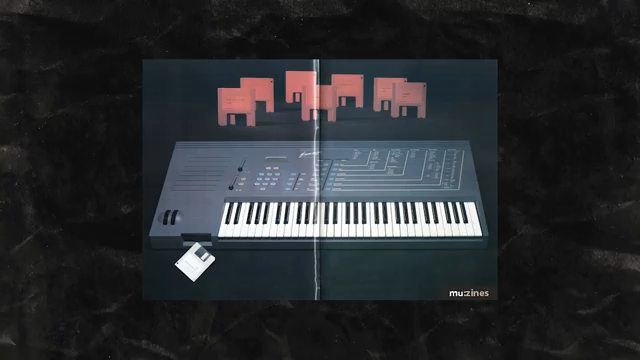
"The original E-Max is famous for its crunchy lo-fi sound."
© Screenshot/Quote: Tonepusher (YouTube)
Echoes in the Present: Recreating the Industrial Spirit

"Honestly, there's nothing wrong using them, but if you want my honest take, nothing really captures the actual character of real hardware."
© Screenshot/Quote: Tonepusher (YouTube)
For today’s sonic storytellers, the quest to recapture ‘Pretty Hate Machine’s’ drum ghosts is both easier and more elusive. Tonepusher surveys the landscape of modern samplers and plugins—Bitcrushers, TAL Sampler, RX1200—each promising a taste of vintage grit. Yet, the true spirit remains just out of reach, as digital emulations often lack the tactile unpredictability of aging hardware.
Still, hope glimmers in unexpected places. Machines like the Rosum SP1200, Sonicware Liven Lo-Fi 12, Isla Instruments S2400, and especially the Behringer LM Drum, offer new portals to the past. By loading custom samples and pitching them down, producers can summon textures that shimmer with industrial nostalgia. But as Tonepusher hints, the real magic is best felt, not described—an invitation to dive into the video and experience the resonance firsthand.
Eclectic Sources: The World as Drum Library
The album’s soundscape is a mosaic of influences, each sample a shard from a different musical mirror. Tonepusher traces the lineage of these drums to genres as disparate as hip-hop, pop, and industrial, revealing how Reznor’s ear was attuned to the world’s hidden rhythms. Public Enemy’s punch, Jane’s Addiction’s swagger, Prince’s funk, and Front 242’s mechanical pulse all find new life within the Emax’s circuitry.
This eclecticism is not chaos, but a deliberate act of storytelling. By curating from such a wide array of sources, Reznor and his collaborators wove a drum sound that feels both familiar and uncanny—a sonic landscape where every hit is a memory, every rhythm a fragment of someone else’s dream.
This article is also available in German. Read it here: https://synthmagazin.at/tonepusher-enthuellt-die-klanggeister-von-pretty-hate-machine/
Watch on YouTube:
Latest articles
Watch on YouTube:
Visit the channel:
https://www.youtube.com/Tonepusher
https://www.youtube.com/Tonepusher
Links from Tonepusher:
Sponsored links:
If you purchase via these links, we may earn a small commission – at no extra cost to you.
Akai S950
🔗 Check price on Amazon
🔗 Check price on Amazon
Behringer LM Drum
🔗 Check price on Amazon
🔗 Check price on Amazon
E-mu Emax
🔗 Check price on Amazon
🔗 Check price on Amazon
Isla Instruments S2400
🔗 Check price on Amazon
🔗 Check price on Amazon
Rosum SP1200
🔗 Check price on Amazon
🔗 Check price on Amazon
Sonicware Liven Lo-Fi 12
🔗 Check price on Amazon
🔗 Check price on Amazon