Musotalk takes us into the mysterious realms of sound design, from the latest Max/DSP building blocks in Ableton to KORG’s virtual synthesizer icons. Let us be seduced by the shimmering promises of modern music production and dive into the wonders of 21st-century sound architecture.
4. November 2025
RAUMKLANG
Technology of the Future with musotalk: A Dive into Shimmering Soundscapes
ASIO, Audiopunks Tape Eater, GForce MAP, KORG Collection 6, Maschine 3.4, Max 9.1, VST 3.8, Whimsical Raps Atrium
Maximally Expanded: A New Chapter in Digital Sound Art
For sound architects and digital alchemists, musotalk brings news from Cycling ’74. The update to Max 9.1 opens up creative spaces to elegantly connect audio systems with new Ableton DSP objects. The integration of building blocks such as Delay, Autofilter, and Compressor within Live becomes reality. As musotalk describes, the playground becomes more opulent and the complexity of the JavaScript engine increases. Alongside tools like the Melt Oscillator, which folds like an origami between waveforms, there is new potential in the form of a Pitch Estimator and expanded Logic Operators.
All this sounds like an invitation to those who are not afraid of structuring digital soundscapes. Despite the innovative potential, the economic aspect does not go unnoticed. Full use of these sonic wonderlands is priced at $400 as a purchase or via a monthly subscription. As musotalk dryly notes, it is ultimately a veiled reminder of the costs of digital freedoms. A complex sound puzzle is waiting to be solved.
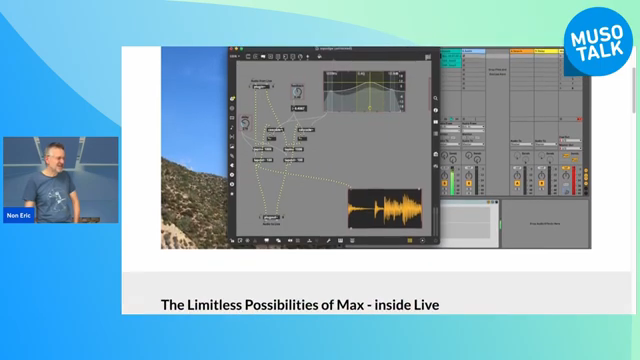
"limitless possibilities for Max Inside Live"
© Screenshot/Quote: Musotalk (YouTube)
Maschine 3.4: A Machine Dialogue of Modulation
"Native Instruments products are all a bit CPU hungry"
("Native Instruments Produkte sind alle ein bisschen CPU hungrig")© Screenshot/Quote: Musotalk (YouTube)
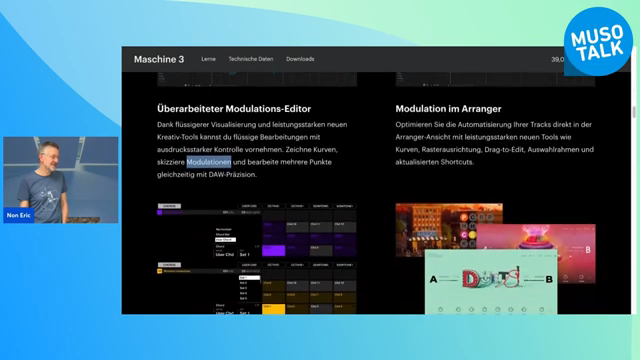
Native Instruments Maschine 3.4 takes the stage with a revamped modulation editor. Musotalk reveals that this innovation allows for deeper synthesis than ever before, comparable to the capabilities offered by advanced DAWs. Particularly exciting is the new ‘Bounce in Place’ feature for effective resource management. This function frees the creative spirit from the shackles of CPU greed that burden many other instruments. Musotalk highlights that this step is particularly helpful in crafting complex soundscapes without technical interruptions.
It’s as if every musical detail is reflected in a prismatic space where each modulation finds its own place. Musotalk feels that the update makes a valuable contribution for anyone looking to make their workflow more efficient. Through the dialogue of the machines – executed under the hands of creative souls – new paths of possibilities and freedoms seem to open. There are no limits anymore, except those imposed by the creators themselves.
GForce MAP: A Westcoast Excursion into New Realms
With GForce MAP, musotalk ventures into the realm of Westcoast synthesis. The software brings the history of modular systems from the ’70s back to the table, inspired by Buchla and Serge. The MAP synthesizer combines this with modern techniques such as MPE and Macro-XY control. Musotalk writes about these features and conveys respect for the pioneers of electronic music. The offerings of the MAP, including three oscillators, dual filters, and a polyphonic arpeggiator, are a testament to this rich source of inspiration.
A modern, probabilistic creative space emerges. Musotalk describes it as an intricate network of possibilities where past and present collide. It is an offer to all those musicians who understand that true craftsmanship and modern innovation are not opposites but conditional. Thus, the MAP becomes a sound instrument that adeptly blends the old philosophy of sound creation with today’s demands, opening new doors in creative potential.
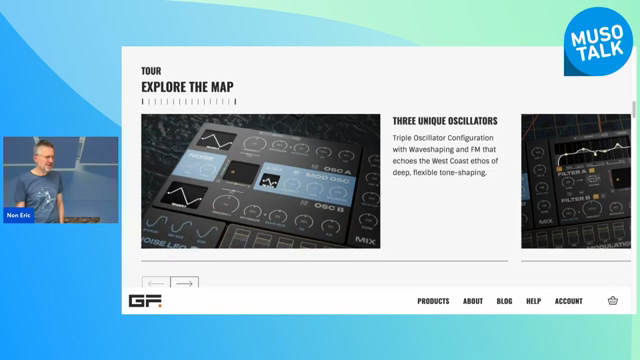
"three oscillators that work in this West Coast Style"
("drei Oszillatoren, die so in diesem West Coast Style auch funktionieren")© Screenshot/Quote: Musotalk (YouTube)
KORG Collection 6: A Journey Through Synth History
The KORG Collection 6 expands the horizon of digital instruments with some significant additions. Musotalk takes us on a journey through decades of groundbreaking technology and sound designs. With classics like the PS-3300 and the Trinity, as well as top models from various decades, KORG currently offers a best-of synth history. Musotalk supports this presentation with a reflective analysis of the historical instruments whose emulation is now available in the KORG Collection.
KORG remains true to its line and elevates the techno-sonic galaxy to new heights with this Collection. Each instrument tells its own story and provides a color palette where past and modern merge into the virtual repertoire. Musotalk notes that KORG remains steadfastly anchored in the past despite modern adaptations. Their emulation not only allows us to nostalgically revel in synth history but also to revive these powerful sounds in our digital world. Those wishing to integrate the spirit of classic analog synths into modern tracks will find an ideal companion in this collection.
Whimsical Raps Atrium: A Synthesizer for the Sensory Journey
In the mysterious corners of the musotalk universe, one discovers the Whimsical Raps Atrium, a polytimbral analog instrument that stands out like a monolith of auditory art. Five voices, synthesis forms inspired by experimental modular projects, and an unparalleled access to polyphony characterize this instrument. Musotalk describes it as a device that allows the sound not just to be heard, but to be felt, as a touch-sensitive surface opens up entirely new interaction possibilities.
The synthesis forms of the Atrium – from sub-octaves to formant modulation – stretch like a complex web of sound threads skillfully woven together. Musotalk predicts that this instrument could revolutionize the emphasis on touch in music production and draws comparisons to already established systems in synthetic music production. It is an unexpected aggregate of sound shaping that impressively demonstrates the inspiring relationship between touch and tone. This invention is not just an instrument but an adventure in acoustic exploration.
Steinberg's Open Doors: VST and ASIO as a Source of New Inspiration
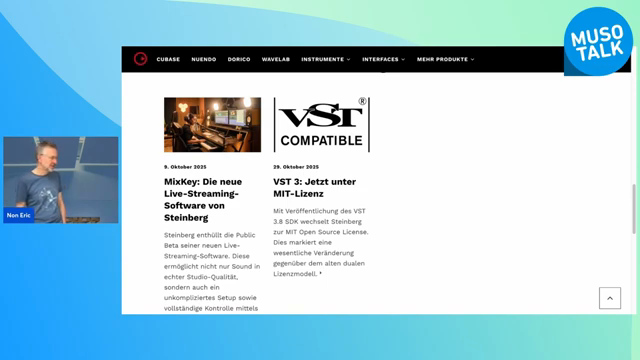
"Under the MIT license, which means developers can now freely use the code"
("Unter der MIT-Lizenz, das bedeutet, Entwickler den Code jetzt frei benutzen können")© Screenshot/Quote: Musotalk (YouTube)
Steinberg takes a remarkably open path with VST 3.8 and ASIO, focusing on the future through open-source solutions. Musotalk reports on these significant developments in the audio software world. With the new openness of the VST specifications, developers now have the opportunity to create new creative tools or improve existing ones based on Steinberg’s standards. The integration with OBS Studio offers an additional level of user-friendliness in the video streaming community.
The open licensing model opens the floodgates of innovation and allows manufacturers and developers to elevate their projects to the next level. The introduction of this more open platform means a renaissance of creativity for all productive minds. Musotalk emphasizes that this step could be a landmark milestone. The music practice core is enriched by this open offering from Steinberg, in an era when freedom and collaboration of technological innovations are more enabled than ever before. Musotalk describes the innovations as door openers for unrestricted creative expression.
Creative Nostalgia: Audiopunks Tape Eater and musotalk's Studio Whisper
Another highlight in musotalk’s portfolio is the Tape Eater by Audiopunks, which revives the analog era in all its raw honesty. This is more than just a plugin – it is like a time machine that merges cassette sounds with current productions. Musotalk impressively describes how it emulates the floating uncertainties of analog medium features like tape saturation and random artifacts. Here, the sound is roughened, and blurs become a creative element.
Musotalk leaves no doubt that the Tape Eater is more than a mere homage to the past. It is an expression of artists who want to defy the boundaries of musical structure. Thus, the plug-in becomes a tool for Lo-Fi lovers who do not confuse the original sound character with perfection but find beauty in the imperfect. This is music technology that prompts reflection and encourages experimentation. A daring venture that shares with the world, through careful attention to detail, how we can redefine our acceptance of technical irregularities.
Translated from German. Read the original here: https://synthmagazin.at/technologie-der-zukunft-mit-musotalk-ein-tauchgang-durch-schillernde-soundlandschaften/
Watch on YouTube:
Latest articles
Watch on YouTube:
Visit the channel:
https://www.youtube.com/musotalk
https://www.youtube.com/musotalk
Sponsored links:
If you purchase via these links, we may earn a small commission – at no extra cost to you. The link opens an Amazon keyword search, and results may vary depending on availability.
ASIO
🔗 Check price on Amazon
🔗 Check price on Amazon
Audiopunks Tape Eater
🔗 Check price on Amazon
🔗 Check price on Amazon
GForce MAP
🔗 Check price on Amazon
🔗 Check price on Amazon
KORG Collection 6
🔗 Check price on Amazon
🔗 Check price on Amazon
Maschine 3.4
🔗 Check price on Amazon
🔗 Check price on Amazon
Max 9.1
🔗 Check price on Amazon
🔗 Check price on Amazon
VST 3.8
🔗 Check price on Amazon
🔗 Check price on Amazon
Whimsical Raps Atrium
🔗 Check price on Amazon
🔗 Check price on Amazon