TAETRO’s at it again, this time putting the Akai MPC Sample through its paces and not pulling any punches. If you’re after a sampler that claims to streamline your creative chaos, this is the video you want. TAETRO’s style is all about fast moves and real talk—he’s got no time for menu-diving or design-school riddles. Expect sharp takes on what slaps, what sucks, and why the MPC Sample might just be the street weapon your portable rig needs (or not). Buckle up, because this isn’t your average gear review—TAETRO’s here to separate the hype from the hardware.
25. March 2026
SPARKY
TAETRO’s MPC Sample: Workflow Weapon or Missed Beat?
Akai MPC Sample, Roland SP404MK2, Teenage Engineering EP-133 KO II
Sample Recall: The Secret Sauce
TAETRO wastes no time getting to the meat: the MPC Sample’s workflow is all about speed and not missing the magic. Sample recall is the headline act here—think of it like the MPC’s answer to Roland’s skip back, always listening and ready to snatch up the last 25 seconds of whatever you just played. No more facepalms when you forget to hit record. It’s not just for audio either; sequence recall grabs your MIDI jams on the fly, Ableton-style, so those accidental bangers don’t slip away.
Non-destructive chopping is another highlight, letting you slice up samples without destroying the original—no more cluttering your kit with a million slices unless you want to. Loading a project as a kit is a workflow hack that lets you reuse your favourite sounds without dragging along all your old sequences. It’s clear TAETRO rates these features for keeping the creative flow unblocked, and honestly, so do I. If you’re the kind of producer who wants to stay in the zone, these are the tricks that matter.
"This is a fantastic feature for a sampler because you can just jam without the pressure of hitting record."
© Screenshot/Quote: Taetro (YouTube)
When the Groove Stumbles: FX and Editing Gripes
"It's a big missed opportunity because we do have the fader right here, which can play different roles."
© Screenshot/Quote: Taetro (YouTube)
Of course, it’s not all rave and roses. TAETRO’s got bones to pick, and he’s not shy about it. The effects workflow is a bit of a toaster-fight: you get pad effects, knob effects, and flex beat, but you can’t trigger samples while flexing those FX. Want to improvise with a beat repeat or bit crusher while jamming? Forget it. The fader’s just sitting there, begging to be used for something more exciting, but Akai’s left it out of the party.
Then there’s the 16 Levels Tune mode—sure, you can play chromatically, but there are no scales, so you’re stuck dodging bum notes. And if you want to edit multiple samples at once (like slapping a low-pass filter across your whole drum bank), you’re out of luck. It’s a one-by-one slog, which feels like Akai missed a trick, especially when Roland’s already patched this into the SP404mk2. Firmware update, anyone?
Intuitive by Design: MPC Sample’s Philosophy
Here’s where the MPC Sample claws back some respect. TAETRO reckons it’s the most intuitive sampler in its class, and after a month of use, he’s not wrong. Nearly every vital function is on a button or shift combo, clearly labelled, and the screen tells you exactly where you are. No cryptic hieroglyphics, no endless menu-diving—just a straightforward, musician-friendly interface. If you’ve ever wanted to throw a sampler at a mate and have them making beats in minutes, this is the one.
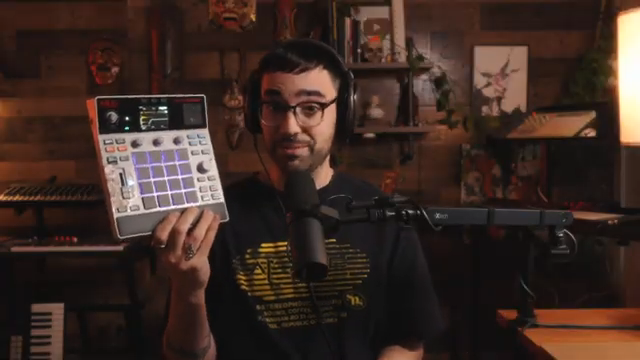
"I think it's the most intuitive sampler in its category."
© Screenshot/Quote: Taetro (YouTube)
SP404mk2, EP-133 & The Design Wars
TAETRO doesn’t just hype the MPC Sample in a vacuum—he lines it up against the competition. Roland’s SP404mk2 gets props for feature updates, but those come at the cost of button combos that would make a Tekken player sweat. Hardware labels don’t always match what the knobs actually do, which is a classic Roland move.
Teenage Engineering’s EP-133 KO II gets a nod for its slim form and upgraded memory, but TAETRO calls out the symbol-heavy, design-first approach that leaves users decoding glyphs instead of making music. The MPC Sample, by contrast, is all about practicality. Akai’s channeling the original MPC60 vibe—built for musicians, not programmers or design snobs. It’s a refreshing change if you’re sick of learning a new visual language every time you buy a box.
Should You Bother?
TAETRO wraps it up by encouraging anyone curious to give the MPC Sample a shot. If you’re after a sampler that’s practical, intuitive, and doesn’t make you feel like you need a degree in cryptography, this one’s worth a look. But hey, if it’s not your flavour, there’s plenty of other fish in the sampler sea. For the full sonic flavour and some hands-on action, you’ll want to check the video—there’s only so much you can get from words on a screen.
This article is also available in German. Read it here: https://synthmagazin.at/taetros-mpc-sample-workflow-waffe-oder-verpasster-beat/
Watch on YouTube:
Latest articles
Watch on YouTube:
Visit the channel:
https://www.youtube.com/Taetro
https://www.youtube.com/Taetro
Links from Taetro:
Instagram: https://instagram.com/taetro
Facebook: https://facebook.com/taetromusic
Bandcamp: https://taetro.bandcamp.com
Sponsored links:
If you purchase via these links, we may earn a small commission – at no extra cost to you. The link opens an Amazon keyword search, and results may vary depending on availability.
Akai MPC Sample
🔗 Check price on Amazon
🔗 Check price on Amazon
Roland SP404MK2
🔗 Check price on Amazon
🔗 Check price on Amazon
Teenage Engineering EP-133 KO II
🔗 Check price on Amazon
🔗 Check price on Amazon