Is a MIDI controller still essential in today’s hybrid studio? Synido Tech dives into this question with a focused look at the TempoPAD P16, highlighting how a compact 4×4 pad controller can streamline everything from beatmaking to orchestral programming. The video walks through four core use cases—drum programming, melodic work, live performance, and advanced control—while also comparing pad and keyboard workflows. For anyone navigating DAWs like Ableton Live or FL Studio, this is a practical, architecture-minded guide to getting the most out of a modern MIDI controller, especially if you’re considering the leap from keys to pads.
31. March 2026
LYRA
Synido Tech’s TempoPAD P16: Four Ways a Pad Controller Shapes Modern Music Workflows
Meet the Synido TempoPAD P16: A Compact Workflow Catalyst
The video opens with Synido Tech positioning the TempoPAD P16 as a versatile pad controller designed to enhance a wide range of music production and performance tasks. Right from the start, the focus is on demystifying whether a MIDI controller—specifically a pad-based one—still holds value in the modern studio or live rig. The presenter makes it clear that the P16 isn’t just for beatmakers, but also for anyone looking to streamline their creative process, whether they’re new to controllers or seeking to unlock more potential from gear they already own.
Synido’s approach is pragmatic: the P16 is introduced as a 4×4 grid with 16 pads, compact enough for mobile setups yet deep enough for serious production. The brand’s characteristic emphasis on affordability and expandability is evident, with the P16 positioned as a tool that bridges the gap between casual experimentation and more structured workflows. The video sets the stage for a practical exploration of how this controller integrates into DAW environments and diverse musical styles.
Four Use Cases: From Drum Kits to Keys and Beyond
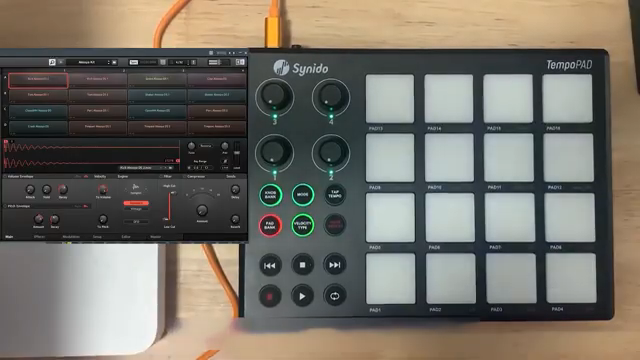
The heart of the video is a breakdown of four primary use cases for MIDI controllers, each mapped to a distinct creative workflow. First, programming electronic drum kits is highlighted as the quintessential pad controller task—here, the one-shot-per-pad logic and visual mapping make the process both intuitive and efficient. The presenter contrasts this with acoustic drum sampling, where MIDI keyboards often provide more nuanced control over articulations and velocity layers, underscoring the architectural differences between controller types.
Next, the video explores using pad controllers for melodies and harmonies. While the 4×4 grid can handle basic melodic programming, the presenter notes that traditional MIDI keyboards remain better suited for music grounded in conventional theory and notation. Still, the evolving landscape of electronic music and the rise of non-traditional workflows mean that pad controllers are finding new roles, especially as music creation habits shift and theory adapts to technology.

"MIDI controllers serve four main purposes: programming electronic drum kits, programming melodies and harmonies, performing music, triggering audio, key switch and CC control."
© Screenshot/Quote: Synidotech (YouTube)
RGB Pads and Pad Banks: Mapping, Customization, and DAW Integration
"This makes programming electronic drums super intuitive and efficient."
© Screenshot/Quote: Synidotech (YouTube)
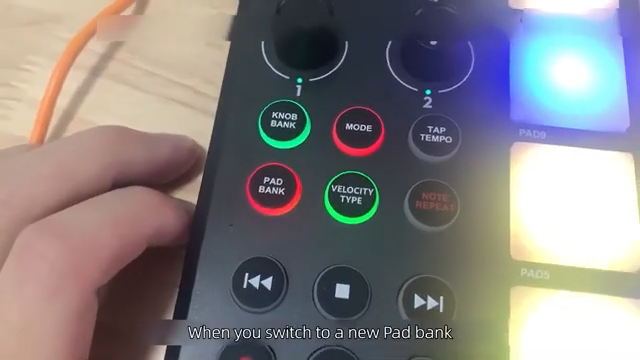
A standout feature of the TempoPAD P16 is its customizable RGB pads, which the video demonstrates as a key asset for organizing and visualizing sound assignments. The official control panel software allows users to set pad colors, making it easier to navigate complex kits or performance setups. This visual feedback is especially valuable when working with drum samplers or triggering multiple audio clips in a DAW.
The concept of pad banks is also explored in depth. With multiple banks, users can dramatically expand the number of sounds or clips accessible from a single controller, overcoming the physical limitation of 16 pads. The video shows how switching banks effectively gives you a blank slate for new assignments, which is particularly useful for live performance scenarios or intricate studio sessions. Integration with DAWs like Ableton Live and FL Studio is presented as straightforward, with mapping processes that support both MIDI note data and audio clip triggering.
Pad Controllers in Action: Versatility Across Genres and Workflows
The final section of the video emphasizes the adaptability of pad controllers like the TempoPAD P16 across a spectrum of musical genres and production needs. Whether programming electronic beats, performing live covers, or managing orchestral articulations via keyswitches and CC controls, the P16 is shown to fit seamlessly into both electronic and more traditional music environments. The presenter notes that while higher-end MIDI keyboards may offer similar features, the pad-centric workflow remains uniquely efficient for certain tasks.
Ultimately, Synido Tech positions the P16 as a compelling, affordable solution for anyone seeking a streamlined, visually organized approach to modern music-making. The video closes with a reminder that the real strength of pad controllers lies in their ability to adapt to evolving creative habits, making them a valuable addition to any hybrid studio or DAWless rig.
"This type of use has a pretty steep learning curve."
© Screenshot/Quote: Synidotech (YouTube)
This article is also available in German. Read it here: https://synthmagazin.at/synido-techs-tempopad-p16-vier-wege-wie-ein-pad-controller-moderne-musik-workflows-praegt/
Watch on YouTube:
Latest articles
Watch on YouTube:
Visit the channel:
https://www.youtube.com/synidotech
https://www.youtube.com/synidotech
Links from synidotech:
website: https://www.synido.com
instagram: https://www.instagram.com/synidotech
facebook: https://www.facebook.com/109726971738618
linktree: https://linktr.ee/synidotech
Sponsored links:
If you purchase via these links, we may earn a small commission – at no extra cost to you. The link opens an Amazon keyword search, and results may vary depending on availability.
Synido TempoPAD P16
🔗 Check price on Amazon
🔗 Check price on Amazon