In the world of Eurorack chaos, StarskyCarr uncovers the magic of the QU-Bit Bloom V2 sequencer. With its three channels of generative madness, this video dives into the intricate dance of modulation, pattern creation, and spontaneous sequences that grow like a wild garden. If you’re looking for a piece of kit that promises mind-bending variations, Starsky’s exploration of Bloom V2 is one not to miss.

18. October 2025
JET
StarskyCarr Takes on the QU-Bit Bloom V2: A Sequencer That Blossoms
The Bloom Begins: Overview of QU-Bit Bloom V2
StarskyCarr kicks off with the QU-Bit Bloom V2, a sequencer that takes Eurorack madness to a new level. With its vibrant tri-coloured channels—blue, green, and red—each one offers a unique output of note, gate, and modulation. The sequencer allows up to 64 steps per pattern. It’s like stepping into a musical funhouse with endless possibilities stretching across its eight pages of joy. But that’s not all. Each step holds a treasure trove of information: from notes and gate lengths to ratchets and modulation. If you ever find yourself lost in the maze of settings, a quick press of the re-seed button will reset things and keep you exploring. Starsky introduces this behemoth with enthusiasm, setting the stage for an intricate dive into Bloom’s capabilities.
Deep Dive into Sequencing
Getting into the nuts and bolts, Starsky delves into the sequencing wizardry of the Bloom V2. The structure of the sequencer is fleshed out as he unravels the operations of its lengths, scales, and orders. From changing the notes’ order—forward, backward, and beyond—to adjusting ratios and resizing, the sequencer offers a vast palette to paint your sonic landscapes. The fun doesn’t just stop at static steps. With MIDI out, the Bloom V2 can translate its magic into your DAW, ensuring that each note, gate, and modulation finds its rightful place in the mix. Starsky’s passion is evident here, as he toggles through options with the flair of a seasoned maestro, showcasing how extensive and precise the sequencer can be.
Branching Out: Patterns and Mutations
Like a musical tide pool brimming with life, the Bloom V2 offers branching patterns and mutations that add layers of complexity. Each branch adds a variation, diversifying sequences with modes like normal, reverse, octave up, and others. The path function shifts these sequences through different routes, creating up to 512-step wonders when intertwining with branches. The mutate knob adds another layer of chaos, guaranteeing some destructive magic as it modifies notes with a twist. Starsky thoughtfully delves into these features, painting a picture of a sequencer that’s as much a tool for exploration as it is for composition. It’s sequencing at its most playful, with mutation and path features keeping creations lively and unpredictable.
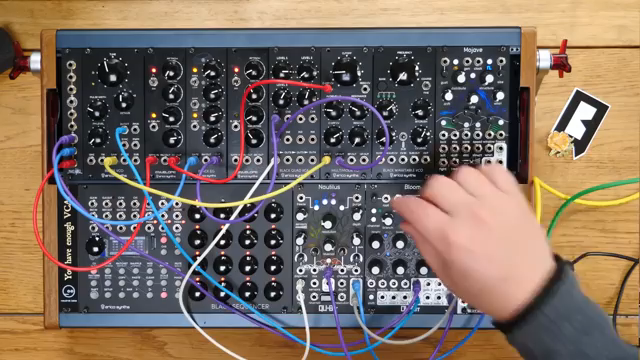
"So now you sort of know your way around it, you know how to program each of the different steps, you know how to set the length, the scale, etc."
© Screenshot/Quote: Starskycarr (YouTube)
Knobs and Controls: Unlocking Bloom V2’s Soul
In this extensive section, Starsky goes knob-deep, unlocking the inner workings of Bloom V2’s controls. The three main knobs—branch, path, and mutate—are centre-stage, each providing a gateway to rhythmic enchantment. While the branch knob creates cloned variations, the path knob allows sequences to take unexpected detours. Meanwhile, the mutate knob spices up the sequences with probabilities, changing notes and introducing gate conditions. Starsky’s manipulation of the controls reveals a sequencer that can transform tracks dynamically, offering a fresh take on live performance. Much like a conductor with an orchestra of LEDs, he demonstrates how a twist here and a turn there can create completely new musical adventures.
Getting Modulated: Envelopes and Smoothing
"I've been getting myself lost in a, lost in beautifulness, anyway, I hope that was of some use to somebody somewhere."
© Screenshot/Quote: Starskycarr (YouTube)
Digging into Bloom V2’s modulation options, Starsky explores the variability of envelope shapes and smoothing parameters. With a twist, different envelopes are applied to each step, creating dynamic modulations. Smoothing operates to overlay these transitions with the ease of a gentle tide. Starsky shows how one can sculpt each modulation with precision, highlighting this feature as an added dimension to Bloom V2’s palette. He walks viewers through the options, ensuring even the complex layers are accessible. This section transforms the sequencer from a standard device into an expressive instrument, ready to add nuance and texture to any composition.
Wrapping Up: Configurations and USB Coups
Starsky wraps up his video with a dive into configuration files and USB functionalities, adding another layer of finesse to the Bloom V2. The Narwhal software gives the user an easy way to configure MIDI sequences and clock outputs. After crafting a sequencer masterpiece, one can save everything to USB for future gigs or studios sessions. The video closes with a nod to how the Bloom V2 stands head and shoulders above its predecessor. Starsky’s well-crafted exploration leaves you excited for the possibilities this gear holds in the modular synthesis landscape, showcasing a love for detail and discovery as he explores every avenue the Bloom V2 offers.
This article is also available in German. Read it here: https://synthmagazin.at/starskycarr-nimmt-sich-der-qu-bit-bloom-v2-an-ein-sequencer-der-erblueht/
Latest articles
Watch on YouTube:
Visit the channel:
https://www.youtube.com/StarskyCarr
https://www.youtube.com/StarskyCarr
Links from StarskyCarr:
Patreon: https://patreon.com/starskycarr
Instagram: https://instagram.com/starskycarr
Facebook: https://facebook.com/StarskyCarrOfficial