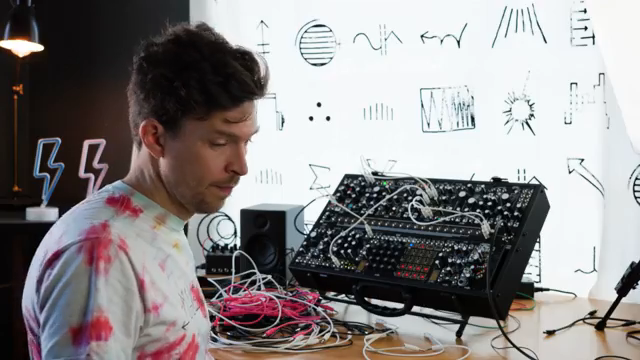
Make Noise, the Asheville-based champions of experimental Eurorack, return with a deep-dive into the world of Spectral Microsonics. In this video, the team explores complex sound design and microsound techniques using a patch built around the Morphagene, DXG, and a supporting cast of Make Noise modules. Expect a hands-on demonstration of pulsar, lysone, and framelit synthesis, plus a healthy dose of creative modulation and transient shaping. As always with Make Noise, the focus is on open-ended exploration and patching strategies that invite you to get lost in the details—and maybe discover a few feedback sanctuaries along the way.
4. July 2024
MILES
Spectral Microsonics: Make Noise Dives into Modular Microsound
Microsound in the Modular Realm
The video opens with a nod to the noisy ambience of the day, setting the stage for a session focused on complex sound design. Make Noise references their earlier “Microsound Workshop” video, bringing back techniques inspired by Curtis Rhodes’ seminal book “Microsound.” This establishes the Spectral Microsonics patch as a continuation of that lineage, aiming to explore the granular and textural possibilities within a modular system.
Rather than starting from scratch, the patch uses the previously created Morphagene reel as its foundation. This reel, available for download, acts as a sonic canvas for further experimentation. The approach is pragmatic: build on proven microsound techniques, but push them into new territory using the latest Make Noise modules and creative routing.

"If you've been watching the channel for a while, you might remember a video called "Microsound Workshop" from 2019."
© Screenshot/Quote: Maken0Isemusic (YouTube)
Pulsar, Lysone, and Framelit: Synthesis in Action
The video demonstrates three core microsound synthesis methods: pulsar, lysone, and framelit synthesis. Each is briefly showcased using the output of the Morphagene and routed through the DXG, providing a taste of their unique sonic signatures. The pulsar approach yields bursts of granular activity, while lysone and framelit offer contrasting textures and rhythmic structures.
By monitoring the DXG outputs and patching the Morphagene’s outputs to channel 2, the patcher sets up a flexible playground for spectral manipulation. The workflow highlights how these synthesis methods can be layered and combined, with the Morphagene reel serving as a rich source of microsonic material ready for further transformation.
Modulation and Transient Shaping: The Art of Control
"If we patch it to channel 4's signal input, we can add it to that offset to allow it to poke itself through more as the output gets louder."
© Screenshot/Quote: Maken0Isemusic (YouTube)
A key focus of the patch is on dynamic control and transient shaping. The video walks through patching the Maths’ thumb output to the DXG’s control input, allowing for manual or CV-based adjustment of the sound’s presence. This hands-on approach is classic Make Noise: encourage users to sculpt their sound in real time, not just set-and-forget.
Further nuance is introduced by using the Morphagene’s envelope follower output, patched to Maths channel 4. This enables the system to respond to the amplitude of the incoming audio, emphasizing transients and high points. By tweaking the Maths’ fall time and offset, the patcher demonstrates how to fine-tune the envelope response, giving precise control over how much of the microsonic content pokes through the mix.
Creative Routing: Building a Sonic Ecosystem
The patch expands as outputs from the DXG are routed through Brusa and then back into the system, using Brusa as a send effect with full wet blend. This introduces another layer of processing, with input level controlling the send amount—an approach that mirrors classic studio techniques but with modular flexibility.
Simultaneously, another DXG output is sent to both inputs of the Spectrophone, running in Spectral Amplitude Modulation mode. By taking the odd outputs from Spectrophone back into DXG channel 1, the patch achieves spectral resynthesis of the micro sounds. This interconnected routing exemplifies the Make Noise ethos: treat the modular as a living ecosystem, where each module feeds and transforms the others in a continuous loop of sonic evolution.

"This gives us spectral resynthesis of the micro sounds."
© Screenshot/Quote: Maken0Isemusic (YouTube)
Modulation Mayhem: Patching for Movement
With the foundation laid, the video shifts to modulation strategies. Outputs from Channel Saver are multed to destinations like very speed, Side A Vulper Octave, and Brusa’s attenuated time input. This multiplies the modulation sources, ensuring that multiple parameters move in tandem or opposition, creating a constantly shifting sonic landscape.
Manual modulation via offset knobs is encouraged, but the patcher also demonstrates the power of feedback and envelope-following CVs. By routing Morphagene slide feedback and modulating slide with Side A’s envelope follower, the patch resists stasis—genes never linger in one place for long. The result is a patch that feels alive, with feedback loops and near-loops emerging organically from the interplay of modulation and audio signals.
Community and Continued Exploration
As the video wraps up, Make Noise invites viewers to share their own approaches to microsonic synthesis. The call to revisit the microsound workshop at the synthesis level signals an ongoing dialogue with the modular community. This open-ended attitude is classic Make Noise: the patch is never truly finished, and every viewer is encouraged to take the ideas further in their own systems.
This article is also available in German. Read it here: https://synthmagazin.at/spectral-microsonics-make-noise-taucht-in-modulare-mikrosounds-ein/
Watch on YouTube:
Latest articles
Watch on YouTube:
Visit the channel:
https://www.youtube.com/MAKEN0ISEMUSIC
https://www.youtube.com/MAKEN0ISEMUSIC
Links from MAKEN0ISEMUSIC:
website: https://www.makenoisemusic.com
instagram: https://www.instagram.com/makenoisemusic
twitter: https://twitter.com/makenoisemusic
facebook: https://www.facebook.com/makenoiseco
Sponsored links:
If you purchase via these links, we may earn a small commission – at no extra cost to you. The link opens an Amazon keyword search, and results may vary depending on availability.
Brusa
🔗 Check price on Amazon
🔗 Check price on Amazon
Channel Saver
🔗 Check price on Amazon
🔗 Check price on Amazon
Maths
🔗 Check price on Amazon
🔗 Check price on Amazon
Morphagene
🔗 Check price on Amazon
🔗 Check price on Amazon
Spectrophone
🔗 Check price on Amazon
🔗 Check price on Amazon