Signal Sounds brought in Arturia’s Tom Lewis for a hands-on PolyBrute 12 sound design session, and let’s just say: this wasn’t your average synth demo snoozefest. Tom dives straight into the guts of subtractive synthesis, pulling pads, basses and leads out of the PolyBrute like a sonic street magician. Expect practical tips, cheeky Glaswegian banter, and some serious knob-twiddling – all in front of a room full of synth nerds. If you want to see a flagship polysynth get pushed to its limits (and maybe learn why wave folding isn’t just for West Coast weirdos), this is your jam. Don’t let the drop in audio quality halfway through scare you off – the content slaps.
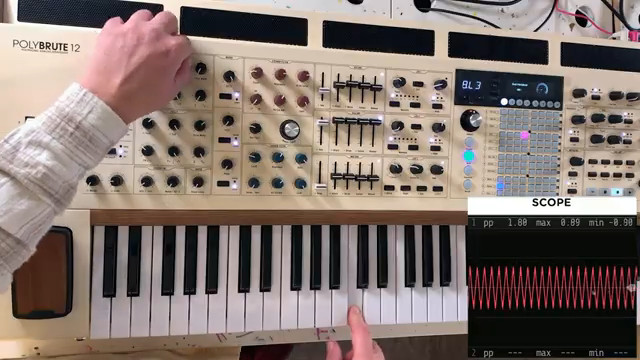
11. December 2025
SPARKY
Signal Sounds: PolyBrute 12 Sound Design Masterclass – When French Synths Go Full Rave Bunker
Tom Lewis Unleashed: PolyBrute 12 Hits the Floor
Signal Sounds, Glasgow’s synth bunker, hosted Arturia’s Tom Lewis for a no-fluff sound design workshop, and the man wasted zero time. Tom’s not just a sales guy – he’s a proper synth nerd who can talk oscillators and envelopes in his sleep. The PolyBrute 12 sat centre stage, ready to be poked, prodded and generally abused for the greater good of sound design education.
From the get-go, Tom set the tone: this wasn’t about reading the manual or getting lost in menu hell. Instead, it was a practical, hands-on crash course in wrangling the PolyBrute 12, with plenty of nods to how these techniques apply to any decent polysynth. Signal Sounds’ crew kept the vibe loose, and Tom’s approach was all about demystifying the process – less theory, more action.
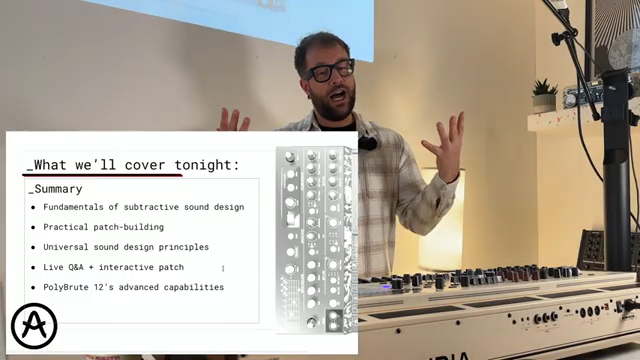
"This synth is really, really good. Not only is it really good to teach on because everything's exploded out on the front panel, but it also does a lot of things that no other synths really can do."
© Screenshot/Quote: Signal Sounds (YouTube)
Subtractive Synthesis: The Real Building Blocks
"The idea of a subtractive synthesizer is you start with something complex and you dial it down. That is the fundamental difference between the two schools of thought."
© Screenshot/Quote: Signal Sounds (YouTube)
Tom broke down subtractive synthesis like he was explaining how to win a pub fight: keep it simple, know your weapons, and don’t get distracted by shiny nonsense. Oscillators are your clay, mixers are your battleground, and filters are your carving knives. He showed how even the most basic waveforms – saw, square, triangle – can be twisted into cinematic monsters or stripped down for classic stabs.
The PolyBrute’s dual filter setup (Steiner and Ladder) got a proper workout, with Tom showing how resonance and filter types shape the sound’s attitude. Modulation wasn’t left behind either: envelopes and LFOs were put to work animating patches, proving that movement is everything if you want your sounds to breathe. Tom’s advice? Start from an initialized patch, go slow, and don’t be afraid to ruin a sound – it’s all part of the game.
If you’re after a full parameter-by-parameter breakdown, you’ll need to watch the video. Tom’s live patching and scope demos are best experienced with your own ears and eyes, not just in text.
Pads, Basses & Leads: Hands-On Sonic Sculpting
This is where the PolyBrute 12 started flexing. Tom walked the crowd through building pads that ooze, basses that punch, and leads that cut through the mix like a rusty hacksaw. The key? Intentional patching – knowing what you want, then dialing it in with a few smart moves instead of endless knob fiddling.
He hammered home the importance of slow attacks for pads, snappy envelopes for bass, and subtle modulation for evolving leads. Detuning, noise, and a touch of chorus were all on the menu. The PolyBrute’s unison mode and sub-oscillator made the basses hit like a drunken horse, while the metallizer and LFOs brought leads to life. If you want the gritty details, you’ll have to watch Tom’s fingers fly – the real magic is in the performance.
PolyBrute’s Secret Weapons: Wave Folding & Poly Aftertouch
Tom didn’t just stick to the basics – he spotlighted what makes the PolyBrute 12 a proper street weapon. Wave folding (aka the metallizer) lets you pile on harmonic filth without changing pitch, turning vanilla triangles into metallic chaos. Oscillator sync and the modulation matrix open up even more mayhem, letting you route anything to anything with a few button presses.
But the real showstopper? Polyphonic aftertouch. Unlike most synths, the PolyBrute 12 lets you press harder on individual keys for per-note modulation – think expressive, MPE-style madness without the faff. And then there’s the morph control: two patches, one knob, and a world of in-between. Tom’s demo of morphing between pads and leads was pure synth flexing. Honestly, you need to see it to believe it – the PolyBrute’s performance tricks are wasted in print.
Patch Roulette: Q&A and Crowd-Sourced Chaos
To wrap things up, Tom threw the floor open for questions and interactive patching. Attendees shouted out sound requests – from Gabba kicks to weird modular textures – and Tom showed how the PolyBrute 12 can get there with a few clever moves. The message was clear: don’t be precious, experiment, and use the synth’s deep modulation options to carve out your own signature sounds.
Signal Sounds’ event wasn’t just a sales pitch – it was a call to arms for synth heads to get their hands dirty. Whether you’re a patching veteran or a newcomer with more enthusiasm than sense, Tom’s workshop proved that the PolyBrute 12 is as much a playground as it is a powerhouse. If you want to see the real chaos, though, you’ll have to catch the full session on YouTube.
This article is also available in German. Read it here: https://synthmagazin.at/signal-sounds-polybrute-12-sound-design-masterclass-wenn-franzoesische-synths-zum-rave-bunker-mutieren/
Watch on YouTube:
Latest articles
Watch on YouTube:
Visit the channel:
https://www.youtube.com/signal-sounds
https://www.youtube.com/signal-sounds
Links from signal-sounds:
website: https://www.signalsounds.com
instagram: https://www.instagram.com/signal_sounds
facebook: https://www.facebook.com/signalsoundsuk
Sponsored links:
If you purchase via these links, we may earn a small commission – at no extra cost to you. The link opens an Amazon keyword search, and results may vary depending on availability.
Arturia Polybrute 12
🔗 Check price on Amazon
🔗 Check price on Amazon