Hold onto your subwoofers, folks! SamGutman is bringing the heat with Omnisphere 3’s new MPE capability, pairing it with the Seaboard. Dive into this gear breakdown where Sam blends groove with tech, showing how MPE can turn your sound into liquid gold. If you love bang-for-buck fun, this demo will blow your headphones off.

Turning on MPE – It's Just That Easy!
SamGutman kicks off the video with some big news: Omnisphere 3 is finally MPE compatible! For those of you living under a rock, MPE means MIDI Polyphonic Expression. It’s like giving every note its own magic wand. All you gotta do is pick your patch, hit System, toggle MPE, and you’re set for some polyphonic wizardry. Sam couldn’t be happier—he’s got that “just warm enough butter” feeling when things spread perfectly. It’s all so easy it feels like cheating, and that’s the kind of hack we can all get behind. Finally, Omnisphere can vibe with your Seaboard in a way that makes you wanna turn up the beat and slide into a new era of sound.
MPE-Y – The Slide of Your Life
With the MPE magic turned on, Sam dives deeper to show how this Seaboard magic works with Omnisphere. Mapping MPE-Y, or the slide gesture, is child’s play. You just navigate your way to the modulation parameters you want, like frequency or depth. A right-click here, a modulation command there, and boom—your Seaboard’s slide is controlling the ring mod’s frequency and depth. It’s like watching a well-oiled jazz ensemble shift seamlessly. “Omnisphere finally having MPE is like having a subwoofer that doesn’t quit on you halfway through the party,” Sam says. Everything feels groovy and under control as Sam maps out the movements, showing how fluid and responsive the Seaboard can be with Omnisphere’s parameters.
Pressurized Perfection – Mapping MPE-Z
Next, Sam zooms in on another dimension of control, the MPE-Z axis, where he shows how pressing keys harder can modulate your sound. It’s like kneading dough to the perfect pliability. Sam uses the modulation matrix, opening it like a treasure map to discover the LFO (Low-Frequency Oscillator) settings. He maps the MPE-Z, or press gesture, to modify both vibrato depth and rate. Suddenly, the expressivity of your finger pressure becomes as valuable as any traditional knob twiddling. Sam compares the shift from regular MIDI to MPE like an upgrade from your old Honda to the latest luxury car. But let’s be real—it’s more fun than any vehicular reference. With each press demonstration, the potential for expressive sounds deepens. No science degree needed, just the right press of a finger.
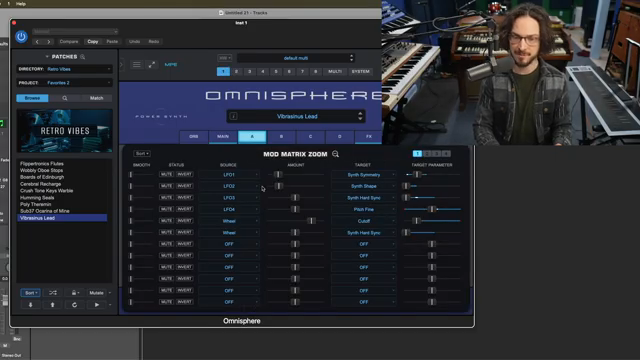
"Regular MIDI is like a 2003 Honda Civic and MPE is like a 2026."
© Screenshot/Quote: Samgutman (YouTube)
Critiques and Wishful Tweaks
"I wouldn't expect it to have as fully functional MPE implementation as a program built for an MPE instrument."
© Screenshot/Quote: Samgutman (YouTube)
The video rides high on waves of excitement, but Sam isn’t shy to drop some constructive criticism. While Omnisphere’s MPE implementation is solid, not everything is rainbows and smooth jazz. Some minor functionalities, like the lift parameter, are MIA in Omnisphere’s MPE world. The release velocity feature absence is a bit of a bummer, kind of like when the ice cream truck drives by without stopping. Plus, Sam wishes it were easier to dial in specific MIDI CC numbers without jumping through hoops. The arpeggiator not working with MPE is like having a burger without the fries—just not as satisfying. But hey, that’s what version 4 is for! Sam’s insights are on point, as always, blending musical know-how with a keen eye for what can be improved.
Final Grooves and Future Hopes
As the video wraps, Sam reflects on what Omnisphere 3 has achieved and what’s still to come. While some MPE functions are missing, he’s jazzed about the doors this compatibility opens for musicians. The power to integrate press and slide just adds more paint to the creative canvas. And although he’d love to see the arpeggiator’s MPE compatibilities shine more brightly, it gives us a damn good reason to look forward to future updates. Sam ends with a shout-out for viewers to make some new noise and to stay tuned for what’s next in this ever-evolving world of synth tech. It’s a classic SamGutman sign-off: thoughtful, optimistic, and full of encouragement to explore the soundscape.
This article is also available in German. Read it here: https://synthmagazin.at/samgutman-begeistert-mit-omnisphere-3-und-mpe/
Watch on YouTube:
Latest articles
Watch on YouTube:
Visit the channel:
https://www.youtube.com/SamGutman
https://www.youtube.com/SamGutman
Links from SamGutman:
Website: https://samgutman.com
Instagram: https://instagram.com/samgutmankeys
Patreon: https://patreon.com/samgutman
Sponsored links:
If you purchase via these links, we may earn a small commission – at no extra cost to you. The link opens an Amazon keyword search, and results may vary depending on availability.
Omnisphere 3
🔗 Check price on Amazon
🔗 Check price on Amazon
Seaboard
🔗 Check price on Amazon
🔗 Check price on Amazon