Ever spent hours stacking loops and still ended up with a track that feels like reheated pizza? Pick Yourself is here to flip your workflow upside down with a sequencer automation trick that’ll have you finishing bangers faster than you can say “Ableton freeze.” In this video, Philipp ditches the old-school clip-dragging grind and shows how automating sequencer parameters can turn a basic loop into a living, breathing arrangement. If you’re tired of endless tweaking and want to actually finish tracks—without losing your groove—this one’s for you. Grab your headphones and get ready for some streetwise arrangement magic.
26. November 2025
RILEY
Pick Yourself’s Sequencer Hack: Finish Tracks Before Your Coffee Gets Cold
Stop Rearranging—Start Automating
Let’s be real: most of us spend more time moving clips around than actually making music. Pick Yourself calls out this classic trap right from the jump, admitting that the old way of copying, stacking, and praying for inspiration just eats up your weekends. Instead of letting your DAW look like a game of Tetris, there’s a smarter way to get your tracks moving—literally and figuratively.
The big revelation? Automate your sequencer parameters. Philipp stumbled onto this hack after months of creative gridlock, and suddenly tracks started finishing themselves. Forget about endless clip duplication; let the sequencer do the heavy lifting and watch your ideas evolve almost on autopilot. It’s like having a ghost producer in your machine, minus the shady contracts.
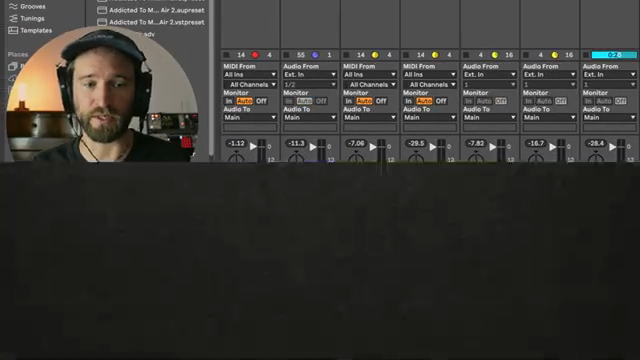
"Arrangement isn't about moving clips, it's about moving the listener."
© Screenshot/Quote: Pickyourselfofficial (YouTube)
Twist Those Knobs: What to Automate for Maximum Groove
"All of these kinds of parameters are automatable and you can automate the gate length, the step length, all of that stuff can be automated."
© Screenshot/Quote: Pickyourselfofficial (YouTube)
Now, here’s where things get spicy. Instead of scribbling in endless MIDI notes, Pick Yourself shows how automating stuff like gate length and step count can totally flip your arrangement game. Using the MDDSnake sequencer, he starts with just a handful of notes—think of it as your beat’s street food cart before it becomes a full-on block party.
By tweaking parameters like gate length and note sequence length, you can morph a simple four-note groove into a polymetric monster, or stretch it out for that late-night warehouse vibe. The best part? All these moves are automatable, so your track can build, drop, and mutate without you ever touching the mouse again. That’s workflow efficiency you can taste.
Building Sequences That Actually Hook People
A loop is cool for about 30 seconds—after that, you need something to keep the heads nodding. Pick Yourself’s trick is to use automation to evolve the sequence, not just the sounds. He’s all about starting simple and letting the sequence grow, adding steps and gates, and even throwing in some rests for that all-important tension and release.
But it doesn’t stop there. By mapping custom layers to things like FM tuning or velocity, you can inject randomization and expression right into the DNA of your groove. Suddenly, your sequence isn’t just repeating—it’s telling a story. That’s the difference between background noise and a track that makes people ask, “Yo, what is that?”
From Loop to Full Arrangement: The Live Demo
Here’s where the rubber meets the road. Philipp walks through how to take that barebones loop and flesh it out into a full arrangement, all in real time. He starts by automating the basics, then layers in expression parameters—think velocity mapped to FM amount for extra movement. The result? A groove that keeps shifting under your feet, never settling into predictable territory.
He even drops a killer tip: automate the snake shape itself to remix your sequence on the fly. It’s like flipping the script mid-track without breaking a sweat. By combining step length tweaks and shape changes, you get endless variations without ever losing the core vibe.
And for all you arrangement-phobes, he lays out a skeleton workflow: automate the main sequence, then build around it with drums, hats, and atmospheres. The magic is in the automation, not in endless mouse clicks. Trust me, you gotta see the video to catch all the subtle moves—words can’t do justice to the way these sequences morph in real time.
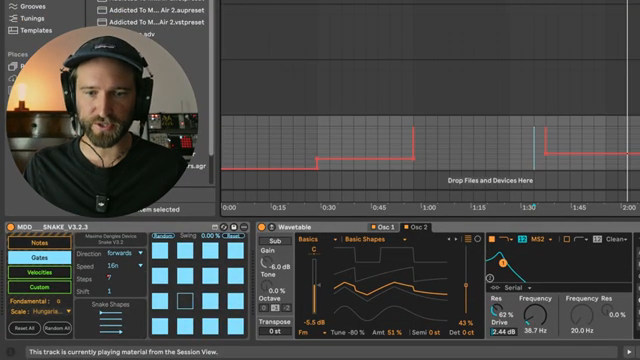
"You use this as what I call a arrangement skeleton. This automation main is your skeleton and then you add some flesh to that skeleton."
© Screenshot/Quote: Pickyourselfofficial (YouTube)
Finish More Music, Stress Less
Let’s face it, finishing tracks is the hardest part of the game. Pick Yourself drops some wisdom on using automation as your arrangement backbone—lay down the skeleton, then add the meat. This approach means you’re not just noodling forever; you’re actually building tracks that go somewhere.
He even plugs his free Finisher Framework, promising you’ll crank out at least one solid track a month if you follow his steps. Whether you’re a serial starter or just stuck in loop land, this workflow is all about getting more music out the door and less stress in your studio. That’s the kind of streetwise advice every beatmaker needs.
This article is also available in German. Read it here: https://synthmagazin.at/pick-yourselfs-sequencer-hack-tracks-fertigstellen-bevor-der-kaffee-kalt-wird/
Watch on YouTube:
Latest articles
Watch on YouTube:
Visit the channel:
https://www.youtube.com/pickyourselfofficial
https://www.youtube.com/pickyourselfofficial
Links from pickyourselfofficial:
Work with me: https://pickyourself.com/coaching/
FREE Guide: https://pickyourself.com/framework/
Sponsored links:
If you purchase via these links, we may earn a small commission – at no extra cost to you. The link opens an Amazon keyword search, and results may vary depending on availability.
Ableton Live
🔗 Check price on Amazon
🔗 Check price on Amazon
MDDSnake
🔗 Check price on Amazon
🔗 Check price on Amazon