OXI Instruments returns with a deep dive into the Accumulator function of their OXI One MKII sequencer—a feature designed for those who crave evolving sequences and hands-on control. In this official walkthrough, the Spanish innovators demonstrate how accumulators can transform both mono and polyphonic patterns, offering a playground for pitch offsets, logic conditions, and musical randomness. As always with OXI, the focus is on immediate, performable results rather than menu-diving. If you’re curious about how a sequencer can become a true compositional partner, this episode is well worth a patch cable’s attention.
29. January 2026
MILES
OXI Instruments OXI One MKII: Accumulators Unleashed
Accumulators: The Heartbeat of Evolving Sequences
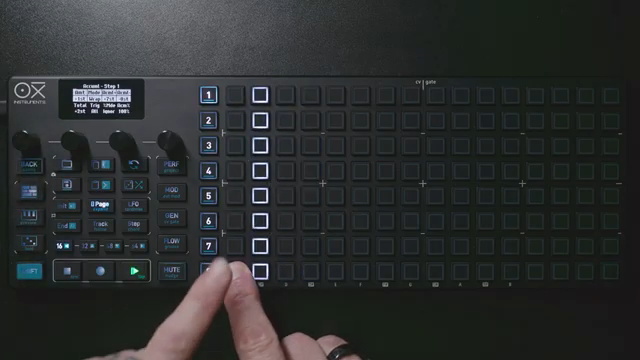
OXI Instruments opens the episode by introducing the Accumulator engine, a feature available in both mono and poly modes on the OXI One MKII. This function is all about controlled musical evolution, allowing sequences to morph over time without losing their harmonic footing. Each step in a sequence can be assigned its own accumulator setting, providing a granular level of control that’s rare in hardware sequencers.
The demonstration begins with a simple four-step sequence, highlighting how even a handful of notes can become something far more interesting once accumulators are in play. By offsetting pitch values on a per-step basis, users can create evolving motifs and melodic patterns that retain their musicality thanks to the quantization provided by the chosen scale. The result is a sequencer that feels alive, always pushing the patch forward without veering into chaos.
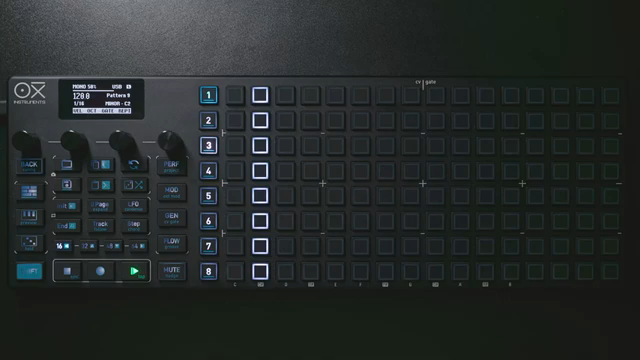
"The Accumulator engine, available for mono and poly mode, is a powerful way to make your sequences evolve in a controlled and musical way."
© Screenshot/Quote: Oxiinstruments (YouTube)
Stepwise Pitch Offsets and Quantized Control
"Every time the playhead passes on that step, that step will be offset by one semitone, quantized to the scale of course."
© Screenshot/Quote: Oxiinstruments (YouTube)
Diving deeper, the video demonstrates how each step’s accumulator amount can be set in semitones, with the offset always quantized to the current scale. This ensures that even as sequences evolve, they remain musically coherent—no rogue microtonal surprises unless you want them. The process is straightforward: hold a step, access the accumulator page, and dial in the desired amount.
The system also allows for both positive and negative accumulation, so sequences can climb or descend as needed. Limits can be set to define how far the accumulation travels before resetting, enabling everything from subtle melodic nudges to dramatic pitch shifts. This approach keeps the creative process immediate and tactile, letting users sculpt evolving lines without getting bogged down in menu labyrinths.
Modes: Clip, Wrap, Pendulum and Beyond
A highlight of the Accumulator function is its range of modes, each offering a distinct musical behaviour. The ‘clip’ mode resets the accumulation to zero once it reaches its set limit, perfect for cycling motifs. ‘Wrap’ mode, on the other hand, carries any excess beyond the limit back to the base note, creating more unpredictable melodic loops. ‘Pendulum’ mode swings the pitch up and down, while ‘hold’ freezes the sequence at its peak, ideal for building tension.
Each mode can be further spiced up with a randomization option, which allows the accumulation to move in positive or negative directions unpredictably. This injects a touch of generative magic into the sequence, making even simple patterns feel organic and less mechanical. The video walks through each mode with clear examples, demonstrating how these behaviours can be harnessed for both subtle and dramatic musical shifts.
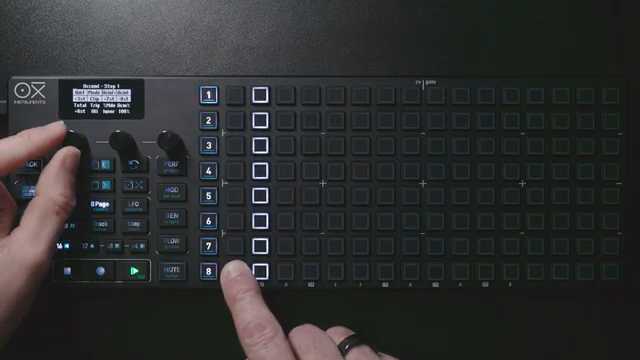
"Now clip means that when the accumulation reach is highest, it resets to 0."
© Screenshot/Quote: Oxiinstruments (YouTube)
Logic Conditions: Rhythmic Complexity at Your Fingertips
The OXI One MKII doesn’t stop at pitch manipulation—logic conditions let users decide how often accumulation occurs. By setting percentages or cycle-based conditions, it’s possible to create evolving rhythms where pitch shifts happen only on certain passes. Modes like ‘skip’ and ‘ignore’ further refine this, determining whether the note holds its last value or reverts to the original when accumulation is inactive.
The video also explores the ‘trig’ settings, which govern how accumulators interact with step repetitions and global track behaviour. Whether you want every note, just repetitions, or only the main step to accumulate, these options provide a toolkit for intricate rhythmic and melodic development. The addition of flow-based logic—where accumulation can be toggled live—opens up performance possibilities, allowing for real-time manipulation of evolving sequences during a set.
Poly Mode: Chord Progressions and Harmonic Play
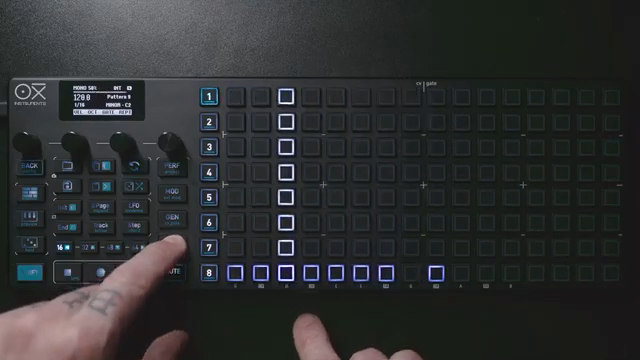
"We recently implemented accumulator to poly mode too. This is pretty big."
© Screenshot/Quote: Oxiinstruments (YouTube)
Perhaps the most exciting development is the extension of the Accumulator to poly mode. Now, accumulators can be applied to entire chords, not just single notes. This means that with a single step, users can generate evolving chord progressions, with each note in the chord offset according to the accumulator’s rules.
The video demonstrates how easy it is to set up shifting harmonies, from simple two-chord vamps to more complex, scale-locked progressions. The quantization ensures everything stays musically grounded, while the various modes and logic conditions allow for endless variation. For anyone looking to inject life into their polyphonic sequences, this feature transforms the OXI One MKII into a formidable compositional tool.
This article is also available in German. Read it here: https://synthmagazin.at/oxi-instruments-oxi-one-mkii-accumulatoren-entfesselt/
Watch on YouTube:
Latest articles
Watch on YouTube:
Visit the channel:
https://www.youtube.com/oxiinstruments
https://www.youtube.com/oxiinstruments
Links from oxiinstruments:
website: https://oxiinstruments.com
instagram: https://www.instagram.com/oxiinstruments
facebook: https://www.facebook.com/oxiinstruments/
support: https://oxiinstruments.com/support
Sponsored links:
If you purchase via these links, we may earn a small commission – at no extra cost to you. The link opens an Amazon keyword search, and results may vary depending on availability.
OXI ONE MKII
🔗 Check price on Amazon
🔗 Check price on Amazon