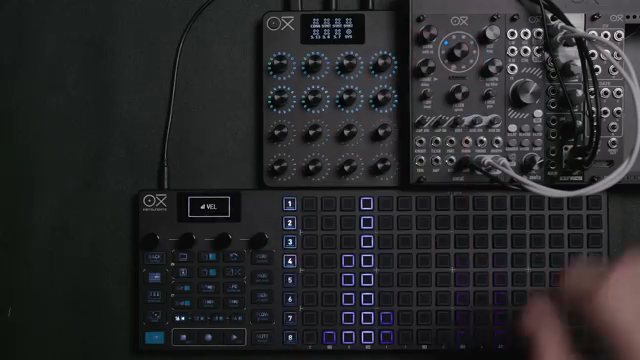
OXI Instruments continues to push the boundaries of hybrid hardware with their latest demonstration, showcasing the E16 controller, One MKII sequencer, and Coral polyphonic Eurorack module as a tightly integrated ecosystem. In this official walkthrough, the OXI team illustrates how these devices can be mapped and sequenced to function as a single expressive instrument, with hands-on control over multiple voices and deep sound-shaping parameters. The focus is on workflow: direct mapping, fluid transitions, and a controller-driven approach that empowers spontaneous performance and evolving soundscapes. For anyone obsessed with modular control, digital flexibility, and performance macros, this video is a revealing look into OXI’s vision for modern electronic music rigs.
11. December 2025
LYRA
OXI Instruments: Building a Modular Powerhouse—E16, One MKII and Coral in Cohesion
The OXI Ecosystem: Cohesion in Action
The video opens with a clear mission: to demonstrate how the OXI E16 controller, One MKII sequencer, and Coral module can be unified into a single, performance-ready ecosystem. The setup is straightforward yet powerful—MIDI from the One MKII flows into the E16, which in turn routes control to the Coral, OXI’s polyphonic and multitimbral Eurorack module. This configuration is designed to maximize hands-on control and sequencing depth, highlighting OXI Instruments’ philosophy of making their gear the central brain of a hybrid setup.
The presenter walks through the initial setup, assigning four tracks on the One MKII to different MIDI channels, each corresponding to a separate voice on the Coral. The process is methodical, with attention to MIDI routing and channel assignment, ensuring that each part of the system communicates seamlessly. The Coral is reset and configured to receive on the correct channels, laying the groundwork for a multitimbral workflow that is both flexible and robust.
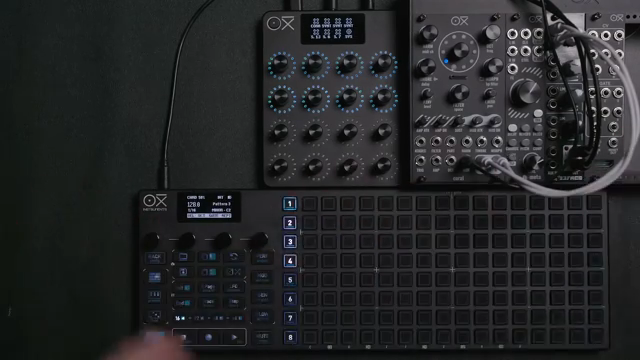
"I'll show you step by step how to take advantage of the full Oxy ecosystem."
© Screenshot/Quote: Oxiinstruments (YouTube)
Direct Mapping: Filters, Levels, Macros and More
"But having the E16 makes your life easier."
© Screenshot/Quote: Oxiinstruments (YouTube)
A core strength of this setup is the direct mapping of Coral’s parameters to the E16’s encoders, bypassing the need to dive into the Coral’s panel for every tweak. The video demonstrates how each E16 knob can be assigned to a specific parameter—filter cutoff, envelope, level, reverb send—per voice, using both the hardware interface and the OXI app. This mapping workflow is designed for speed and clarity, letting performers shape sound in real time without menu-diving.
The mapping process is shown both manually on the E16 and via the OXI app, which streamlines bulk assignments and visualizes parameter layouts. The flexibility to assign any Coral parameter to any encoder, and to organize controls by track or by sound design depth, underlines the E16’s role as a performance macro surface. This hands-on approach is central to OXI’s ethos: making complex digital architectures feel immediate and playable.
Fluid Transitions and Evolving Soundscapes
With the mapping in place, the integration between sequencer, controller, and synth module enables seamless musical transitions. The video highlights how performers can move between sections, adjust tones on the fly, and create evolving textures without breaking the performance flow. The E16’s scene and page system allows users to group controls for different tracks, instruments, or sound design layers, supporting both global and per-voice manipulation.
The presenter demonstrates switching between pages for global versus detailed control, emphasizing the ability to tailor the interface to the needs of a particular performance or composition. This architecture supports both quick, high-level changes and deep, voice-specific edits, making it suitable for live improvisation as well as studio sound design.
What stands out is the lack of friction: transitions between musical ideas are immediate, and the performer is never forced to stop the music to reconfigure controls. This is a workflow designed for spontaneity, where the boundaries between sequencing, modulation, and sound shaping are intentionally blurred.
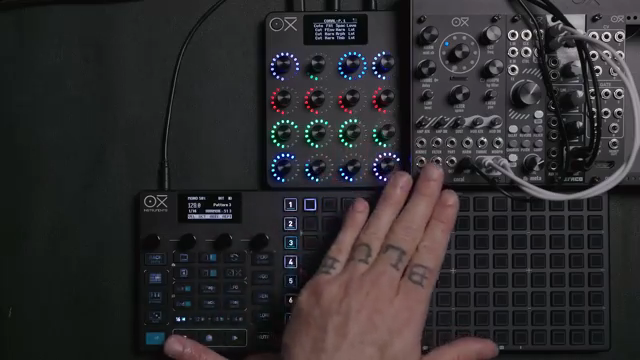
"Now once you did this, your imagination is just the limit because you can create different pages and you have 12 per scene in which you group different controls."
© Screenshot/Quote: Oxiinstruments (YouTube)
Controller-Driven Creativity: Use Cases and Versatility
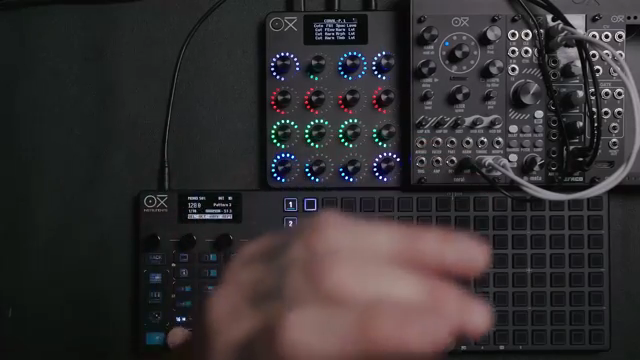
"There's so many things you can do with just this little setup."
© Screenshot/Quote: Oxiinstruments (YouTube)
The video wraps up by illustrating the versatility of this controller-driven approach. With up to 12 pages per scene and the ability to organize encoders by track, instrument, or function, the E16 becomes a dynamic hub for manipulating multiple voices and applying complex sound design techniques. The presenter suggests use cases ranging from global performance macros to deep, per-voice sound sculpting, all accessible without interrupting the musical flow.
This setup is not just about technical integration—it’s about empowering creativity. The OXI ecosystem, as demonstrated, supports a workflow where imagination sets the limits, not the gear. Whether for live performance, DAWless rigs, or intricate studio sessions, the combination of One MKII, E16, and Coral offers a compelling, intuitive platform for modern electronic musicians.
Watch on YouTube:
Latest articles
Watch on YouTube:
https://www.youtube.com/oxiinstruments
Links from oxiinstruments:
Sponsored links:
If you purchase via these links, we may earn a small commission – at no extra cost to you. The link opens an Amazon keyword search, and results may vary depending on availability.
🔗 Check price on Amazon
🔗 Check price on Amazon
🔗 Check price on Amazon