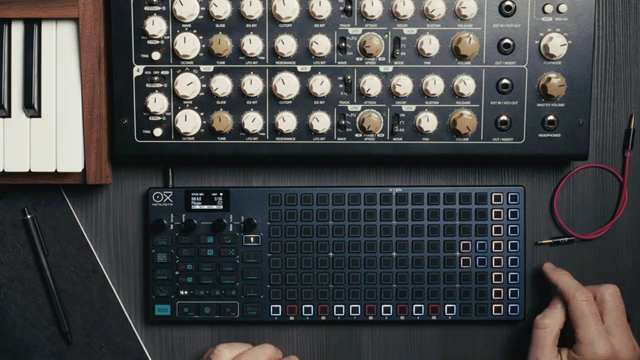
OXI Instruments, renowned for their forward-thinking sequencers and modular brains, take randomness to a new level with the Stochastic mode on the OXI One. In this official walkthrough, OORA demonstrates how this mode transforms unpredictability into a compositional ally, letting users sculpt evolving patterns that balance surprise with precision. The video dives into probability-driven melodies, rhythmic locking, and modulation tricks, all within OXI’s signature hands-on workflow. If you’re curious about how digital sequencing can become a creative partner rather than just a rigid grid, this deep dive is essential viewing.
24. October 2024
LYRA
OXI Instruments and the Art of Controlled Chaos: Stochastic Mode on OXI One
Embracing the Stochastic: OXI One’s Approach to Randomness
Stochastic mode on the OXI One is introduced as a playful yet deeply functional tool for generating sequences that are both random and musically useful. Rather than leaving everything to chance, OXI’s implementation lets users interact with unpredictability, freezing patterns when inspiration strikes and letting the machine suggest new directions. This approach positions the OXI One as not just a sequencer, but a creative collaborator, ideal for those who want to inject fresh ideas into their workflow without sacrificing control.
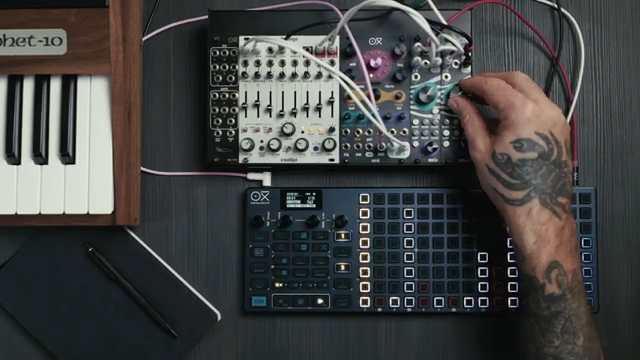
"Stochastic mode is a playful way to generate random sequences with a surprising amount of control."
© Screenshot/Quote: Oxiinstruments (YouTube)
Probability, Locking, and Dynamic Composition
"The last 4 columns let you adjust octave spread, gate and division modifiers, and the randomization probability of both pitch and rhythm."
© Screenshot/Quote: Oxiinstruments (YouTube)
The heart of Stochastic mode lies in its probability grid, where each of the first twelve columns determines the likelihood of a specific note being triggered. Users can quickly select a scale, such as C major, and then sculpt the sequence by adjusting these probabilities, effectively shaping the melodic DNA of the pattern. The interface also features columns for octave spread, gate and division modifiers, and the degree of randomization applied to both pitch and rhythm.
A standout feature is the ability to lock rhythm and pitch independently. By setting the probability to zero, users can freeze either aspect of the sequence, capturing a moment of inspiration while still allowing other parameters to evolve. This separation of control enables a workflow where rhythmic stability can be paired with melodic evolution—or vice versa—making the OXI One particularly adept at generating dynamic, evolving compositions that never feel static.
Building Complexity: Melodies, Rhythms, and Modifiers in Action
The video moves from basics to more advanced territory by demonstrating how to create intricate melodies and rhythms. Adjusting pitch probabilities allows for nuanced melodic movement, while the rhythmic modifiers introduce everything from glitchy, rapid-fire divisions to languid, stretched gates. The third column from the right is highlighted for its ability to inject both short, fast divisions and longer, slower gates, offering a wide palette of rhythmic textures.
Octave spread and velocity randomization further expand the sonic possibilities. By tweaking these parameters, users can generate sequences that feel organic and ever-changing. The workflow remains fluid: patterns can be shifted, locked, or subtly altered on the fly, and the interface encourages experimentation without menu-diving. This section underscores how OXI’s design philosophy—hands-on, immediate, and musically aware—translates into real-world creative power.
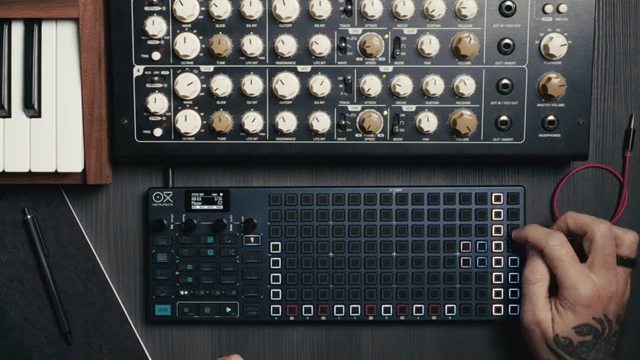
"The top three rows had random shorter gates and faster divisions, creating glitch-like effects."
© Screenshot/Quote: Oxiinstruments (YouTube)
Modulation and Integration: Stochastic Mode as a Creative Hub
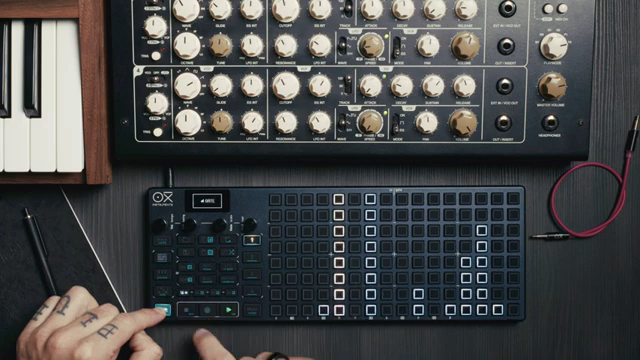
"We went a step further with this mode, giving you the possibility to modulate its parameters with the two LFOs, the four mod lanes, external MIDI mappings and even the CV input."
© Screenshot/Quote: Oxiinstruments (YouTube)
Stochastic mode isn’t just about internal randomness; it’s designed for deep modulation and integration. The video showcases how parameters can be modulated via the OXI One’s two LFOs, four mod lanes, external MIDI mappings, and even CV input. This opens the door to advanced generative techniques, such as using a sample-and-hold LFO to periodically shift probabilities, ensuring sequences remain lively and unpredictable. The mode also harmonizes well with polyphonic and chord tracks, making it a versatile tool for both solo explorations and complex arrangements. OXI Instruments’ commitment to creative flexibility is on full display, positioning Stochastic mode as a central feature for anyone seeking to blur the line between composition and controlled chaos.
This article is also available in German. Read it here: https://synthmagazin.at/oxi-instruments-und-die-kunst-des-kontrollierten-chaos-stochastic-mode-auf-dem-oxi-one/
Watch on YouTube:
Latest articles
Watch on YouTube:
Visit the channel:
https://www.youtube.com/oxiinstruments
https://www.youtube.com/oxiinstruments
Links from oxiinstruments:
website: https://oxiinstruments.com
instagram: https://www.instagram.com/oxiinstruments
facebook: https://www.facebook.com/oxiinstruments/
support: https://oxiinstruments.com/support
Sponsored links:
If you purchase via these links, we may earn a small commission – at no extra cost to you. The link opens an Amazon keyword search, and results may vary depending on availability.
Oxi One
🔗 Check price on Amazon
🔗 Check price on Amazon