A new chapter of digital sound architecture unfolds at Synthesizer Studio Berlin: musotalk takes us on an analytical journey through the Waldorf Protein. Between Microwave-1 DNA and Iridium technology, a hybrid sonic space emerges that weaves vintage charm with contemporary modularity. Those searching for 8-bit crackle, layer experiments, and a dash of machine ethics will find an instrument here that offers more than just workflow—it invites acoustic origami. But beware: the true depth of this nano-wave only reveals itself in the video, when the sound spaces unfold live.
28. November 2025
RAUMKLANG
Nano-Wave Meets Modernity: musotalk Deconstructs the Waldorf Protein
Heritage Meets the Present: The Protein's DNA
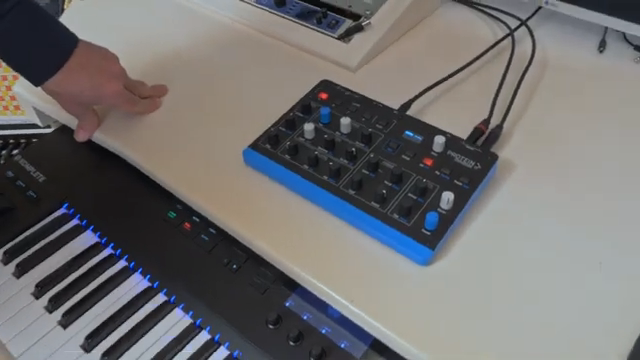
The Waldorf Protein presents itself as a compact result of a long synthesizer evolution. musotalk and Waldorf representative Rolf Würmer guide us through the genesis of this device, which distills the essence of the Microwave 1 into a modern, flat desktop enclosure. The Protein is not just a tribute to the past, but also a response to the call for affordable, powerful synthesizers outside the high-end league.
With its distinctive spot color and USB-C power supply, the Protein signals a break from bulky studio machines and opens the field to a new generation of sound architects. The combination of Microwave-1 ASICs and current features like layering and modulation matrix promises a patch geometry that appeals to both nostalgics and chaos aesthetes.
8-Bit Origami: The Sound of the ASIC Oscillators
At the heart of the Protein beat the legendary ASIC oscillators that already gave the Microwave 1 its unmistakable character. These chips are not ordinary DSPs, but digital circuits running at 250 kHz and 8-bit wavetables, creating a sound that folds like origami from tension and noise. The result: a rough, overtone-rich sound that brings the crackle and fizz of the ’80s into the present.
Anyone hoping for clinical precision won’t find it here—the Protein thrives on its digital dirt and the small imperfections that set it apart from modern wavetable synths. The machine thus offers a sonic bridge between PPG Wave, Microwave 1, and current Waldorf developments. If you really want to hear the difference between ASIC and DSP, you shouldn’t miss the sound examples in the video.
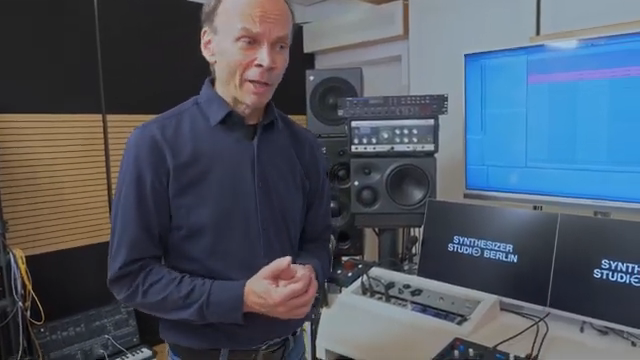
"You basically get the original sound down to the digital dirt, and you can't do that with any modern wavetable synth, because it really works differently than it's done today."
("Man hat quasi bis in den Digital-Dirt, was da drin steht, den Original-Sound und das kann man mit keinem modernen Wave-Table-Syndi machen, weil das wirklich auch anders funktioniert als wie es heutzutage gemacht wird.")© Screenshot/Quote: Musotalk (YouTube)
Layers, Matrix, and Modularity: Sonic Spaces in the Protein
"So I have the possibility to create complex sounds pretty quickly, because with layering or alternating playing, you can easily do great things."
("Ich habe also die Möglichkeit damit ziemlich schnell komplexe Sounds zu machen, weil aus den Layering oder abwechselnden Spielen kann ich natürlich sehr einfach tolle Sachen machen.")© Screenshot/Quote: Musotalk (YouTube)
The Protein’s flexible 4-layer system opens up new dimensions in sound design. Up to four layers can be played either stacked or in round-robin mode—a dream for anyone who loves complex sequences and polyphonic textures. The layers can be mixed from different presets, allowing for quick creation of unique sounds without getting lost in a jungle of parameters.
The modulation matrix with eight slots per layer, LFOs, envelopes, and MPE support invites experimentation. Effects like reverb, delay, and drive add extra depth, while the Curtis filter rounds out the sound. Those with patience and an ear for the unpredictable will find a tool here that goes far beyond classic wavetable architecture—but the true patch geometry only reveals itself when you get hands-on or follow musotalk’s demonstration.
Compact and Mobile: Protein on the Go
With its slim dimensions and USB-C power supply, the Protein is predestined for mobile setups and live performances. Despite its small size, the device offers a surprisingly complete control surface reminiscent of full-fledged studio synths. So, anyone wanting to explore sonic spaces not just in the studio but also on the go will find a companion here that folds into any bag—a prime example of machine ethics in miniature format.
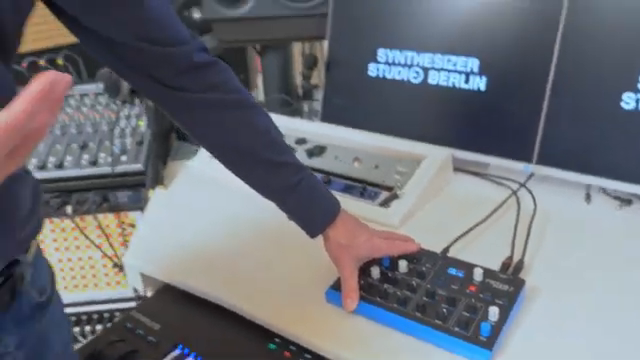
"For this small form factor, we have quite a lot of knobs, so you can really tweak, it's not like the Blofeld, which is great, but with this matrix principle, we couldn't fit many more knobs on it, but they're well spaced for operation."
("Für diesen kleinen Formfaktor haben wir ziemlich viele Knöpfe, man kann also richtig schrauben, das ist jetzt nicht wie im Blohfeld, der toll ist, aber nach diesem Matrix-Prinzip, viel mehr Knöpfe kriegen wir auch gar nicht unter Aufsicht, die sind doch gut vom Abstand zu bedienen.")© Screenshot/Quote: Musotalk (YouTube)
Chord Mode and Step Sequencer: Creative Playgrounds
The Protein’s chord mode and step sequencer invite innovative sound experiments. Chords can be played chromatically or scale-based, while the arpeggiator and step sequencer enable complex rhythmic structures. Despite the wealth of functions, the operation remains clear, even if some parameters are accessed via shift levels or the display.
Here, the device’s creative potential becomes apparent: those willing to embrace the quirks of the interface are rewarded with a wealth of musical possibilities. The combination of classic Waldorf philosophy and modern functionality makes the Protein a tool suitable for both structured sound architecture and spontaneous chaos aesthetics.
Translated from German. Read the original here: https://synthmagazin.at/nano-wave-trifft-moderne-musotalk-dekonstruiert-den-waldorf-protein/
Watch on YouTube:
Latest articles
Watch on YouTube:
Visit the channel:
https://www.youtube.com/musotalk
https://www.youtube.com/musotalk
Sponsored links:
If you purchase via these links, we may earn a small commission – at no extra cost to you. The link opens an Amazon keyword search, and results may vary depending on availability.
Waldorf Microwave 1
🔗 Check price on Amazon
🔗 Check price on Amazon
Waldorf Protein
🔗 Check price on Amazon
🔗 Check price on Amazon