With a touch of Austrian dialectics, MusoTalk invites us on a sonic journey through modular systems and digital innovations. Accompanied by sound artists like Thorsten Quaeschning, we delve deep into the symbiosis of DAWs and modular synthesizers, while AI appears as a recalcitrant supporting actor. A must for anyone wanting to explore sound architectures and digital-analog realms.
31. October 2025
RAUMKLANG
MusoTalk conquers sound worlds: DAW, modular synths, and AI music in focus
DAW, Korg Collection, Memotron, modul 1, Softube Modular, VCV Rack
Roundtable of sound magicians
MusoTalk, the German channel for music lovers and tech enthusiasts, invites you to a very special roundtable. In this video, everything revolves around the dialogue between the digital and analog sound worlds. Joining are Thorsten Quaeschning from Tangerine Dream, Thorsten Feuerherdt from Manikin Electronic, and Marc Ziebarth from Loop Studio. Together, they explore the exciting possibilities of connecting a DAW with a modular synthesizer. A topic that poses as many questions as it does answers, for the tactile nature of a modular system and the precision of a DAW could hardly be more different. Yet, it is precisely these discrepancies that create the allure.
Manikin Electronic and the magic of modules
Manikin Electronic presents its unique product range, which by no means consists only of standard modules. With a preference for unusual device forms, the company has developed innovative Euro-Rack modules such as dual headphone amplifiers and phono preamps. Particularly noteworthy is the digital Mellotron, the Memotron, which is continually being developed. Discussions about engineering artistry and musical passion are the common thread throughout the discussion. The guests emphasize how important it is to find a balance between technical innovation and artistic expression. The Manikin products are exemplary for devices that unfold in unique sound worlds, far from industrial standards.

"The sound folds like an origami of tension and noise."
("Der Klang faltet sich wie ein Origami aus Spannung und Rauschen.")© Screenshot/Quote: Musotalk (YouTube)
The symphony orchestra of software synths: VCV Rack & Co
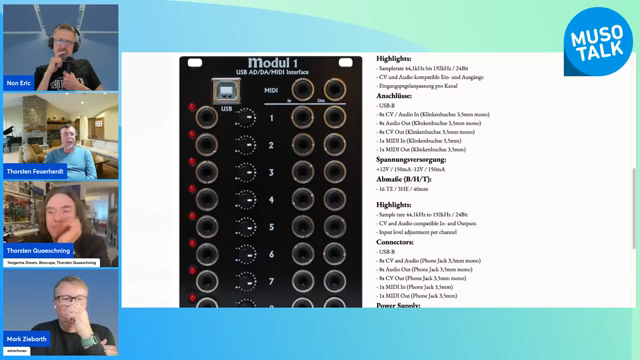
"We can handle eight channels with up to 192 kilohertz per channel in and out."
("Wir können acht Kanäle mit bis zu 192 Kilohertz pro Kanal rein und raus.")© Screenshot/Quote: Musotalk (YouTube)
While Manikin Electronic impresses in the physical world, in the digital realm Softube Modular and VCV Rack dominate. These virtual modular systems offer an almost endless variety of sound options. However, the question remains: Why would you control a physical modular system with a DAW? This question shows that even here there are no clear answers, but rather a tension between comfort and sonic depth. Yet, it becomes clear that in the digital world as well, the same dedication and experience are needed to shape the various modules into a harmonious sound.
A visit to the Synthesizer Museum
The Synthesizer Museum Berlin is more than just a conservatory of old instruments – it is a living place of history and innovation. Known for its exclusive tours and sessions, it offers a retrospective on the evolution of synthesizers. A thrilling addition to the digital themes of the video is the presentation of the KORG Collection, showcasing historical devices like M1 and Triton in a new light. Collectors and aficionados among the viewers will surely swoon over the insider tips on rare models. For the blending of nostalgia and modern technology holds not only technical but emotional treasures. The museum makes the mechanics of old devices speak, creating a cozy feeling of familiarity with a touch of explorer spirit.

"The Synthesizer Museum Berlin is, at Cottbuser Tor and the former Schneiders Laden."
("Das Synthesizer Museum Berlin ist, am Cottbuser Tor und im ehemaligen Schneiders Laden.")© Screenshot/Quote: Musotalk (YouTube)
AI music and its role in the industry
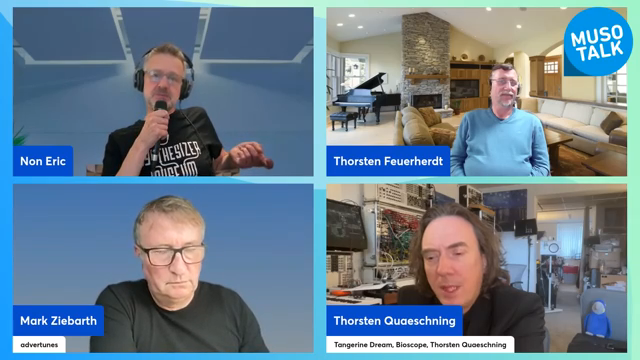
"No, about 8% of all streaming on Spotify comes from AI-generated artists."
("Ne, also 8% des gesamten Streamings auf Spotify sind KI-generierte Künstler.")© Screenshot/Quote: Musotalk (YouTube)
In a world full of digital possibilities, the question of the role of humans remains. The use of AI tools like Suno opens up many possibilities, but also meets with resistance. Discussions about AI-generated music and its authenticity dominate the round. The guests question the artistic responsibility towards an increasingly automated process. Although AI can support production, there is fear that original creative integrity will be lost. Some argue that limitations are creatively inspiring because they force the artist to think outside the pre-set paths. This debate is part of a larger dispute over the future of the music industry, exploring the ethical and philosophical boundaries of technological integration.
Creativity in abundance: blessing or curse?
The abundance of possibilities offered by today’s technologies is reminiscent of a well-filled patch bay: much is possible, but not everything makes sense. The discussion about whether the freedom to create almost infinite sound variations promotes or hinders creativity captivates the listeners. Marc Ziebarth argues that it is precisely the reduction to the essentials that stimulates creative thinking. The experts present consider what role the past plays in the future creative process. While some idealize the historical sound colors, others see the loss of individual sound worlds in technical reproducibility. The key to a vibrant and pulsating music scene lies precisely in the balance of innovation and tradition.
A look into the future of making music
When asked where the journey of music production is headed, MusoTalk’s guests offer surprisingly different outlooks. On one hand, increasing virtualization of music seems likely, while on the other, the desire for handmade, authentic music persists. It becomes clear that despite uninterrupted technological progress, humans should remain at the center of musical creation. The desire for authenticity and immediacy resonates in this discussion, as does the question of how musicians will assert themselves in a world where machines are increasingly taking over. The guests agree that the creative landscape will continue to evolve in the coming years, and that the key to success lies in a harmonious connection between man and machine. In the end, the unique signature of each artist matters most.
Translated from German. Read the original here: https://synthmagazin.at/musotalk-erobert-die-klangwelten-daw-modulsynths-und-ki-musik-im-fokus/
Watch on YouTube:
Latest articles
Watch on YouTube:
Visit the channel:
https://www.youtube.com/musotalk
https://www.youtube.com/musotalk
Sponsored links:
If you purchase via these links, we may earn a small commission – at no extra cost to you. The link opens an Amazon keyword search, and results may vary depending on availability.
Korg Collection
🔗 Check price on Amazon
🔗 Check price on Amazon
Memotron
🔗 Check price on Amazon
🔗 Check price on Amazon
modul 1
🔗 Check price on Amazon
🔗 Check price on Amazon
Softube Modular
🔗 Check price on Amazon
🔗 Check price on Amazon
VCV Rack
🔗 Check price on Amazon
🔗 Check price on Amazon