MusicRadar Tech have dragged Akai’s new MPC XL into the bunker for a first look, and let’s just say, this thing isn’t here to play nice. With double the RAM, a heap of new controls, and those expressive MPCe pads, the XL is gunning for studio dominance. But is it a true upgrade, or just a big, expensive brick? We break down the key features, the workflow tweaks, and why you might still want to grab an MPC Live instead. If you’re after a portable groovebox, look away now – but if you want a centrepiece that could anchor your whole rig, keep reading. As always, MusicRadar Tech keep it sharp, honest, and just a bit cheeky.
21. January 2026
SPARKY
MusicRadar Tech’s MPC XL Review: Studio Heavyweight or Overpriced Dinosaur?
Flagship Flex: The XL Arrives
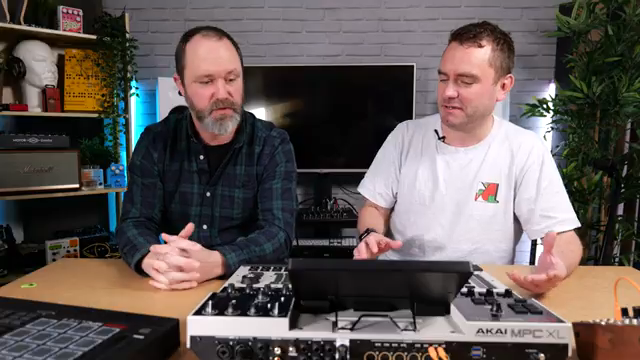
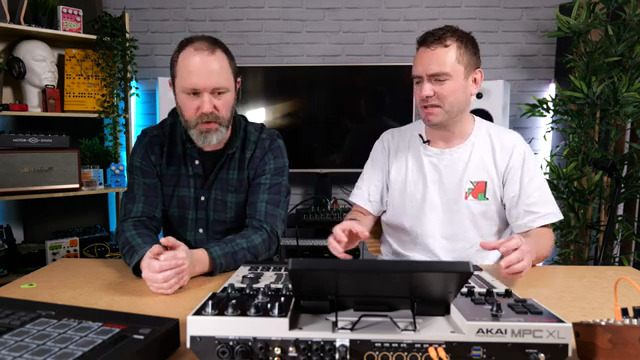
Akai’s MPC XL has stomped onto the scene, promising a proper refresh to the flagship MPC X after years of minor tweaks and limited editions. MusicRadar Tech waste no time pointing out that this isn’t just a cosmetic update – it’s a serious overhaul, with the XL positioned as both a successor to the X and a beefed-up alternative to the MPC Live III. The XL is bigger, heavier, and definitely not something you’ll sling in a backpack for a quick jam at your mate’s flat.
But it’s not all about size. The XL brings a host of new features and workflow changes that aim to justify its flagship status. MusicRadar Tech are clear: this is a studio beast, not a portable plaything. If you’re after a centrepiece for your setup, the XL is gunning for that spot. The team set the stage for a head-to-head showdown with its predecessors, promising to dig into what the XL does better—and where it might fall short.
"This is a studio centerpiece in every sense of the word."
© Screenshot/Quote: Musicradartech (YouTube)
Pads, Power, and Performance: What’s New?
"They feel really nice. So and they're still great here."
© Screenshot/Quote: Musicradartech (YouTube)
The XL’s headline act is the new MPCe pads—multi-expression monsters that let you trigger samples, modulate, and roll with a level of nuance that’s frankly overdue. These pads aren’t just a gimmick; they’re a genuine leap forward, letting you play with quadrants and get hands-on in ways that older MPCs could only dream of. If you loved the pads on the Live III, you’ll feel right at home here.
Under the hood, the XL flexes serious muscle: an eight-core processor, 16GB of RAM (double the Live III), and 256GB of storage. That’s a spec sheet that’ll make plugin junkies and sample hoarders grin. The XL is built to handle heavy sessions, big projects, and all the effects you can throw at it. MusicRadar Tech don’t mince words—this is a studio workhorse, not a battery-powered busker’s toy.
Step Sequencing Gets Serious
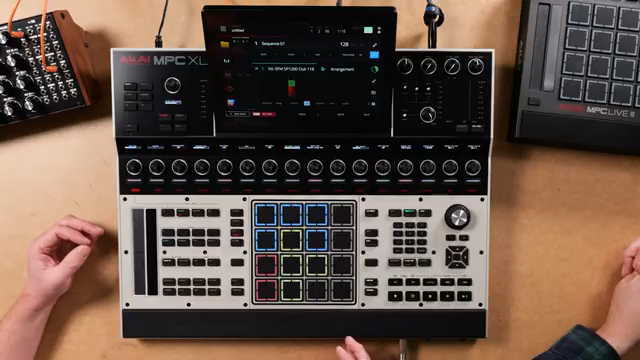
The new step sequencing workflow is where the XL starts to flex its creative muscle. With 16 Q-Link rotaries—each with its own screen—you can dive deep into drum programming, note sequencing, and clip launching without menu-diving like a lost raver. The expanded controls mean you can tweak, nudge, and probability your way to complex patterns without breaking a sweat.
MusicRadar Tech point out that the step sequencer isn’t perfect—visibility under studio lights could be better, and there’s the odd quirk with button labelling. But the hands-on control, especially for sequencing external gear via CV or MIDI, is a massive win. If you’re the sort who likes to build beats from scratch or wrangle modular synths, the XL’s sequencer is a proper tool, not an afterthought. For the full workflow magic (and the odd fumble), you’ll want to watch the video—some things just don’t translate to text.
"I struggle telling, without putting my hands over it like that, telling what's lit up and what isn't."
© Screenshot/Quote: Musicradartech (YouTube)
Plugged In: Connectivity Overload
If you love cables, the XL’s got you covered. MusicRadar Tech run through a laundry list of ins and outs: combo XLR/TRS, extra TRS jacks, eight outputs, RCA, footswitches, and a whopping six MIDI ports. The CV connectivity is doubled from the Live III, making this a modular-friendly monster. There’s even hands-on audio routing up top, so you’re not menu-diving just to switch inputs.
The XL’s layout is designed for semi-permanent studio setups, not quick-and-dirty jams. It’s got a bigger, angle-able touchscreen and more front-panel controls than you can shake a stick at. Metering is improved, and the extra USB port is a nice touch. If you want a box that can anchor your whole studio, this is it. But don’t expect to move it around without a gym membership.
Portability vs. Power: The XL’s Trade-Offs
"For a machine that's designed to have many different ways to do the same thing, that is a noticeable omission compared to the fact that that does it as well."
© Screenshot/Quote: Musicradartech (YouTube)
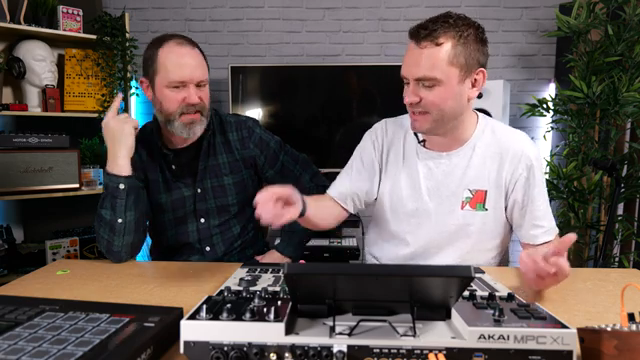
Here’s where the XL shows its hand—and its limits. MusicRadar Tech are blunt: if you want to make beats on the bus, stick with the MPC Live. The XL ditches the built-in battery and speaker, and there’s no onboard mic. That’s a shame, because the Live’s speaker actually sounds decent (for once), and the quick-sample mic is genuinely handy for spontaneous ideas.
But for studio heads, the XL’s extra power, controls, and connectivity might be worth the price hike. It’s not cheap, but you’re getting a robust, chunky centrepiece with a workflow that’s been seriously refined. The look is divisive—retro ugly, but in a way that works. Bottom line: if you want portable fun, the Live still rules. If you want a flagship that can handle anything you throw at it (and don’t mind being tethered to the mains), the XL is a serious contender.
This article is also available in German. Read it here: https://synthmagazin.at/musicradar-techs-mpc-xl-test-studio-schwergewicht-oder-ueberteuerter-dinosaurier/
Watch on YouTube:
Latest articles
Watch on YouTube:
Visit the channel:
https://www.youtube.com/MusicRadarTech
https://www.youtube.com/MusicRadarTech
Links from MusicRadarTech:
website: https://www.musicradar.com
instagram: https://www.instagram.com/musicradartech
Sponsored links:
If you purchase via these links, we may earn a small commission – at no extra cost to you. The link opens an Amazon keyword search, and results may vary depending on availability.
Akai MPC Live III
🔗 Check price on Amazon
🔗 Check price on Amazon
Akai MPC X
🔗 Check price on Amazon
🔗 Check price on Amazon
Akai MPC XL
🔗 Check price on Amazon
🔗 Check price on Amazon