Moog Music, the iconic purveyor of analog synths, steps into the world of modular ergonomics with the Sound Studio Accessory Kit. In this official walkthrough, the Moog team assembles a three-tier system featuring DFAM, Labyrinth, and Spectravox, demonstrating how the kit brings order and flexibility to a semi-modular setup. From rack ears to summing mixer, every detail is covered, showing how the kit transforms a pile of synths into a cohesive sonic workstation. If you’ve ever wondered how to wrangle multiple Moog boxes into a single, patch-friendly rig, this video is a methodical deep dive into the nuts, bolts, and cables of modular organisation.
20. September 2025
MILES
Moog Music’s Sound Studio Accessory Kit: Building a Modular Playground
Moog DFAM, Moog Labyrinth, Moog Sound Studio Accessory Kit, Moog Spectravox
Three-Tiered Modular Mayhem: The Moog Sound Studio Ecosystem
Moog’s Sound Studio Accessory Kit is designed to bring three of their semi-modular instruments together into a single, unified system. In this official assembly video, the team selects DFAM, Labyrinth, and Spectravox—a trio well-suited for rhythmic and experimental soundscapes. The kit supports any combination of Mother-32, DFAM, Subharmonicon, Spectravox, or Labyrinth, so users can tailor their modular stack to taste.
By racking these instruments vertically, the kit transforms a tabletop sprawl into an organised modular ecosystem. This approach not only saves space but also encourages creative patching between units, making it easier to experiment with complex signal flows and synchronised sequences. The video highlights how this setup is ideal for genres ranging from techno to avant-garde explorations.

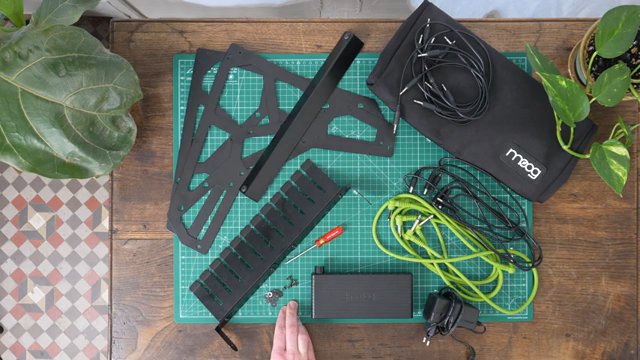
"The Moog Sound Studio Accessory Kit allows you to assemble three Moog semi-modular instruments together into one organized and powerful, unique modular ecosystem."
© Screenshot/Quote: Moogsynthesizers (YouTube)
Assembly Hardware: All the Bits You Need (and a Moog Screwdriver)
"You don't need any additional hardware to assemble your system."
© Screenshot/Quote: Moogsynthesizers (YouTube)
The kit comes with everything required for assembly—no need to raid your toolbox or hunt for missing screws. Included are two three-tier rack ears, a stabilising crossbar, a Moog-branded screwdriver, washers, and all the necessary screws. The process starts by removing specific screws from each synth’s chassis, then attaching the rack ears and crossbar for a sturdy build.
A thoughtful touch is the inclusion of a patch cable holder, which attaches to the topmost unit using the existing hardware. The video methodically demonstrates each step, ensuring even the most solder-shy synth fan can follow along. The result is a robust, gig-ready frame that keeps your modules secure and accessible.
Summing Mixer & Power Distribution: One Cable to Rule Them All
Central to the kit is a four-channel summing mixer, which acts as both the audio hub and power distributor for the system. Audio routing is straightforward: each instrument’s output is patched into a dedicated mixer channel using the supplied quarter-inch cables. The mixer’s channels are mono by default, but two can be combined for stereo sources if needed, thanks to switches on the back.
Power distribution is equally streamlined. Instead of juggling multiple wall warts, a single included power supply feeds the mixer, which then distributes power to each synth via the provided cables. The mixer’s 3.5mm TRS output, complete with attenuator, serves as a master out for headphones, mixers, or recording interfaces. This setup simplifies both studio and live workflows, reducing cable clutter and setup time.
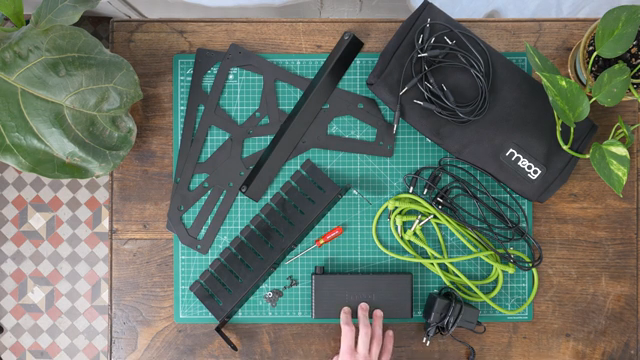
"The kit also comes with a four-channel summing mixer to mix your three instruments together as well as to distribute power to them so that you only need to use one wall wart instead of three."
© Screenshot/Quote: Moogsynthesizers (YouTube)
Patch Cable Organizer: Taming the Spaghetti
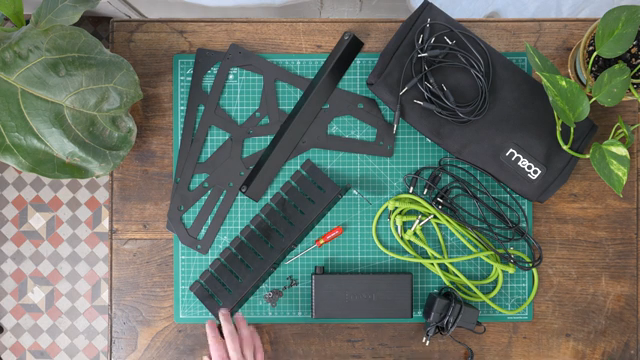
"Patch cable organizer attaches to the rear of the system for easy access to your patch cables at all times."
© Screenshot/Quote: Moogsynthesizers (YouTube)
No modular setup is complete without a tangle of patch cables, but Moog’s accessory kit offers a solution. The patch cable organizer mounts to the rear of the top unit, providing easy access to cables during patching sessions. This thoughtful addition keeps cables off the desk and within arm’s reach, making it easier to experiment with complex routings on the fly.
By integrating cable management into the rack design, Moog encourages a more efficient workflow. The kit also includes a set of patch cables and a rugged Cordura dust cover, ensuring your system stays protected from both clutter and the occasional studio mishap. It’s a small touch, but one that makes a big difference in day-to-day use.
The Jam: Modular Interplay in Action
The video culminates in a jam session that demonstrates the creative potential of the assembled system. The DFAM’s trigger output is patched to the clock input on Labyrinth, syncing both sequencers for tight rhythmic interplay. Labyrinth’s sequencer two output is then routed to Spectravox’s shift input, modulating all ten filters to create evolving melodic textures.
This patching approach showcases the synergy between the instruments—DFAM provides the pulse, Labyrinth sequences both itself and Spectravox, and Spectravox transforms the sequence into a shifting filter melody. The result is a dynamic, interconnected performance that highlights the strengths of Moog’s semi-modular lineup when unified by the accessory kit.
This article is also available in German. Read it here: https://synthmagazin.de/moog-music-sound-studio-accessory-kit-ein-modulares-paradies-entsteht/
Watch on YouTube:
Latest articles
Watch on YouTube:
Visit the channel:
https://www.youtube.com/MoogSynthesizers
https://www.youtube.com/MoogSynthesizers
Links from MoogSynthesizers:
website: https://moogmusic.com
instagram: https://instagram.com/moogsynthesizers
facebook: https://www.facebook.com/moogmusicinc
twitter: https://twitter.com/moogmusicinc
Sponsored links:
If you purchase via these links, we may earn a small commission – at no extra cost to you. The link opens an Amazon keyword search, and results may vary depending on availability.
Moog DFAM
🔗 Check price on Amazon
🔗 Check price on Amazon
Moog Labyrinth
🔗 Check price on Amazon
🔗 Check price on Amazon
Moog Sound Studio Accessory Kit
🔗 Check price on Amazon
🔗 Check price on Amazon
Moog Spectravox
🔗 Check price on Amazon
🔗 Check price on Amazon