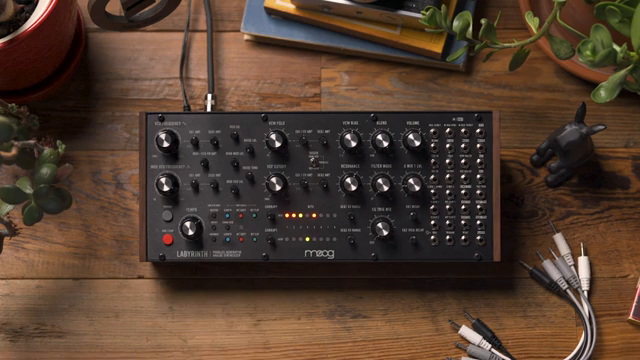
Moog Music steps into the world of generative sequencing with Labyrinth, a module that promises more than just step-by-step repetition. In this official walkthrough, the Moog team demonstrates how Labyrinth’s dual sequencers, hands-on controls, and clever randomness can conjure evolving rhythms and melodies from the simplest of patterns. The focus is on real-time manipulation, voltage-driven surprises, and the subtle art of locking in happy accidents. For those who crave patchable unpredictability with a dash of classic Moog character, this video offers a clear, practical orientation to Labyrinth’s core features and creative potential.
12. July 2024
MILES
Moog Music’s Labyrinth: Sequencer Basics and Generative Rhythms Unveiled
A Maze of Possibilities: Labyrinth’s Sequencer Unpacked
Labyrinth is introduced as a unique sequencer module, designed to generate complex patterns and evolving rhythms that go far beyond the usual step-based fare. Moog Music positions Labyrinth as a tool for both structured and generative sequencing, with two independent sequencers onboard. Each sequencer offers eight steps, and both can be clocked internally or via external sources, opening up a world of sync and modulation options for the modular enthusiast.
From the outset, the video makes it clear that Labyrinth is not just about repetition—it’s about transformation. The emphasis is on how patterns can morph and mutate, with the module serving as a playground for voltage, randomness, and hands-on interaction. This sets the stage for a deep dive into the controls and creative workflows that define Labyrinth’s character.
Hands-On Control: Building and Manipulating Sequences
The essential controls—BUFFER, RESET, ADVANCE, and BIT FLIP—are at the heart of Labyrinth’s sequencing workflow. The video demonstrates how holding BUFFER and RESET clears the sequencer, providing a blank slate for new rhythmic ideas. Using ADVANCE, users can step through the sequence, while BIT FLIP toggles individual steps on or off, allowing for rapid construction of custom rhythms.
RESET brings both sequencers back to step one, ensuring tight control over playback. The process is tactile and immediate, with each button press directly shaping the pattern. This hands-on approach encourages experimentation, making it easy to sculpt sequences in real time and hear instant results—a hallmark of Moog’s design philosophy.
Shaping the Sequence: Range, Length, and Real-Time Programming
Labyrinth’s generative process comes alive as soon as steps are activated. Each time a BIT FLIP is engaged, the module assigns a random voltage between -5V and +5V to that step, instantly transforming simple rhythms into unpredictable melodies. The Seq 1 CV range knob allows users to scale the melodic output, from a narrow octave to a sprawling ten-octave sweep, providing fine control over the musical scope.
Sequence length is equally flexible. By pressing the LENGTH button, the number of active steps can be adjusted on the fly, enabling anything from short, looping motifs to longer, evolving phrases. Real-time programming is encouraged, as users can toggle steps and adjust parameters while the sequence is running, resulting in dynamic patterns that respond immediately to creative input.
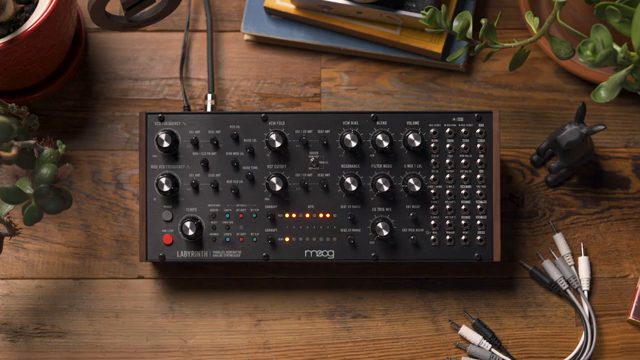
"Every time you flip a bit in Labyrinth's sequencer on, a random voltage is generated between negative five and positive five volts and stored at that bit."
© Screenshot/Quote: Moogsynthesizers (YouTube)
Embracing Chaos: The CORRUPT Control
"The corrupt control introduces a further element of randomness to your sequences."
© Screenshot/Quote: Moogsynthesizers (YouTube)
The CORRUPT control is where Labyrinth’s generative spirit truly shines. Set low, the sequencer plays back rhythms and melodies as programmed. As CORRUPT is increased, the stored voltages at each step begin to mutate, introducing subtle or drastic changes to the melodic content. Push it past noon, and even the rhythm itself becomes unstable, with steps flipping on and off in real time.
This feature invites users to relinquish some control and let the module surprise them. The ability to dial in just the right amount of chaos—or to lock in a particularly inspired mutation by turning CORRUPT down—makes Labyrinth a powerful tool for those who thrive on unpredictability and evolving textures in their patches.
Snapshots and Chains: Saving and Expanding Sequences
Labyrinth’s BUFFER button allows users to save snapshots of their favourite sequences, making it easy to recall a compelling pattern after a bout of generative exploration. This is particularly useful when using CORRUPT to mutate sequences, as it provides a safety net for locking in happy accidents before they drift away.
For those seeking longer phrases, Labyrinth offers the ability to chain both sequencers together, creating a single 16-step sequence. This expands the module’s creative reach, enabling more intricate patterns and extended melodic development. The video closes by highlighting how these features combine to make Labyrinth a versatile centrepiece for generative music-making, capable of both spontaneous invention and structured recall.
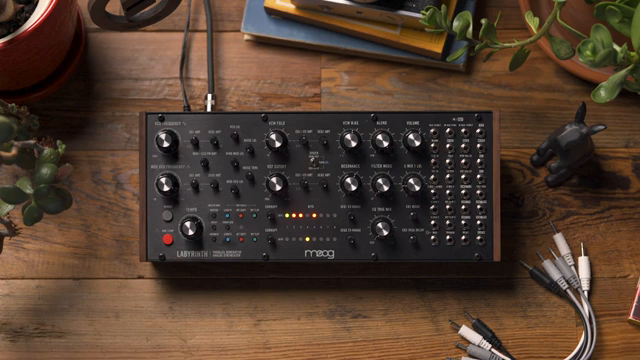
"Finally, you can chain both sequencers together to get one sequence of up to 16 steps."
© Screenshot/Quote: Moogsynthesizers (YouTube)
This article is also available in German. Read it here: https://synthmagazin.at/moog-music-labyrinth-sequencer-grundlagen-und-generative-rhythmen-enthuellt/
Watch on YouTube:
Latest articles
Watch on YouTube:
Visit the channel:
https://www.youtube.com/MoogSynthesizers
https://www.youtube.com/MoogSynthesizers
Links from MoogSynthesizers:
website: https://moogmusic.com
instagram: https://instagram.com/moogsynthesizers
facebook: https://www.facebook.com/moogmusicinc
twitter: https://twitter.com/moogmusicinc
Sponsored links:
If you purchase via these links, we may earn a small commission – at no extra cost to you. The link opens an Amazon keyword search, and results may vary depending on availability.
Moog Labyrinth
🔗 Check price on Amazon
🔗 Check price on Amazon