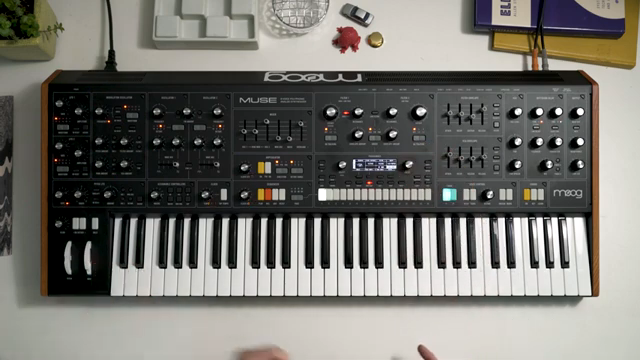
Moog Music’s Muse takes a bold step into hybrid modulation territory with the v1.4 firmware, introducing a transformative LFO envelope mode. This official Moog demo dives into how LFOs can now behave like envelopes, unlocking nuanced, key-triggered modulation possibilities for sound designers and performers alike. The video walks through practical applications, from pitch bends to dramatic filter sweeps, and highlights the creative power of user-defined waveforms. For those interested in digital modulation architectures and hands-on workflow enhancements, this update is a significant leap for the Muse ecosystem.
28. May 2025
LYRA
Moog Music Muse v1.4: LFO Envelope Mode Redefines Modulation Workflows
LFO Envelope Mode: A New Paradigm for Modulation
The v1.4 firmware update for the Moog Muse introduces envelope mode to LFOs 1 and 2, fundamentally changing how modulation can be applied within the instrument. This new mode allows the LFOs to function more like envelopes, offering a single, key-triggered cycle rather than continuous oscillation. The result is a modulation source that feels immediate and musically responsive, bridging the gap between traditional LFOs and envelope generators.
Moog’s demo highlights how this approach adds a fresh layer of expressiveness to the Muse’s architecture. By resetting the LFO cycle with each key press, users can craft dynamic, one-shot modulation effects that were previously the domain of dedicated envelopes. This opens up new territory for sound designers seeking to inject movement and variation into their patches without relying solely on static envelope shapes.
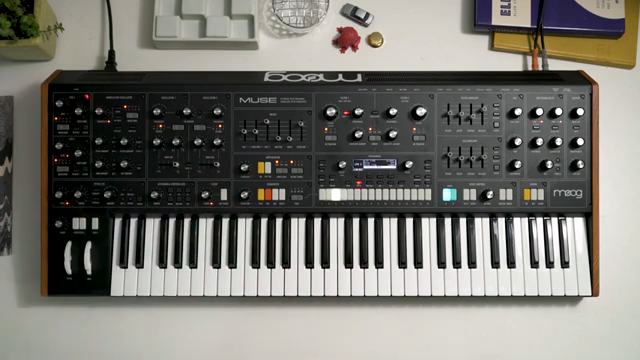
"It's going to work a little bit more like an envelope would rather than a cyclical function like an LFO."
© Screenshot/Quote: Moogsynthesizers (YouTube)
Key-Triggered Cycles: Dynamic Modulation in Action
"So as you can hear we have it set to a triangle wave and it's just running through a single cycle of its waveform and then pausing."
© Screenshot/Quote: Moogsynthesizers (YouTube)
When envelope mode is activated, pressing a key triggers the LFO to run through a single cycle of its selected waveform, then pause until the next key event. This behavior enables precise, per-note modulation effects, such as pitch bends or filter sweeps that respond directly to performance gestures. The demo walks through assigning LFO 1 in envelope mode to pitch, demonstrating both upward and downward bends by adjusting modulation depth.
By manipulating the LFO’s speed, users can shape the character of these modulations—from quick, percussive blips to slow, evolving transitions. The immediacy of this workflow means that expressive details can be dialed in on the fly, making the Muse’s modulation system feel more like a performance tool than a static programming environment.
Global LFOs and Expanded Modulation Architecture
Firmware v1.4 doesn’t just stop at timbre-specific LFOs; it also brings envelope mode to the global LFOs. This addition means that users can apply envelope-like, key-triggered modulation across broader aspects of their patches, not just within individual timbres. The video briefly notes this expanded capability, hinting at the flexibility it brings to complex sound design scenarios.
With both local and global LFOs now supporting envelope mode, Muse’s modulation architecture becomes notably more versatile. Users can layer multiple, independently triggered modulation sources, tailoring their movement to suit everything from subtle timbral shifts to dramatic, multi-parameter sweeps. This positions the Muse as a strong contender for those who crave deep, architectural modulation control in a hardware instrument.
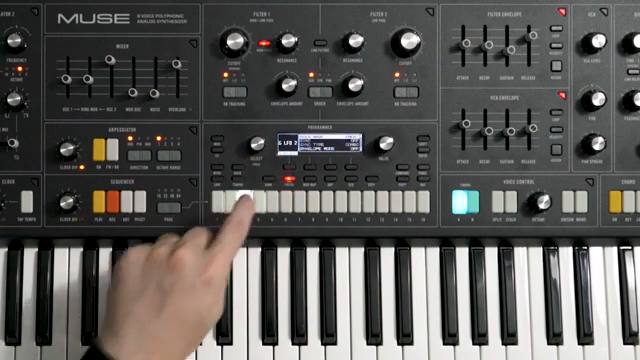
"The global LFOs that we've added in the 1.4 firmware also feature envelope mode."
© Screenshot/Quote: Moogsynthesizers (YouTube)
User Waveforms: Unlocking Unique Modulation Shapes
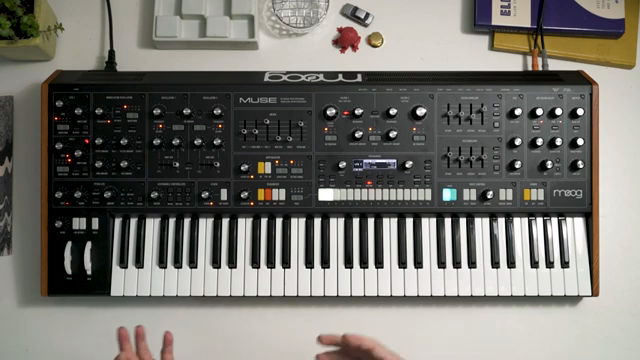
"We're able to generate a lot of interesting new behaviors out of the LFOs that can add unique movements into your sound design as you're making patches on Muse."
© Screenshot/Quote: Moogsynthesizers (YouTube)
The integration of user-defined waveforms into the LFO system further amplifies the creative potential of envelope mode. The demo showcases how selecting different user waves—such as Chebby, Chert, Faux Delay, and Faux Flat—yields distinctive modulation contours, each imparting its own flavor to the resulting sound. This flexibility allows for nuanced, signature movements that go well beyond standard triangle or sawtooth shapes.
By exploring these custom waveforms, users can infuse their patches with idiosyncratic motion, from double dips to faux delays, all triggered per note. The ability to audition and swap waveforms in real time encourages experimentation, making the Muse’s modulation system as much about discovery as it is about control.
Depth, Speed, and Slew: Sculpting Expressive Modulation
The expressive range of the new LFO envelope mode is further highlighted by how modulation depth and speed interact. The video demonstrates quick pitch blips and slower, more dramatic filter movements, all easily dialed in by adjusting LFO parameters. This hands-on approach makes it straightforward to sculpt the modulation envelope to fit the musical context, whether it’s a sharp attack or a languid sweep.
Additionally, the inclusion of slew control allows users to tame transients and clicks that can arise from abrupt waveform transitions, especially with shapes like sawtooth. By fine-tuning the slew rate, the Muse enables smoother, more polished modulation effects, ensuring that even aggressive movements can be rendered with musical finesse. This level of control underscores the instrument’s suitability for both studio sound design and nuanced live performance.
This article is also available in German. Read it here: https://synthmagazin.at/moog-music-muse-v1-4-lfo-envelope-mode-revolutioniert-modulations-workflows/
Watch on YouTube:
Latest articles
Watch on YouTube:
Visit the channel:
https://www.youtube.com/MoogSynthesizers
https://www.youtube.com/MoogSynthesizers
Links from MoogSynthesizers:
website: https://moogmusic.com
instagram: https://instagram.com/moogsynthesizers
facebook: https://www.facebook.com/moogmusicinc
twitter: https://twitter.com/moogmusicinc
Sponsored links:
If you purchase via these links, we may earn a small commission – at no extra cost to you. The link opens an Amazon keyword search, and results may vary depending on availability.
Moog Muse
🔗 Check price on Amazon
🔗 Check price on Amazon