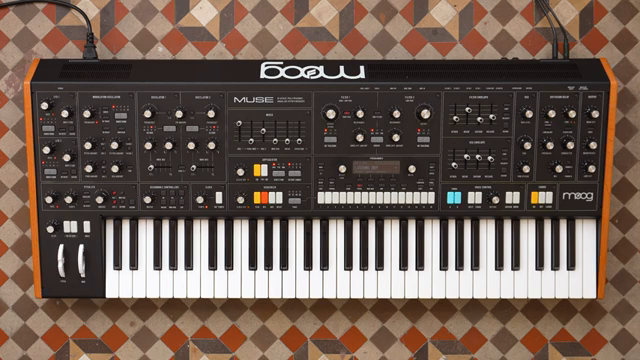
Moog Music’s Muse steps confidently into the spatial audio arena, offering a suite of stereo and binaural features that transform even the most basic patches into immersive soundscapes. In this official Moog demo, the spotlight is on Muse’s Pan Spread, LFO Phase Spread, and random spatialization tools—each designed to animate the stereo field with precision and flair. As always, Moog’s presentation is focused, technical, and rooted in practical sound design, giving us a clear window into how these features can reshape both studio and live workflows. For those seeking depth, movement, and a touch of unpredictability in their synth textures, Muse’s spatial toolkit is well worth a closer look.
Muse: A Spatial Playground
Muse is introduced as a synthesizer with a distinct focus on spatial and binaural sound manipulation, setting it apart from typical analog polysynths. The video wastes no time in highlighting Muse’s stereo animation capabilities, which are accessible across multiple sections of the instrument. Notably, the filter section supports stereo operation for wide filtering effects, while the diffusion delay acts as a dedicated stereo processor, further expanding the instrument’s spatial palette.
However, the real centerpiece here is the VCA’s Pan Spread control, which enables per-voice panning and forms the backbone of Muse’s spatial workflow. This feature is positioned as a gateway to enveloping, wide-screen sonic experiences, allowing users to move beyond static, mono patches. Moog’s approach is methodical, emphasizing how these spatial tools can be integrated into both sound design and performance contexts.
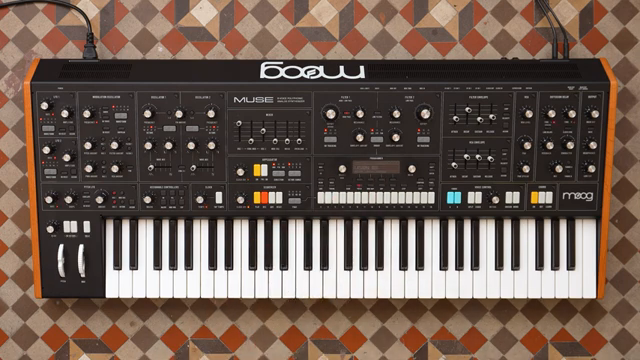
"But in the VCA section, we have the pan spread control which allows for per voice panning."
© Screenshot/Quote: Moogsynthesizers (YouTube)
Pan Spread: From Mono to Cinematic Stereo
"This can really open up a static patch and create a much more enveloping sound."
© Screenshot/Quote: Moogsynthesizers (YouTube)
The Pan Spread control is demonstrated as a transformative tool for stereo imaging. Starting from a classic analog polysynth patch, the video shows how gradually increasing the Pan Spread alternates the placement of voices between the left and right channels. This alternation grows in width as the control is turned up, culminating in a full stereo spread when set fully clockwise.
This approach doesn’t just widen the sound; it fundamentally reshapes the listener’s perception, turning a simple, static patch into something immersive and enveloping. The effect is immediate and musical, making it easy to inject life into otherwise plain textures. Moog’s demo underscores how Pan Spread can serve as both a subtle enhancement and a dramatic spatializer, depending on the musical context and the amount of spread applied.
LFO Phase Spread: Dynamic Binaural Animation
The video then dives into the LFO Phase Spread setting, a feature tucked away in the VCA’s advanced menu. By routing LFO 1 to modulate parameters like filter cutoff or VCA level, and enabling per-voice LFO operation, users can activate LFO Phase Spread to distribute LFO phases across the stereo field. This creates a binaural effect where modulation is no longer uniform but spatially animated, with each voice’s LFO phase determined by its stereo position.
When applied to volume modulation, the result is a sophisticated alternative to basic tremolo: instead of a flat, global volume pulse, the sound acquires a rotating, Leslie-like movement, with voices swirling independently across the stereo spectrum. The effect can be further intensified by combining it with Muse’s stereo diffusion delay, layering spatial and temporal animation for truly enveloping results. Moog’s workflow here is logical and menu-driven, but the payoff is a sound that feels alive and multidimensional.
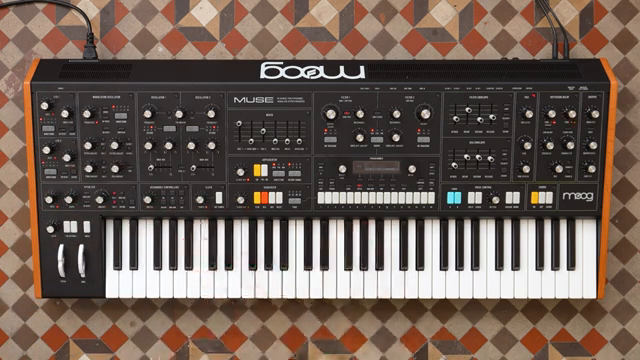
"This creates a really nice enveloping binaural sound."
© Screenshot/Quote: Moogsynthesizers (YouTube)
Random Pan Spread: Spatial Chaos for Creative Play
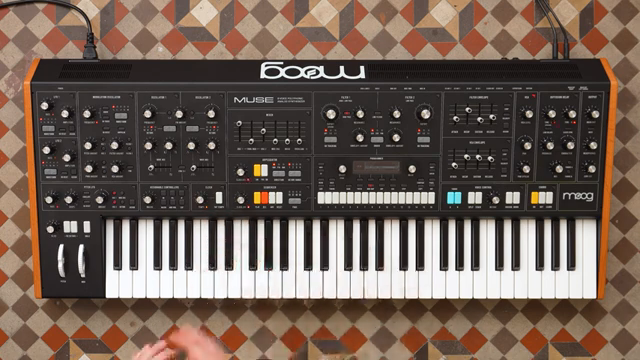
"This will randomly keep some voices in the center while throwing others to the extremes of the stereo field with increasingly out of phase spreading modulation."
© Screenshot/Quote: Moogsynthesizers (YouTube)
Finally, the demo explores Muse’s random Pan Spread mode, which assigns each voice a unique, unpredictable position in the stereo field. This randomness, especially when paired with LFO Phase Spread, yields textures where some voices remain centered while others are flung to the extremes, all with independently modulated phases. The result is a lively, evolving stereo image that resists predictability and invites experimentation. For performers and sound designers seeking organic, ever-shifting spatiality, this feature adds a welcome layer of creative chaos to Muse’s otherwise precise spatial toolkit.
This article is also available in German. Read it here: https://synthmagazin.at/moog-music-muse-raeumliche-und-binaurale-magie-entschluesselt/
Watch on YouTube:
Latest articles
Watch on YouTube:
Visit the channel:
https://www.youtube.com/MoogSynthesizers
https://www.youtube.com/MoogSynthesizers
Links from MoogSynthesizers:
website: https://moogmusic.com
instagram: https://instagram.com/moogsynthesizers
facebook: https://www.facebook.com/moogmusicinc
twitter: https://twitter.com/moogmusicinc
Sponsored links:
If you purchase via these links, we may earn a small commission – at no extra cost to you. The link opens an Amazon keyword search, and results may vary depending on availability.
Moog Muse
🔗 Check price on Amazon
🔗 Check price on Amazon