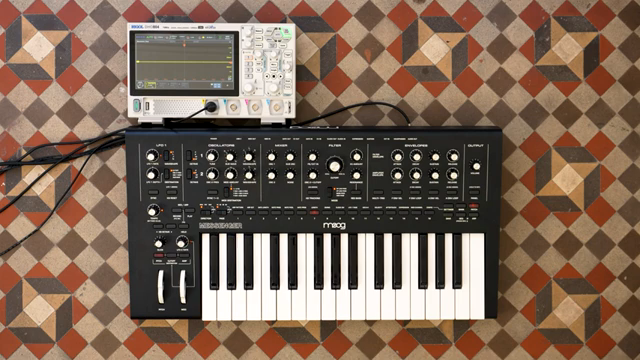
Moog Music’s Messenger steps into the limelight with a deep dive into its oscillator section, where classic waveforms meet modern wavefolding and a rather clever sub-oscillator trick. In this official Moog demo, the team walks us through the raw sonic building blocks, from saws and squares to variable pulses and triangles, before revealing the diode-transistor hybrid wavefolders that push the timbral palette far beyond the usual. The sub-oscillator, with its variable triangle shape, offers a refreshing approach to low-end reinforcement without the usual harmonic clutter. For those who care about the nuances of oscillator behaviour and how it shapes a patch, this video is a revealing look at Messenger’s core sound engine.
24. June 2025
MILES
Moog Music Messenger: Oscillator Alchemy and Sub-Octave Sorcery
Oscillator Origins: Messenger’s Sonic Foundation
The Messenger is introduced as a synthesizer with a focus on its oscillator section, which forms the heart of its sound generation. Moog Music’s demo sets the stage by reminding us that oscillators are the starting point for any synth patch, always humming away at the pitch dictated by the keyboard, waiting for the amplifier to let them through. The Messenger’s oscillators provide the raw material, ready to be sculpted by the filter and amplifier downstream.
This video makes it clear that what sets Messenger apart is not just the inclusion of classic oscillator shapes, but also the addition of wavefolders and a unique sub-oscillator. The approach is methodical, walking through each element and showing how these features open up new sonic territory. It’s a classic Moog presentation: understated, focused on sound and function, and aimed at those who want to know exactly how the instrument behaves at the patch level.
Classic Shapes: Saw, Square, Pulse, and Triangle
Messenger’s oscillators offer a full suite of traditional waveforms, accessible via a single wave shape knob. The demo highlights the morphing from sawtooth to square, with the pulse width narrowing as the knob is turned fully clockwise, and then returning to saw at the centre position. Moving counter-clockwise from noon, the shape transitions from saw to triangle, reducing harmonic content and offering a smoother, more subdued tone.
There’s also a nod to the shark-tooth and saw-triangle hybrid shapes, reminiscent of the Minimoog Model D’s palette. This flexibility allows for a wide range of timbres before any further processing, giving patchers plenty of raw material. The video demonstrates how these shapes respond to filtering, laying the groundwork for more complex sound design.
Folding the Spectrum: Diode-Transistor Hybrid Wavefolders
Diving below the triangle setting on the wave shape knob, Messenger introduces wave folding—a technique more often found in West Coast modular systems than in classic Moog fare. Here, the diode-transistor hybrid wavefolders, borrowed from the Labyrinth design, come into play. Rather than simply clipping the waveform, these folders fold the tops and bottoms back into themselves, creating complex, harmonically rich tones.
Both oscillators 1 and 2 share this wavefolding architecture, so they can be layered for even more intricate results. The folding is described as smooth and musical, expanding the oscillator’s tonal range well beyond the standard shapes. For those who like to push their oscillators into new territory, this is a significant addition to the Moog toolkit.
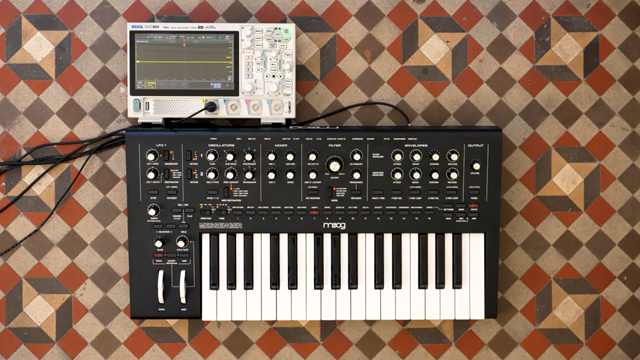
"When we go below the triangle, we engage wave folding."
© Screenshot/Quote: Moogsynthesizers (YouTube)
Sub-Octave with a Twist: The Variable Triangle Sub-Oscillator
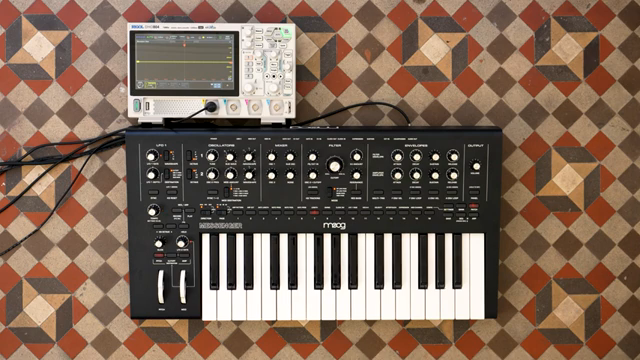
"An innovative feature of Messenger is that the sub-oscillator also has variable shape, from square, through narrowing pulse, and all the way down to triangle."
© Screenshot/Quote: Moogsynthesizers (YouTube)
Messenger’s sub-oscillator is always one octave below oscillator 1, but it’s not limited to the usual square wave. Instead, it offers a variable shape that can morph from square, through narrowing pulse, all the way to triangle. This is a rare feature, as most sub-oscillators stick to square waves for simplicity.
The triangle sub-oscillator is particularly useful for adding low-end weight without introducing extra harmonics that could muddy the mix. The demo shows how this focused low-frequency energy can reinforce a patch, keeping the bass tight and clean. It’s a thoughtful design choice for those who want sub support without sacrificing clarity.
Oscillator Synergy: Classic Meets Modern
Bringing it all together, Messenger’s oscillator section offers both the expected Moog waveforms and a few surprises. The inclusion of wavefolding and a variable-shape sub-oscillator means the instrument can cover classic sounds as well as more experimental textures. This flexibility is emphasised throughout the video, with examples that move from pure, harmonically simple tones to complex, folded waveforms.
For sound designers and patchers, Messenger’s oscillators provide a deep well of possibilities. The combination of classic and innovative features ensures that the instrument can deliver both vintage character and modern edge, all within a single, cohesive architecture.
This article is also available in German. Read it here: https://synthmagazin.at/moog-music-messenger-oszillator-alchemie-und-suboktav-zauberei/
Watch on YouTube:
Latest articles
Watch on YouTube:
Visit the channel:
https://www.youtube.com/MoogSynthesizers
https://www.youtube.com/MoogSynthesizers
Links from MoogSynthesizers:
website: https://moogmusic.com
instagram: https://instagram.com/moogsynthesizers
facebook: https://www.facebook.com/moogmusicinc
twitter: https://twitter.com/moogmusicinc
Sponsored links:
If you purchase via these links, we may earn a small commission – at no extra cost to you. The link opens an Amazon keyword search, and results may vary depending on availability.
Moog Messenger
🔗 Check price on Amazon
🔗 Check price on Amazon