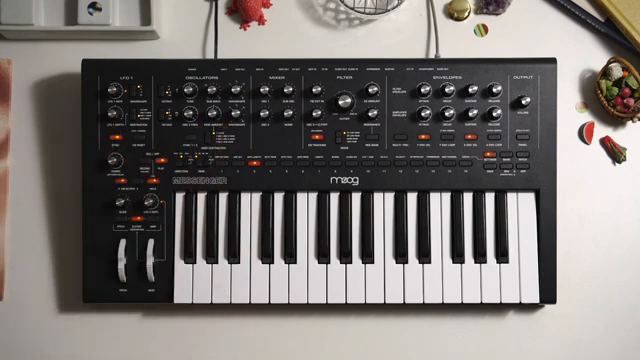
Moog Music’s Messenger steps into the spotlight with a demo focused on its impressively flexible arpeggiator—a tool designed not just for classic patterns, but for modern, rhythmically adventurous workflows. In this official Moog video, we’re guided through the Messenger’s ARP functions, from traditional up/down movement to advanced pattern and octave behaviors. The video emphasizes how Messenger’s arpeggiator isn’t just an add-on, but a compositional engine in its own right, with per-patch style storage and hands-on rhythm programming. For those interested in how digital control meets classic Moog sound, this is a revealing look at the architecture and workflow possibilities of Messenger’s ARP system.
15. November 2025
LYRA
Moog Music Messenger: Deep Dive into Arpeggiator Architecture
Messenger’s Arpeggiator: More Than a Bonus Feature
Messenger is introduced as a synthesizer with a built-in arpeggiator that’s clearly intended as a core compositional tool, not just a performance afterthought. The video opens by highlighting the ARP’s central role in the Messenger workflow, with dedicated panel controls and visual feedback for key functions. Moog’s approach here is to make the arpeggiator immediately accessible, with buttons for Play, Record, Hold, and ARP, each serving a distinct purpose in shaping the arpeggiator’s behavior.
The demonstration quickly moves from basic activation to showing how the ARP button enables a 16-button grid for rhythm programming—allowing users to insert rests or notes to define custom rhythmic patterns. The Hold function is also showcased, letting users latch arpeggiations without keeping hands on the keys. This setup positions Messenger’s arpeggiator as a flexible tool for both hands-on jamming and structured composition, with workflow cues that will feel familiar to anyone who’s used modern grooveboxes or workstation synths.
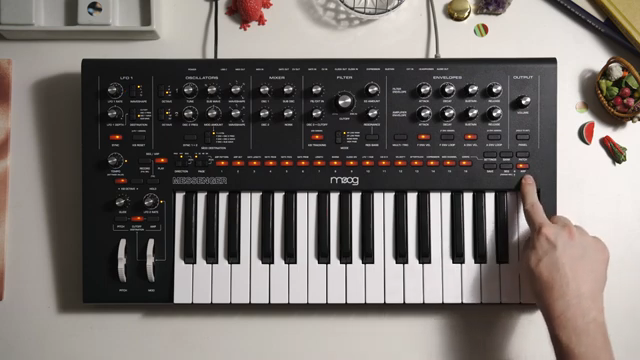
"When this button is lit, it indicates that these 16 buttons can be used to add rests or notes in order to create a rhythm for your arpeggiation."
© Screenshot/Quote: Moogsynthesizers (YouTube)
Movement Patterns: Classic and Cutting-Edge
"Order allows us to treat the ARP almost like a mini sequencer, where its movement is controlled by the order of the notes that we press on the keyboard."
© Screenshot/Quote: Moogsynthesizers (YouTube)
The Messenger’s arpeggiator offers a range of movement patterns, accessible via the Direction button. The video details three primary settings: Random (RND), Pattern (PAT), and Seek (the latter reserved for sequencer-focused demos). For this walkthrough, Pattern mode is the focus, as it unlocks the full depth of ARP behaviors.
Within Pattern mode, users can select from ascending, descending, and order-based motions, with the latter allowing the ARP to follow the exact order of notes played—a nod to mini-sequencer flexibility. The Record button introduces a pendulum (window wiper) motion, adding further movement complexity. Beyond these, Messenger includes more exotic options: random, leapfrogging, and alternating patterns, all designed to inspire unique melodic and rhythmic results. The architecture here is reminiscent of advanced digital arpeggiators, but with Moog’s tactile panel workflow.
Settings and Creative Workflows: Rhythms, Octaves, and Beyond
Diving into the Settings menu, the video explores two key pages: ARP Pattern and ARP Octave. These settings are where Messenger’s arpeggiator moves beyond the basics, offering users detailed control over both note order and octave behavior. The ARP Pattern page lets users select how the arpeggiator traverses notes, while ARP Octave determines how phrases or individual notes are distributed across octaves.
Messenger supports traditional octave cycling—running a phrase across one to four octaves—but also introduces per-note octave movement and randomized octave selection. This means users can create arpeggiations where each note jumps unpredictably across octaves, or where the ARP cycles octaves per note rather than per phrase. Combined with the pendulum motion and rhythmic grid, these features enable highly complex, evolving patterns that go well beyond standard up/down arpeggiation.
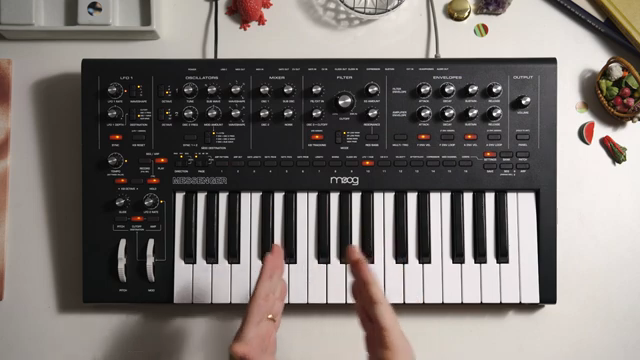
"This randomized octave selection is different from the randomized ARP selection, where that's randomizing the order of the notes."
© Screenshot/Quote: Moogsynthesizers (YouTube)
Per-Patch ARP Styles: Compositional Flexibility Unleashed
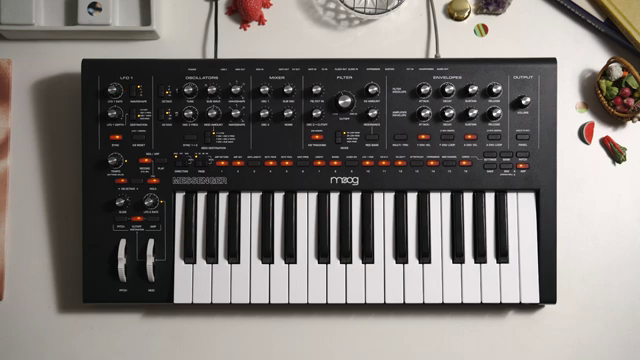
"Messenger's Arpeggiator is a really powerful tool for music creation, and can allow for some really nice melodic movement with rhythms, or can be used as a scratch pad to come up with new ideas for the sequencer."
© Screenshot/Quote: Moogsynthesizers (YouTube)
One of Messenger’s standout workflow features is the ability to store a unique arpeggiator style with each patch. The video demonstrates how users can quickly change ARP patterns, octave behaviors, and rhythmic grids, then save these settings as part of a patch for instant recall. This per-patch storage is crucial for composers and performers who want each sound to have its own ARP identity—no need to reprogram settings between songs or sections.
The video closes by emphasizing how Messenger’s arpeggiator can serve as both a melodic inspiration engine and a scratch pad for developing new ideas. Whether you’re building intricate rhythmic textures or sketching out sequences to transfer to the onboard sequencer, the ARP’s architectural flexibility is positioned as a key asset for modern composition and live performance.
This article is also available in German. Read it here: https://synthmagazin.at/moog-music-messenger-tiefenanalyse-der-arpeggiator-architektur/
Watch on YouTube:
Latest articles
Watch on YouTube:
Visit the channel:
https://www.youtube.com/MoogSynthesizers
https://www.youtube.com/MoogSynthesizers
Links from MoogSynthesizers:
website: https://moogmusic.com
instagram: https://instagram.com/moogsynthesizers
facebook: https://www.facebook.com/moogmusicinc
twitter: https://twitter.com/moogmusicinc
Sponsored links:
If you purchase via these links, we may earn a small commission – at no extra cost to you. The link opens an Amazon keyword search, and results may vary depending on availability.
Moog Messenger
🔗 Check price on Amazon
🔗 Check price on Amazon