In the second episode of Moog Music’s educational series, ‘Synthesizing with Moog,’ the focus shifts to the art of dynamics in synthesis—how a static circuit becomes a living, breathing instrument. Hosted by Chris Miller and filmed in the hallowed halls of Schneidersladen, this lesson dives into the voltage-controlled world of amplifiers and envelopes, revealing how human touch and control voltages transform mere oscillations into expressive musical phrases. Moog’s signature approach, blending technical clarity with a nod to history, makes this a must-watch for anyone curious about the tactile side of synthesis. Whether you’re a patch cable veteran or just learning your first ADSR, this is a deep dive into what makes a synth truly playable.
16. October 2025
MILES
Moog Music Explores Synth Dynamics: From Voltage to Expression
From Static Circuits to Expressive Instruments
The video opens with a philosophical musing on what truly defines a musical instrument. Is it the sound, the tactile response, or the way a musician can shape a note over time? Moog Music’s team sets the stage by contrasting the apparent coldness of a box full of knobs and cables with the subtlety and nuance that human interaction can bring—even to the most modular of setups.
This segment underscores that, despite their reputation for being machines, synthesizers can be deeply expressive. Whether it’s a gentle twist of a knob or the insertion of a patch cable, the performer becomes part of the circuit, infusing intention and emotion into every note. The lesson is clear: dynamics aren’t just about volume—they’re about the living relationship between musician and machine.
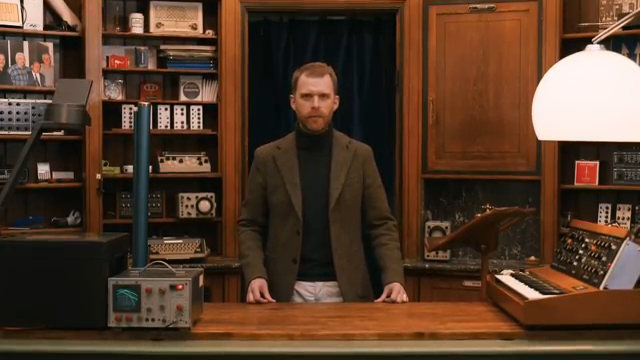
"How to control and articulate a note over time, and how you yourself can become a part of the circuit."
© Screenshot/Quote: Moogsynthesizers (YouTube)
Voltage-Controlled Amplifiers and Envelope Generators: The Heart of Dynamics
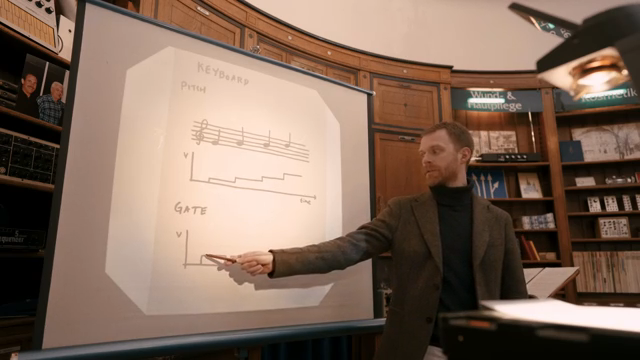
"The gate signal is zero volts at all times until we press a key, at which point it jumps up to eight volts and stays there all while the key is held."
© Screenshot/Quote: Moogsynthesizers (YouTube)
After establishing the three fundamental characteristics of sound—pitch, timbre, and amplitude—the video zeroes in on amplitude as the most basic property. Using the Minimoog Model D as a reference, the team explains that while oscillators are always running, it’s the Voltage-Controlled Amplifier (VCA) that determines when and how we actually hear a note. The VCA acts as an internal volume knob, modulated by control voltages rather than fingers, enabling the creation of discrete, articulated notes instead of endless drones.
The keyboard’s gate signal is introduced as the initial means of note articulation: zero volts until a key is pressed, then a jump to eight volts for the duration of the press. This binary on-off approach, while functional, lacks the nuanced articulation found in acoustic instruments. Enter the envelope generator, which takes the gate and sculpts it into a dynamic shape over time. The classic ADSR (Attack, Decay, Sustain, Release) model is explained in detail, with each stage offering a different way to shape the onset, body, and tail of a note.
Moog’s presentation highlights how having separate envelopes for amplitude and filter opens up a world of sonic nuance. By adjusting attack, decay, sustain, and release, the synthesist can mimic everything from percussive plucks to orchestral swells. The video demonstrates how these controls interact, giving practical examples of how envelope settings change the feel and expressiveness of a patch.
Control Voltages: Velocity, Aftertouch, and Beyond
The discussion shifts to the keyboard as a source of multiple control voltages, not just pitch and gate. Modern keyboards often provide velocity—how hard a key is struck—and aftertouch, the pressure applied after the initial press. These additional signals allow for a far greater range of expressive possibilities, letting the performer shape volume and timbre in real time.
Moog’s team also touches on alternative interfaces such as expression pedals and even the theremin, which uses hand proximity to control pitch and amplitude. The message is clear: electronic instruments are only as expressive as the voltages we feed them, and modern controllers offer a toolkit for nuanced, organic performance.

"It's just a few extra millimeters of key travel, but gives you a lot of added expressive control."
© Screenshot/Quote: Moogsynthesizers (YouTube)
A Nod to the Pioneers: Historical Roots of Synth Dynamics
The historical context is woven in with a story about composer Vladimir Ussachevsky’s influence on Bob Moog. Ussachevsky, a key figure at the Columbia Princeton Electronic Music Center, recognized the limitations of simple gate-based articulation and proposed the envelope generator—specifically, one with four distinct stages. This collaboration led to the now-standard ADSR envelope, a cornerstone of modern synthesis.
The video reminds us that these innovations didn’t emerge in a vacuum; they were shaped by the needs and imaginations of early electronic musicians. Moog’s approach, as always, is to blend technical explanation with a sense of lineage, grounding today’s patching techniques in decades of creative exploration.
Synthesizer as Partner: Fostering Creative Connection

"There is a connection. I hesitate to use the word spiritual, but it has to do with the forces that we know we living things can exert and can respond to."
© Screenshot/Quote: Moogsynthesizers (YouTube)
The closing moments reflect on the evolving relationship between musician and instrument. As Bob Moog himself once suggested, there’s a connection—almost spiritual—between player and machine, forged through the act of exploration and response. The video encourages viewers to approach synthesis not just as a technical exercise, but as a creative partnership, where curiosity and control go hand in hand.
Watch on YouTube:
Latest articles
Watch on YouTube:
https://www.youtube.com/MoogSynthesizers
Links from MoogSynthesizers:
Sponsored links:
If you purchase via these links, we may earn a small commission – at no extra cost to you. The link opens an Amazon keyword search, and results may vary depending on availability.
🔗 Check price on Amazon