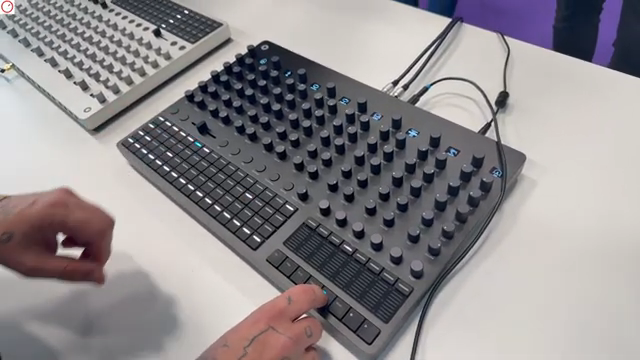
Modor Music’s NF-1k synthesizer receives its first firmware upgrade, OS002, and the focus is all about workflow. The update doesn’t reinvent the synth’s core sound but instead introduces thoughtful improvements to how aftertouch, velocity, arpeggio, and unison functions are accessed and assigned. This video, in classic Modor style, walks through these refinements with a hands-on patch-building demo. For synth nerds who care about modulation matrices and menu ergonomics, it’s a revealing look at how digital architecture can be fine-tuned for real-world playability.
Firmware 002: Subtle but Significant
The video opens by positioning the Modor NF-1k not just as a digital powerhouse, but as a platform that evolves through firmware. OS002 doesn’t radically alter the synth’s sonic character, but instead focuses on usability and workflow—a nod to players who value efficient patching as much as raw DSP. The update underlines Modor’s ongoing commitment to making navigation and modulation assignments more transparent, especially for those deep in the weeds of digital synthesis.
What’s most apparent is the philosophy: rather than chasing new oscillators or dramatic effects, Modor targets the hands-on experience. The NF-1k’s already deep modulation structure gains tweaks that streamline everyday tasks, addressing small but real friction points for performers and sound designers. In a world of feature bloat, this kind of targeted refinement is quietly radical.
"It has been made a lot easier now to assign aftertouch and velocity modulations, and it's also easier to access the different arpeggio and unison parameters."
© Screenshot/Quote: Modormusic (YouTube)
Aftertouch and Velocity: Modulation Matrix, Simplified
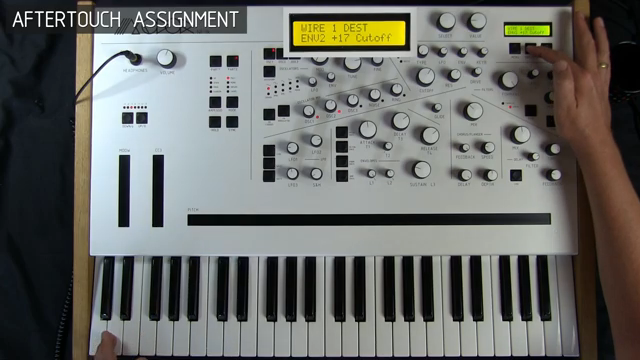
"And you see the source jumps to aftertouch over here. If you hit the key harder it jumps to velocity."
© Screenshot/Quote: Modormusic (YouTube)
The OS002 firmware introduces a more direct way to assign aftertouch or velocity as modulation sources, minimizing button gymnastics. By holding the source button and pressing a key, users can instantly route aftertouch or velocity into the modulation matrix—transforming expressive gestures into tangible sonic results with far less menu-diving. This is a small but meaningful shift for performers who want immediacy when shaping a sound.
The process is made even smoother by the system’s flexibility: users can still opt for LFOs, envelopes, or other sources, but the act of mapping keyboard dynamics to destinations like filter cutoff is now frictionless. For those who live in the modulation matrix, this refinement translates into quicker experimentation and a more tactile connection to the synth’s digital core.
Menus for Humans: Unison and Arpeggio Streamlined
A standout in OS002 is the introduction of dedicated menus for unison and arpeggio parameters. Gone is the need for awkward two-handed combinations—simply holding the Mode or Arpeggio button for a second brings up all relevant settings in a single view. This shift makes real-time sound shaping more practical, particularly for live or improvisational contexts.
Now, adjusting the number of unison voices, detuning, or stereo spread is fast and clear. Similarly, tweaking arpeggiator speed and octave range no longer demands button-and-dial choreography. By restructuring these controls, Modor addresses a classic digital synth pain point: too many features hidden behind multi-function buttons and convoluted shortcuts.
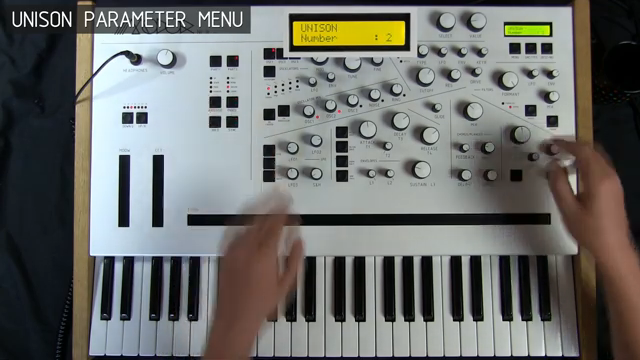
"If you keep down the mode button for a second it jumps into this unison menu where all unison related parameters are listed up."
© Screenshot/Quote: Modormusic (YouTube)
Arpeggio Speed Random: Controlled Chaos
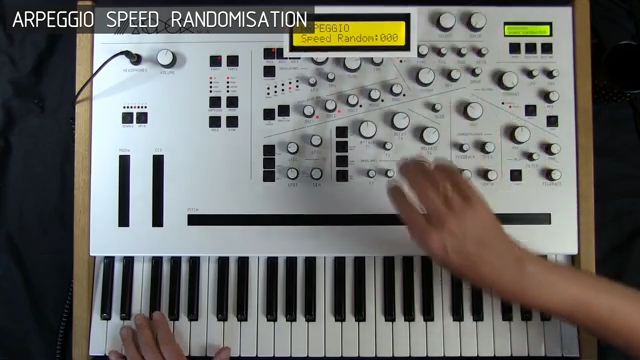
"Normally the arpeggiator plays in a steady pace but if you turn up random the speed, this pace gets randomized."
© Screenshot/Quote: Modormusic (YouTube)
Adding the Speed Random parameter to the arpeggiator brings playful unpredictability to the NF-1k’s rhythmic engine. When dialed in, the arpeggiator’s timing becomes less rigid, injecting a sense of movement that’s often missing from tightly clocked patterns. This is not about losing control, but about shaping grooves with a humanized, evolving edge.
Combined with the synth’s flexible modulation routing, this new parameter opens up possibilities for generative patches and evolving textures. It’s a subtle addition, but for digital synth aficionados, such controlled randomness is a powerful tool in the creative arsenal.
Bitimbral Atmospheres: Layered Digital Textures
To showcase these firmware enhancements, the video culminates in a lush, bitimbral atmospheric pad—one layer driven by a unison pad with aftertouch-controlled filter, the other by an arpeggiated FM bell patch. The demonstration underscores the NF-1k’s ability to weave intricate textures from its digital architecture, layering classic pad richness with evolving, randomized arpeggios.
This is where the workflow upgrades are most tangible: switching between layers, tweaking modulation sources, and introducing randomness all happen without breaking musical flow. The result is a clear argument for incremental firmware improvements—sometimes, a more playable synth is the most musical upgrade of all.
This article is also available in German. Read it here: https://synthmagazin.at/modor-music-nf-1k-os002-firmware-verfeinert-digitale-tiefe/
More articles about these products:
Watch on YouTube:
Latest articles
Watch on YouTube:
Visit the channel:
https://www.youtube.com/ModorMusic
https://www.youtube.com/ModorMusic
Links from ModorMusic:
website: https://www.modormusic.com
instagram: https://www.instagram.com/modormusic
facebook: https://www.facebook.com/modormusic
Sponsored links:
If you purchase via these links, we may earn a small commission – at no extra cost to you. The link opens an Amazon keyword search, and results may vary depending on availability.
Modor NF-1k
🔗 Check price on Amazon
🔗 Check price on Amazon