The Modor NF-1 is no ordinary digital poly synth—it’s a showcase of what happens when a proudly digital architecture meets tactile sound design. In this official overview, Modor Music walks us through the NF-1’s eight-voice polyphony, custom DSP oscillators, distinctive multimode and formant filters, and a hands-on effects section that’s all about real-time control. As always with Modor’s design philosophy, it’s not just about recreating analog classics, but about expanding the possibilities of digital synthesis in a workflow-focused package.
A Digital Powerhouse in Metal
The Modor NF-1 is introduced as a digital polyphonic synthesizer with eight voices, immediately setting the tone for a modern approach to synthesis. Housed in a robust metal chassis, the instrument is clearly designed for both studio permanence and stage durability. For those with specific rack requirements, Modor includes a pair of 19-inch rack ears, underlining its versatility in various setups.
Connectivity is straightforward and familiar, with classic MIDI in, out, and through ports, as well as stereo audio outputs. Two pedal connectors—one for sustain and another for modulation—provide additional hands-on control options. These hardware decisions show Modor’s intent to make the NF-1 both accessible and flexible for electronic musicians seeking a digital instrument that fits comfortably into existing rigs.
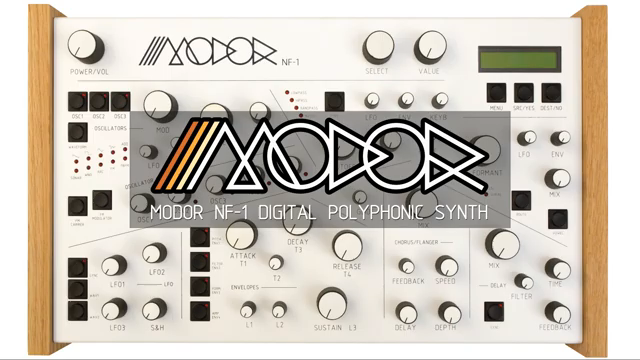
"This is the Modor NF1 digital poly synth 8 voices of polyphony built inside a sturdy metal casing."
© Screenshot/Quote: Modormusic (YouTube)
Oscillator Section: Classic Meets Character
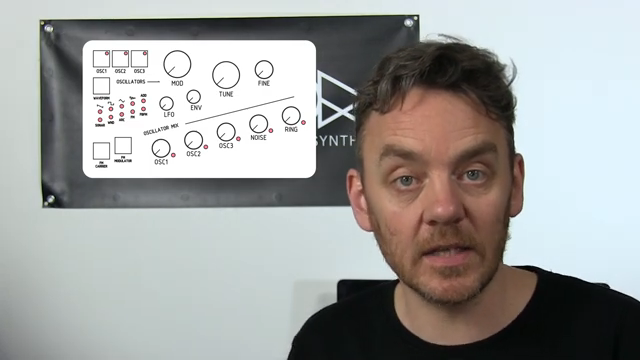
"Three noisy tonal noisy waveforms that make not white noise but noise with a certain tonal character."
© Screenshot/Quote: Modormusic (YouTube)
The NF-1’s sound generation is pure digital subtractive synthesis—no analog circuitry or filters lurking under the hood. The workflow here is classic: oscillators feed into filters, which then pass through effects. But Modor departs from virtual-analog orthodoxy by introducing unique tonal elements in the oscillator section.
Beyond the expected sawtooth, square, and triangle waves, the NF-1 offers three ‘tonal noisy’ waveforms, which go beyond mere white noise. These waveforms inject a grainy, textural layer with a defined tonal center, making them ideal for adding edge or complexity to a patch. Layering these noisy oscillators with traditional waveforms opens up new sonic landscapes, emphasizing the NF-1’s experimental edge within a familiar subtractive framework.
Multimode and Formant Filters: Morphing the Spectrum
Filtering on the NF-1 is handled by a multimode filter, offering low-pass, band-pass, and high-pass outputs. What stands out is the ability to crossfade between these outputs, giving users dynamic control over the filter character in real time. Resonance is present, allowing for the classic emphasis and shaping expected in subtractive synthesis workflows.
Distinctively, a second filter—the formant filter—brings vowel morphing into the mix. This filter is capable of morphing between different vowel sounds, simulating the spectral motion of a human voice. Such a feature isn’t just for novelty; it invites creative sound design, enabling patches that move and articulate in ways not possible with standard filter types.
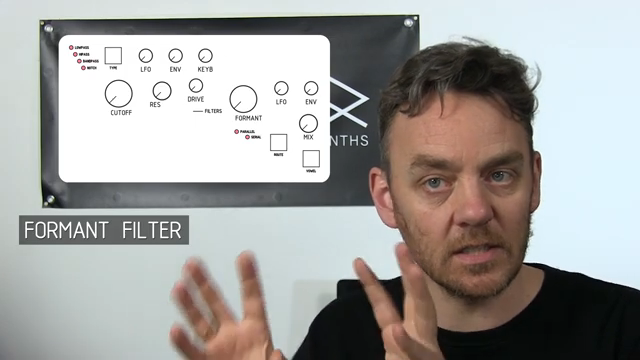
"The formant filter that does vowel morphing morphing between different vowels sounds a bit like filtering towards a human voice sound."
© Screenshot/Quote: Modormusic (YouTube)
Microtonality Unleashed
"The nf1 has quite a extensive set of microtonal options built inside it for those who are interested in microtonality."
© Screenshot/Quote: Modormusic (YouTube)
Modor makes a point of highlighting the NF-1’s built-in microtonal capabilities. For users intrigued by tuning systems beyond standard Western scales, the synth provides an extensive set of microtonal options. While the video does not detail these parameters, their inclusion signals that the NF-1 is designed for adventurous composers and performers seeking to push pitch and harmony into new territory.
Effects: Knobs for Every Twist
The effects section on the NF-1 is as hands-on as the rest of the interface. Every parameter is assigned its own dedicated front panel knob, eschewing menu-diving for direct, immediate control. This physicality enhances real-time performance and sound sculpting, keeping the musician’s focus on creativity rather than navigation.
While the effects themselves are described as classic, the workflow is deliberately streamlined for experimentation and live use. The commitment to dedicated hardware controls throughout the instrument reinforces Modor’s design ethos: digital synthesis can—and should—be as tactile and immediate as its analog ancestors.
This article is also available in German. Read it here: https://synthmagazin.at/modor-music-nf-1-digitale-polyphonie-mit-eigenem-charakter/
Watch on YouTube:
Latest articles
Watch on YouTube:
Visit the channel:
https://www.youtube.com/ModorMusic
https://www.youtube.com/ModorMusic
Links from ModorMusic:
website: https://www.modormusic.com
instagram: https://www.instagram.com/modormusic
facebook: https://www.facebook.com/modormusic
Sponsored links:
If you purchase via these links, we may earn a small commission – at no extra cost to you. The link opens an Amazon keyword search, and results may vary depending on availability.
Modor NF-1
🔗 Check price on Amazon
🔗 Check price on Amazon