Make Noise, the Asheville-based modular mavericks, return with a deep-dive into the world of microsound synthesis, putting the QMMG and XPO modules through their paces. This workshop-style video is a patcher’s delight, dissecting pulsar, glisson, and trainlet synthesis techniques with a focus on hands-on signal flow and creative modulation. Expect a heady mix of envelope sculpting, randomisation, and stereo wizardry, all delivered in Make Noise’s signature exploratory style. If you’re curious about how these modules can be wrangled into complex, evolving textures, this is a must-watch.
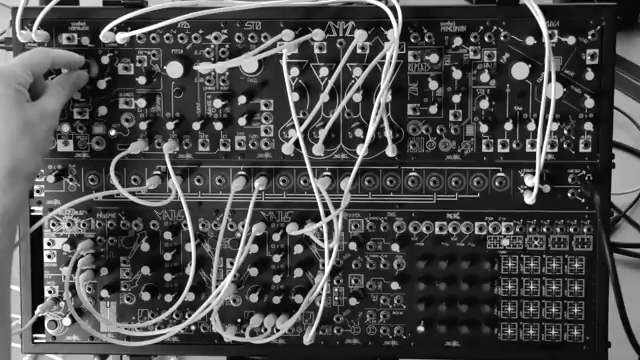
Microsound Foundations: QMMG and XPO at the Core
The video opens with a clear mission: to revisit microsound synthesis at the patch level, using Make Noise’s QMMG and XPO modules as the primary sonic engines. The QMMG, with its multi-mode filtering and VCA capabilities, is paired with the XPO oscillator, laying a robust foundation for granular explorations. This isn’t just a theoretical overview—the focus is on real-world patching, with each connection and modulation source explained as it happens.
As is typical for Make Noise’s approach, the emphasis is on experimentation and discovery rather than step-by-step instruction. The modules are patched in a way that encourages evolving textures and unexpected results, setting the stage for the three microsound techniques to follow. The video’s tone is conversational but dense with technical detail, making it a rewarding watch for anyone who thinks in voltages and patch cables.
Pulsar Synthesis: Envelope Sculpting in Action
Pulsar synthesis is tackled first, with the creation of short amplitude envelopes applied to simple waveforms—here, the XPO’s sine output is the star. The QMMG’s first two channels are set to VCA mode, shaping the amplitude of the incoming signal, while the subsequent channels are switched to high-pass mode for further timbral refinement. The resulting signal path is a classic example of Make Noise’s modular philosophy: flexible, layered, and ripe for modulation.
The patch is animated by a Maths channel, which provides dynamic CV to the QMMG, and is triggered by the EOR output from the opposite side of Maths. Randomness is injected via the Wogglebug, whose stepped random output is routed through attenuators to modulate both the envelope shapes and the filter cutoff points. The result is a lively, ever-shifting soundscape, with stereo motion introduced by multing CV signals to the XPO’s modulation inputs. This section showcases the modules’ ability to generate complex microsound textures from relatively simple building blocks.

"Pulsar synthesis is based on the creation of short amplitude envelopes on simple waveforms like sine."
© Screenshot/Quote: Maken0Isemusic (YouTube)
Glisson Synthesis: Frequency Slews and Sonic Layers
"Glisson synthesis is the creation of many small sound events with glissando applied."
© Screenshot/Quote: Maken0Isemusic (YouTube)
Glisson synthesis is all about crafting small sound events with embedded frequency glissando—essentially, micro-events that swoop up or down in pitch. The patch leverages Maths to create upward motion, while the EOC gate clocks the Wogglebug, injecting further unpredictability into the duration and direction of each glisson. The sum output from Maths, combined with a negative offset, is used to randomise both the depth and polarity of the pitch modulation.
This approach results in a patch where each micro-event is unique, with the oscillator’s pitch moving variably up or down. Stereo interest is maintained by modulating the XPO’s stereo outputs, and the overall effect is a dense, intricate tapestry of glissandi. The video demonstrates how these techniques can be layered and recorded, providing a practical template for anyone looking to add movement and complexity to their modular patches.
Trainlet Synthesis: Impulse Streams and Evolving Textures
Trainlet synthesis enters the fray with the use of short bursts of impulse streams, generated by cycling Maths channels controlling the XPO’s sub output. This signal is then multed to two high-pass filters on the QMMG, creating a stereo field of percussive, grain-like events. Each new amplitude event triggers a fresh impulse frequency, ensuring the texture is always in flux.
Further modulation is applied by routing both smooth and stepped random CV from the Wogglebug through attenuators, shaping the filter behaviour in real time. The result is a patch that feels alive, with constantly shifting timbres and rhythmic patterns. This section underlines the QMMG’s versatility as both a filter and a VCA, and highlights how impulse-driven microsound techniques can yield surprisingly organic results in a modular context.
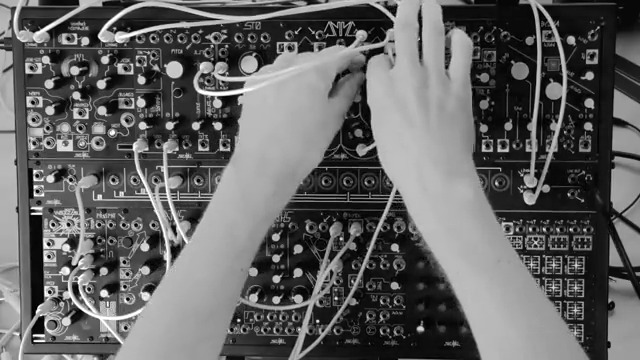
"Trimlet synthesis is created using short bursts of impulse streams."
© Screenshot/Quote: Maken0Isemusic (YouTube)
Layering and Effects: Expanding the Microsound Palette
The final segment encourages creative layering of the previously demonstrated techniques, suggesting that the real magic happens when pulsar, glisson, and trainlet methods are combined. The video demonstrates sound-on-sound recording, building up dense, multi-layered textures that showcase the strengths of both the QMMG and XPO in a collaborative patch environment.
Spatial effects are brought into play, with the VCA output routed through a reverb (Brusa) before being sent to the high-pass channels. This not only adds depth and space to the microsound events but also highlights the importance of effects in shaping the final result. The video closes with a nod to the value of experimentation and invites viewers to share their own sonic explorations—a fitting end to a workshop steeped in Make Noise’s ethos of open-ended patching.
This article is also available in German. Read it here: https://synthmagazin.at/mikrosound-alchemie-make-noise-erforscht-qmmg-und-xpo-im-detail/
Watch on YouTube:
Latest articles
Watch on YouTube:
Visit the channel:
https://www.youtube.com/MAKEN0ISEMUSIC
https://www.youtube.com/MAKEN0ISEMUSIC
Links from MAKEN0ISEMUSIC:
website: https://www.makenoisemusic.com
instagram: https://www.instagram.com/makenoisemusic
twitter: https://twitter.com/makenoisemusic
facebook: https://www.facebook.com/makenoiseco
Sponsored links:
If you purchase via these links, we may earn a small commission – at no extra cost to you. The link opens an Amazon keyword search, and results may vary depending on availability.
Maths
🔗 Check price on Amazon
🔗 Check price on Amazon
Morphagene
🔗 Check price on Amazon
🔗 Check price on Amazon
QMMG
🔗 Check price on Amazon
🔗 Check price on Amazon
Wogglebug
🔗 Check price on Amazon
🔗 Check price on Amazon