If you think filter banks are just for polite EQ-ing, think again. Meska of the statik collective runs the Erica Synths Resonant Filter Bank through its paces, turning what could be a clean lab tool into a filthy, feedback-laden party starter. With a sharp eye for experimental tricks and a taste for techno chaos, Meska digs into the module’s quirks, clocked oddities, and digital wizardry. This isn’t just a demo—it’s a guided tour through the underbelly of a modern filter bank, where presets morph and white noise becomes a playground for sonic mischief. Don’t expect hand-holding—do expect some heavy inspiration.
2. June 2026
SPARKY
Meska’s Filter Bunker: Erica Synths Resonant FB Gets the Rave Lab Treatment
The Beast Uncaged: 10 Bands, Analog Guts, Digital Brain
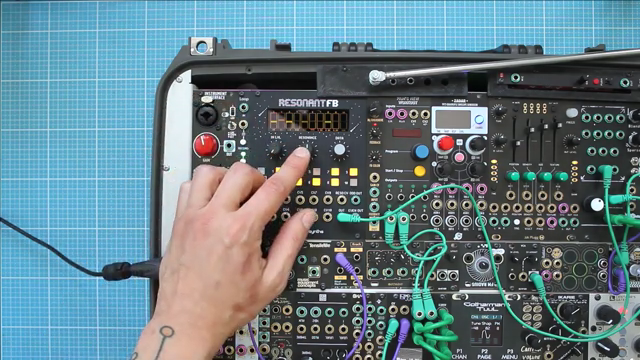
Meska jumps straight in, introducing the Erica Synths Resonant Filter Bank as a ten-band analog filter bank with fixed frequencies, but don’t be fooled—this is no museum piece. The real magic is digital: save and load presets, tweak feedback, and step into new creative territory. You get a front panel full of knobs, buttons and encoders ready for action.
There’s a quick run through the interface—gain, resonance (bipolar for inverted feedback too), navigation encoder, and the full spread of CV inputs for total surgical control. Stereo is sorted with odd/even outputs, which means you can get wild with the stereo field and stack up some serious chaos. In short, this is a filter bank with teeth and a taste for trouble.
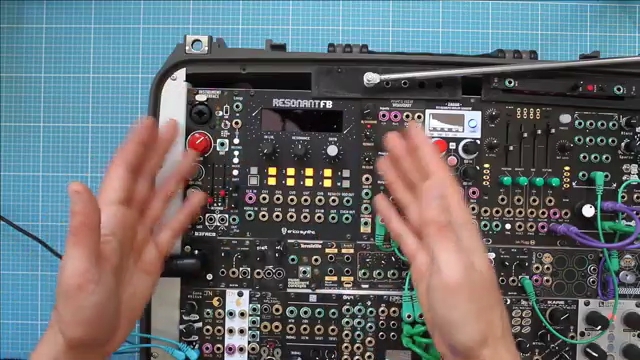
"It's basically a 10-band analog filter bank with fixed set frequencies, with feedback or resonance, and it's digitally controlled, so you can, for example, save and load presets, but it opens many new possibilities."
© Screenshot/Quote: Meska Statik (YouTube)
Control Freaks Welcome: Bands, Feedback, and Filter Modes
Every band can be CV’d, tweaked, and pushed to the edge—or into self-oscillation if you’re brave. Feedback isn’t just a switch; it’s a full playground, with the option for inverted feedback and routing tricks. Want to send just one band into the feedback loop? Easy. The only let down: no way to select a handful of bands for feedback—it’s all or one, not some, and Meska isn’t shy about wishing for more.
There’s also randomisation for the chaos heads—shuffle your bands, clear them out, or just mash buttons until something explodes. Modes change the game, with filter, bandpass, high pass, and more, all digitally controlled for precise (or not-so-precise) mayhem. If you want surgical, it’s here; if you want wild, that’s on tap too.
Noise as Canvas: Demoing with White Noise and Self-Oscillation
"it can go into self-oscillation and create some crazy sound, and the volume can be a little high, so beware if you're here, especially if you're wearing headphones."
© Screenshot/Quote: Meska Statik (YouTube)
For the demo, Meska slams white noise into the filter bank—no polite sine waves here, just raw fodder for the beast. You can solo bands, sweep gains, and crank resonance until the whole thing howls. It’s not just about shaping sound; it’s about pushing the circuit until it begs for mercy. Watch your headphones, though—this thing will scream if you let it.
Self-oscillation isn’t some accidental side effect—it’s a feature, a weapon for those who want their filter bank to double as a mad oscillator. The feedback path gets a workout, with both standard and inverted options showcased. The result? Unpredictable, gnarly textures that sound more like a rave in an abandoned power station than a polite filter bank demo.
Modes for Days: Clocked, Dynamic and Beyond
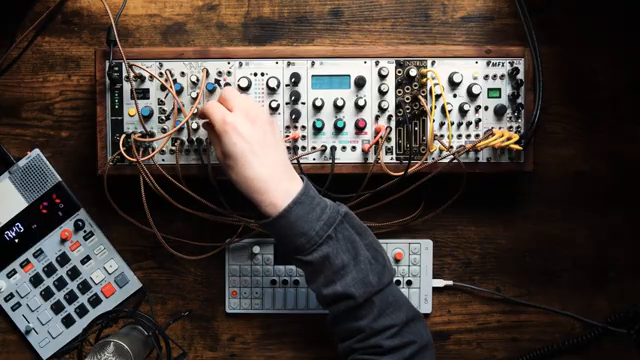
Meska dives deep into the different operational modes, starting with classic filter sweeps, then moving to clocked and dynamic territory. Clocked mode lets you step through bands in sync with an external clock—think Pamela’s New Workout—sampling CV values and creating animated, evolving textures. Push the clock rate high and bands start swirling in a way that’s more ‘modular fever dream’ than ‘traditional filtering’.
Dynamic mode is a bit of a spectral detective, analysing incoming signals and boosting or cutting frequencies based on thresholds. Drop in a complex VCO and the module starts sculpting wild new timbres, perfect for dark, experimental techno and brutalist sound design. There’s a play mode for morphing presets, randomisation, and even a spectral visualiser for those who want to see the mayhem as well as hear it. Some modes get a quick pass (spectral mode, we’re looking at you), but it’s clear this module isn’t short on creative routes for experimentalists.
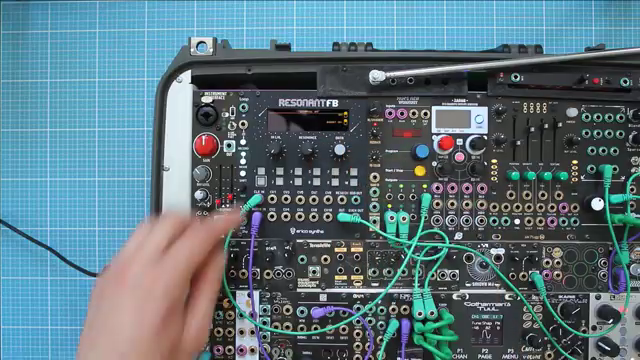
"In this mode, you can create some really interesting wave shaping for oscillators, for example."
© Screenshot/Quote: Meska Statik (YouTube)
Watch It, Don’t Read It: Meska’s Demo Delivers the Goods
Look, you can read specs until your eyes glaze over, but Meska’s demo is where the real action is. Seeing (and hearing) the filter bank abused in real time makes all the difference. If you want to understand how presets morph, how feedback can turn pleasant into punishing, or just how wild white noise can get, this video is essential viewing for the sound design-obsessed. Don’t just take my word for it—strap on your headphones and dive in.
This article is also available in German. Read it here: https://synthmagazin.at/meskas-filter-bunker-erica-synths-resonant-fb-bekommt-die-rave-labor-behandlung/
More articles about these products:

Watch on YouTube:
Latest articles
Watch on YouTube:
Visit the channel:
https://www.youtube.com/Meska_Statik
https://www.youtube.com/Meska_Statik
Links from Meska_Statik:
Official release: https://statikwave.bandcamp.com/
Instagram: https://www.instagram.com/statik_wave/
Facebook: https://facebook.com/statikwave
Sponsored links:
If you purchase via these links, we may earn a small commission – at no extra cost to you. The link opens an Amazon keyword search, and results may vary depending on availability.
Erica Synths Resonant Filter Bank
🔗 Check price on Amazon
🔗 Check price on Amazon
Pamela's New Workout
🔗 Check price on Amazon
🔗 Check price on Amazon