Descending into Make Noise’s signature netherworld, this video is a deep dive into the Spectrophone—a synthesizer that thrives on chaos, noise, and intricate groove construction. The official Make Noise channel, always one for avant-garde patching and creative modulation, demonstrates how the Spectrophone can morph static textures into dynamic, evolving soundscapes. Expect a patch-oriented walkthrough: from kick drum patterns that blur into toms, to ghostly melodies and modulated noise, all stitched together with clever sequencing and modulation. If you’re after inspiration for wrangling wild voltages into musical forms, this is a journey worth following.
Into the Netherworld: Spectrophone’s Sonic Landscape
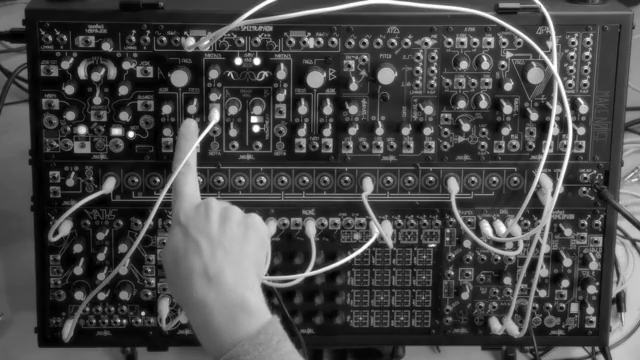
The video opens with a tongue-in-cheek descent into a mysterious underworld, setting the stage for a session with the Spectrophone. Make Noise’s presenter wastes no time, suggesting the static atmosphere could use a groove—cue the Spectrophone’s chaos and noise modes. This isn’t your average oscillator: the A side is set to chaos, the B side to noise, and the follow function ensures pitch modulation on A is mirrored on B, with their tuning ratio locked for potential tuned FM work.
What’s immediately clear is that the Spectrophone is designed for more than traditional synthesis. Its chaos and noise modes are not just sound sources, but interactive engines for evolving textures. The initial sounds—engine revs and abstract pulses—hint at the module’s ability to conjure everything from subterranean rumbles to spectral atmospheres, all before a single sequencer step is patched.
Chaos, Noise, and Interactive Pitch: Core Functions Unveiled
Diving into the Spectrophone’s core, the video demonstrates how chaos and noise modes can be harnessed for rhythm and melody alike. With the A side in chaos, a gate sequence is used to strike the DXG, producing a kick drum pattern that morphs between percussive roles as pitch is sequenced. This approach blurs the line between kick and tom, showing the Spectrophone’s flexibility in percussive duties.
Pitch modulation isn’t just for melodic lines—it’s a tool for shaping the entire timbral landscape. The follow feature ensures that modulations on A influence B, allowing for tightly coupled or wildly divergent voices depending on patching. The presenter’s use of tuned FM and modulation of internal parameters like partials and focus highlights the Spectrophone’s penchant for interactive, hands-on sound design.
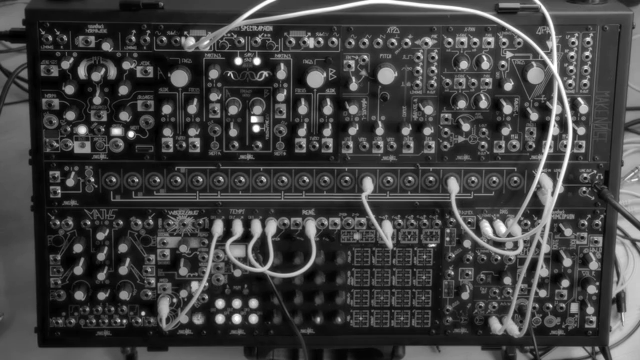
"I like sequencing the pitch of an oscillator used for kick drums."
© Screenshot/Quote: Maken0Isemusic (YouTube)
Patchwork Complexity: Layering Voices and Routing

"That's sort of a ghostly melody, but also tightly intertwined with this drum beat."
© Screenshot/Quote: Maken0Isemusic (YouTube)
The patch quickly evolves as additional voices are layered in. Side B’s noise mode is pressed into service for a ghostly melodic line, tightly intertwined with the drum groove thanks to shared sequencing and the follow function. Outputs are routed through the X-Pan and Q-Post, then into the Mimeophon for spatial processing, before being mixed back into the system via the DXG. This chain demonstrates how the Spectrophone integrates with other Make Noise modules to create a multi-dimensional soundscape.
Envelope generation is handled by the Cartesian channel of René, injecting movement into the melodic voice. The partials parameter on the noise side is rhythmically modulated using René’s Y-Gates, with stepped random voltages from the Wogglebug adding further unpredictability. This modulation is patched through the ModDemix, allowing the depth of modulation to be randomized and layered with envelope shapes for nuanced control.
A third voice enters: a metallic, high-pitched element sourced from the XPO’s spike wave, crossfaded and VCA’d for dynamic interplay. Each voice is carefully routed and modulated, illustrating the Spectrophone’s role as the heart of a complex, evolving patch where every output can become a new input for creative exploration.
Modulation and Performance: Evolving Grooves in Real Time
Performance tools and modulation techniques take centre stage as the patch grows. The Morphagene is introduced, receiving audio from the DXG and feeding its processed output back into the mix. With the sound-on-sound control set for overdubbing and the SD card’s input option engaged, the performer records and re-records in sync with the groove, then plays back at a lower octave for added depth.
Modulation is everywhere: from subtle focus tweaks with smooth CV from the Wogglebug to rhythmic gating and stepped random voltages shaping the noise and melodic voices. The result is a constantly shifting sonic landscape where no two bars are the same. The interplay between manual control and automated modulation is highlighted, showing how the Spectrophone and its companions can be played as a live instrument rather than a static sound source.
Throughout, there’s a sense of playful experimentation. The groove is described as “nice but not powerful enough to get me out of here,” underscoring the idea that this system is as much about the journey as the destination. The evolving patch invites further tweaking, with the performer musing about counter-patches and the need to “shake up” the groove—a nod to the endless possibilities of modular performance.
"This groove is nice but I don't know if it's powerful enough to get me out of here."
© Screenshot/Quote: Maken0Isemusic (YouTube)
Experimentation Encouraged: Sample & Hold and Rhythmic Mutation
The closing section is a masterclass in creative modulation. Sample and hold techniques, courtesy of the Wogglebug’s stepped random voltages, are used to inject rhythmic variation and unpredictability into the patch. Gates, envelopes, and random sources are combined to modulate parameters like partials, focus, and filter cutoff, ensuring the groove never settles into repetition.
Make Noise’s presentation style is as much about inspiring experimentation as it is about demonstrating features. The repeated refrain—wondering if the groove needs shaking up—serves as both a running joke and a challenge to the viewer: don’t be afraid to patch outside the lines. The Spectrophone, in this context, is less a fixed instrument and more a launchpad for sonic adventure, rewarding those willing to embrace chaos and let the patch evolve.
This article is also available in German. Read it here: https://synthmagazin.at/maken0ise-spectrophone-subterrane-grooves-von-chaos-zu-kontrolle/
Watch on YouTube:
Latest articles
Watch on YouTube:
Visit the channel:
https://www.youtube.com/MAKEN0ISEMUSIC
https://www.youtube.com/MAKEN0ISEMUSIC
Links from MAKEN0ISEMUSIC:
website: https://www.makenoisemusic.com
instagram: https://www.instagram.com/makenoisemusic
twitter: https://twitter.com/makenoisemusic
facebook: https://www.facebook.com/makenoiseco
Sponsored links:
If you purchase via these links, we may earn a small commission – at no extra cost to you. The link opens an Amazon keyword search, and results may vary depending on availability.
Mimeophon
🔗 Check price on Amazon
🔗 Check price on Amazon
modDemix
🔗 Check price on Amazon
🔗 Check price on Amazon
Morphagene
🔗 Check price on Amazon
🔗 Check price on Amazon
Q-Post
🔗 Check price on Amazon
🔗 Check price on Amazon
René
🔗 Check price on Amazon
🔗 Check price on Amazon
Spectrophone
🔗 Check price on Amazon
🔗 Check price on Amazon
Wogglebug
🔗 Check price on Amazon
🔗 Check price on Amazon
X-PAN
🔗 Check price on Amazon
🔗 Check price on Amazon