In this Make Noise video, we’re treated to a re-imagined patch on the Resynthesizer, drawing on techniques honed during the company’s formative years. The patch, inspired by the hazy atmosphere of wildfire season, explores cross-clocking and interlocked modulation between modules like Morphagene and Mimeophone. As is typical for Make Noise, the focus is on creative signal flow and evolving, atmospheric textures rather than rigid sequences. The result is a demonstration of how environmental inspiration and patch experimentation can lead to uniquely evocative sonic landscapes—perfect for those who think in voltages and feedback loops.

3. July 2025
MILES
MAKEN0ISE Resynthesizer: Smoke, Memory and Modular Crossfire
DXG, Maths, Mimeophone, Morphagene, QPAS, René, Resynthesizer, Spectraphon, Tempi
From the Test Bench to the Patch Bay
The video opens with a Make Noise team member reflecting on their long tenure at the company, recalling the days spent testing and calibrating modules destined for systems like the Resynthesizer and the earlier Shared System. The process involved not just rigorous functional checks, but also the development of personal routines for ensuring every jack and knob behaved as expected. Over time, these routines evolved into patching strategies that blurred the line between quality control and creative exploration.
In those early days, the DSP modules—then the Phonogene and Echophon—were often left for last, becoming the site of experimental cross-patching. By feeding and clocking each other, these modules generated unpredictable, evolving textures. The approach was systematic enough for efficient testing, yet open-ended enough to avoid repetition fatigue, ensuring that no two patches sounded quite the same. This blend of method and improvisation set the stage for the patch showcased in the video.
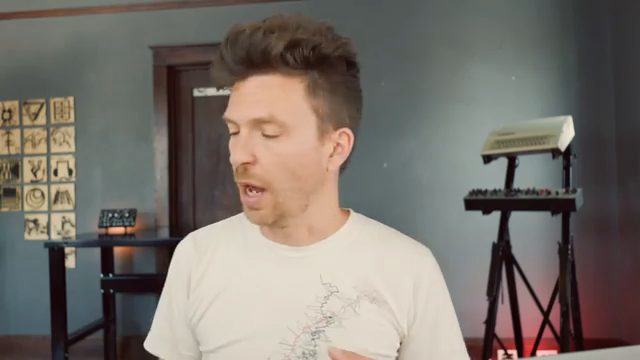
"I would make a patch where these two modules clocked and fed each other sound, sometimes recorded off whatever I pulled from my phone, sometimes scraps of noise or sound from within the system."
© Screenshot/Quote: Maken0Isemusic (YouTube)
Cross-Clocking: The Heart of the Smoke Patch
Central to the patch is a web of cross-clocking between modules, now updated for the Resynthesizer’s modern lineup. Tempi provides a steady pulse, which is distributed to trigger both Maths channels and clock the Mimeophone. This interconnected timing structure forms the backbone of the evolving soundscape, ensuring rhythmic coherence without locking the patch into predictability.
The Morphagene and Mimeophone, successors to the Phonogene and Echophon, are at the core of this interaction. Their interplay—facilitated by clock signals and feedback routing—allows for continuous looping, echoing and transformation of sonic material. The result is a patch that breathes and shifts, with each module’s output subtly influencing the others in a feedback-rich ecosystem.
Modulation and Performance: Interlocking Rhythms
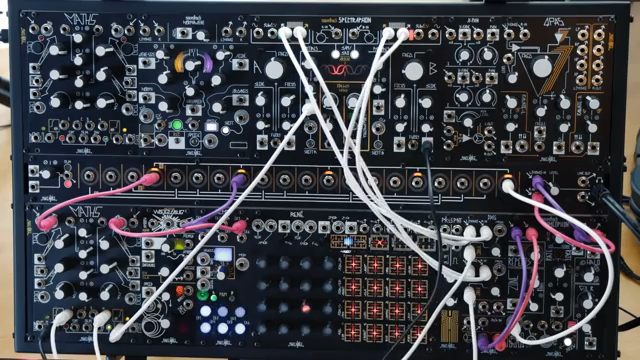
"We'll be able to focus our ears instead on the interlocking rhythms and maybe the atmospheric nature of overlapping echoes."
© Screenshot/Quote: Maken0Isemusic (YouTube)
The demonstration delves into modulation techniques that bring the patch to life. Triggered Maths channels are used to modulate parameters like slide and partials on the Spectraphon, as well as to open channels on the DXG. These modulations are chosen for their ability to create indistinct pitch content, focusing the listener’s attention on rhythm and texture rather than melody.
Random modulation is applied to the Mimeophone’s color parameter, while the Morphagene is set up to record only when prompted, ensuring that captured material is always fresh. The patch also routes outputs through QPAS for additional filtering, and employs Rene to clock further modulation sources. The result is a mesh of interlocking rhythms and atmospheric echoes, with performance gestures—such as shifting Tempi channels—capable of shaking up the entire structure on the fly.
Smoke in the Air: Environmental Inspiration
The emotional core of the patch is rooted in the environmental conditions of late 2016, when wildfires cast a smoky haze over the Make Noise headquarters. This atmospheric backdrop inspired a series of melancholic patches, each crafted during short afternoon breaks at the demo system near the front entrance. The hazy look and intense smell of the season seeped into the sound design, lending the patches a reflective, almost wistful quality.
For several weeks, the creator challenged themselves to build a new version of the patch daily, recording the most evocative results. This routine not only provided a creative outlet during a difficult time, but also demonstrated how external circumstances can shape the mood and direction of modular experimentation. The nostalgia for that period is palpable in the video, adding a layer of meaning to the technical demonstration.
"The smoky season we were going through as fall started to turn into winter gave me a particularly melancholy vibe that put to mind some of the sounds I've gotten with that test patch."
© Screenshot/Quote: Maken0Isemusic (YouTube)
Patch Experimentation: The Resynthesizer in Action
The latter part of the video is devoted to a hands-on demonstration, showing how the patch’s interlocked modulations and cross-clocking yield a constantly evolving sonic landscape. The Morphagene records and processes incoming signals, while the Mimeophone’s buffer is periodically flipped and held, introducing further unpredictability. QPAS adds filter sweeps, and the DXG channels route signals in and out of the feedback loop.
Performance tools like shifting Tempi channels are used to disrupt and reshape the patch in real time, illustrating the system’s responsiveness to hands-on intervention. The result is a dense, atmospheric texture that never settles into repetition, always inviting further exploration.
Through this demonstration, Make Noise highlights the Resynthesizer’s strengths as a platform for open-ended experimentation. The patch is less about replicating a specific sound and more about creating a framework where unexpected interactions and environmental inspiration can drive the music. It’s a reminder that in modular synthesis, the process is as important as the outcome.
This article is also available in German. Read it here: https://synthmagazin.at/maken0ise-resynthesizer-rauch-erinnerung-und-modulare-kreuzfeuer/
Watch on YouTube:
Latest articles
Watch on YouTube:
Visit the channel:
https://www.youtube.com/MAKEN0ISEMUSIC
https://www.youtube.com/MAKEN0ISEMUSIC
Links from MAKEN0ISEMUSIC:
website: https://www.makenoisemusic.com
instagram: https://www.instagram.com/makenoisemusic
twitter: https://twitter.com/makenoisemusic
facebook: https://www.facebook.com/makenoiseco
Sponsored links:
If you purchase via these links, we may earn a small commission – at no extra cost to you. The link opens an Amazon keyword search, and results may vary depending on availability.
Maths
🔗 Check price on Amazon
🔗 Check price on Amazon
Mimeophone
🔗 Check price on Amazon
🔗 Check price on Amazon
Morphagene
🔗 Check price on Amazon
🔗 Check price on Amazon
QPAS
🔗 Check price on Amazon
🔗 Check price on Amazon
René
🔗 Check price on Amazon
🔗 Check price on Amazon
Resynthesizer
🔗 Check price on Amazon
🔗 Check price on Amazon
Spectraphon
🔗 Check price on Amazon
🔗 Check price on Amazon
Tempi
🔗 Check price on Amazon
🔗 Check price on Amazon