Make Noise, the Asheville-based champions of modular experimentation, take a deep dive into the MultiMod’s slowest realms in their latest video. This isn’t your usual quick-fire demo—instead, we’re treated to a meditation on long time settings, stretched control signals, and the subtle art of letting modulation breathe. The MultiMod is shown not just as a utility, but as a tool for navigating musical timescales, with creative uses of its spread, hold, and phase controls. For those who think in voltages and crave nuanced modulation, this is a patch-oriented exploration worth your attention.
20. February 2025
MILES
MAKEN0ISE MultiMod: Stretching Time and Control Signals in Eurorack
Time as a Playground: MultiMod’s Modulation Philosophy
The video opens with a philosophical nod to time as the true medium of music, setting the stage for a deep exploration of the MultiMod module. Make Noise frames the MultiMod not just as another modulation source, but as a device capable of traversing multiple musical timescales—from the micro to the macro. Referencing Curtis Rhodes’ concept of layered timescales, the presenter reminds us that modular synthesis is about more than just fast-moving LFOs or snappy envelopes; it’s about inhabiting the full spectrum of temporal experience.
This context is essential for understanding the MultiMod’s role in a rack. Rather than focusing on rapid-fire modulation, the video encourages us to consider how control signals can be stretched, layered, and manipulated over extended periods. The MultiMod is positioned as a tool for those who want to sculpt modulation in ways that reflect the evolving, multi-layered nature of music itself.
Stretch, Hold, and Multiply: Key Features in Action
Diving into the specifics, the video highlights the MultiMod’s time control, which can reach up to a substantial 30 seconds per cycle using just the panel knob. This isn’t about holding a single static voltage for half a minute; rather, the module can store and replay complex, evolving control signals across that entire timespan. The ability to stretch and hold incoming signals means you’re not limited to simple LFO shapes—any modulation source can be captured, manipulated, and sent through MultiMod’s multiple outputs.
The spread control is demonstrated as a way to offset each channel’s timing, so some outputs move faster or slower than others. This allows for intricate phase relationships and evolving modulation patterns, all derived from a single input. The hold function, meanwhile, lets you freeze these patterns at will, looping the captured modulation until you’re ready to move on. It’s a flexible approach that rewards both careful planning and spontaneous patching.

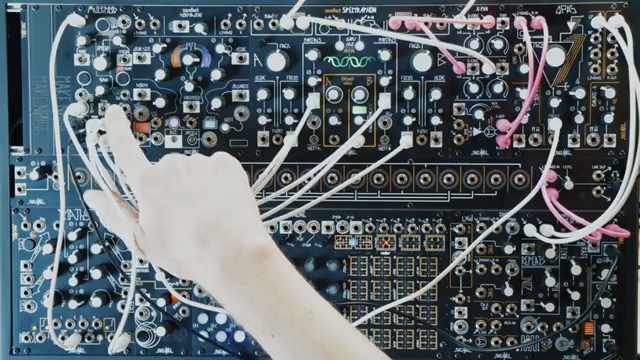
"The time parameter goes out to about 30 seconds just from the knob."
© Screenshot/Quote: Maken0Isemusic (YouTube)
Creative Workflows: Clock Division, Spread, and Channel Interaction
"The time counterclockwise, it's listening to exactly one clock."
© Screenshot/Quote: Maken0Isemusic (YouTube)
The presenter moves on to more advanced workflows, showing how MultiMod can be clocked externally and used as a clock divider. By feeding a complex function into the input and clocking the module from an end-of-cycle pulse, the time parameter becomes a division of the master clock. This opens up rhythmic possibilities, with each channel able to operate at a different subdivision thanks to the spread control.
Inter-channel interaction is further explored by modulating the phase parameter with external voltage, effectively scrubbing through the stored copies at different rates. Pushing phase modulation to extremes, channels can be pulled so far out of phase that they wrap back into sync—a neat trick for evolving, cyclical modulation. The video also demonstrates how removing the input and clock allows for more freeform, continuous control, with spread and phase creating shifting, polyrhythmic modulation landscapes.
Navigating Timescales: The Art of Slow Modulation
The final section is a meditation on the value of slow modulation in sound design. By turning the time control to its maximum and adding external voltage, the MultiMod can slow down even further, revealing nuances in the original modulation that would otherwise be lost at higher speeds. The presenter encourages us to listen for subtle transient details and to appreciate the musicality that emerges when modulation unfolds over tens of seconds.
Throughout this segment, the interplay between phase, spread, and time is highlighted as a way to navigate different musical timescales within a single patch. Whether using MultiMod for gentle, evolving textures or for complex, interlocking rhythms, the emphasis is on letting modulation breathe and interact. The video closes with an open-ended invitation to experiment, underscoring the idea that the best uses for MultiMod are still waiting to be discovered by adventurous patchers.
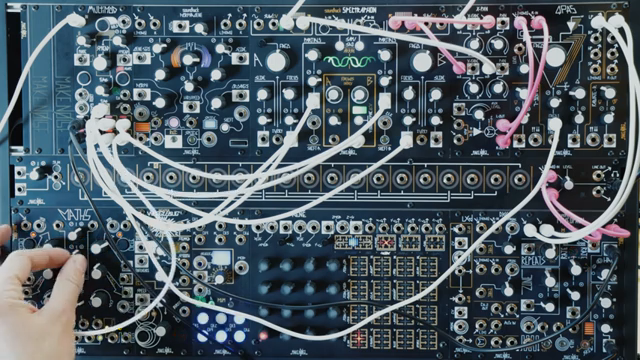
"We may even start to hear nuances in the original transients that we couldn't hear at its original, fast speed."
© Screenshot/Quote: Maken0Isemusic (YouTube)
This article is also available in German. Read it here: https://synthmagazin.at/maken0ise-multimod-zeit-und-steuersignale-im-eurorack-dehnen/
Watch on YouTube:
Latest articles
Watch on YouTube:
Visit the channel:
https://www.youtube.com/MAKEN0ISEMUSIC
https://www.youtube.com/MAKEN0ISEMUSIC
Links from MAKEN0ISEMUSIC:
website: https://www.makenoisemusic.com
instagram: https://www.instagram.com/makenoisemusic
twitter: https://twitter.com/makenoisemusic
facebook: https://www.facebook.com/makenoiseco
Sponsored links:
If you purchase via these links, we may earn a small commission – at no extra cost to you. The link opens an Amazon keyword search, and results may vary depending on availability.
Make Noise MultiMod
🔗 Check price on Amazon
🔗 Check price on Amazon