Make Noise, the Asheville-based modular stalwarts, are back with a deep-dive into the GTE module’s role as a channel index translator within their New Universal Synthesizer System. This official walkthrough demonstrates how GTE can wrangle complex timing and rhythm duties, translating channel index voltages into precise gate outputs. With a focus on real-world patching, the video explores how settings like Span and Space interact, and showcases GTE’s integration with modules like MultiMod, Polymaths, and René. For anyone obsessed with modular timing tricks and creative signal routing, this is a patch-oriented look at what GTE brings to the Make Noise ecosystem.
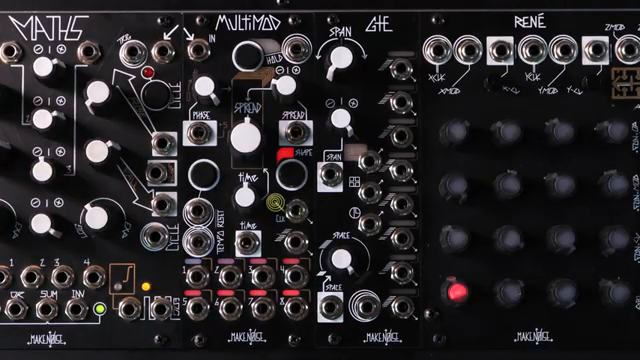
Translating Channels: GTE’s Role in Modular Timing
The GTE module is introduced as a channel index translator, designed to bridge the gap between complex timing signals and the rhythmic needs of the New Universal Synthesizer System. By focusing on channel index voltages, GTE becomes a crucial tool for anyone looking to generate repeatable, controllable rhythm and timing information from analog sources. This approach is classic Make Noise—eschewing the obvious in favour of creative signal manipulation.
In the context of a modular setup, GTE’s ability to translate channel indices into gate outputs means it can serve as the rhythmic backbone for multi-channel patches. The video positions GTE not just as a utility, but as a creative enabler, allowing intricate timing relationships between modules like MultiMod, Polymaths, and René. For those who thrive on patching evolving rhythmic structures, GTE’s translation capabilities open up new avenues for modular exploration.
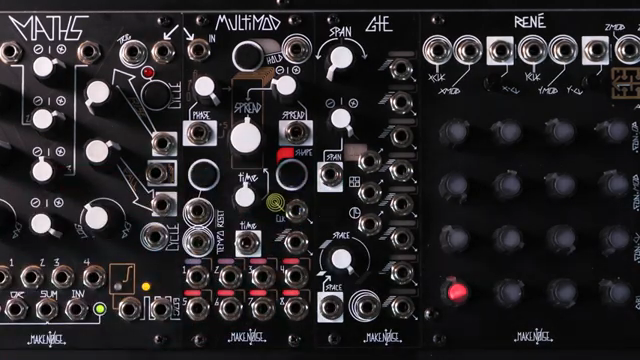
"GTE can be used to generate repeatable and controllable rhythm and timing information from any analog signal."
© Screenshot/Quote: Maken0Isemusic (YouTube)
Dialling In: Span, Space, and Tracking Precision
"With these settings in place, GTE will accurately track channel index movements that are patched to the SPAN CV input."
© Screenshot/Quote: Maken0Isemusic (YouTube)
Central to GTE’s function are its Span and Space controls, which dictate how channel index voltages are interpreted and translated into gate outputs. The walkthrough begins by setting Span fully counterclockwise, the Span CV attenuverter fully clockwise, and Space fully clockwise—settings that ensure GTE accurately tracks incoming channel index voltages. This precise tracking is essential for aligning GTE’s outputs with the movement of channel indices across connected modules.
With these settings, GTE becomes highly responsive to analog control signals, offering tight timing and repeatability. The video demonstrates how, by patching the channel index output of MultiMod to GTE’s Span CV input, the module’s eight outputs activate sequentially, mirroring the channel progression. This level of control is invaluable for modular users seeking to synchronise complex patches, especially when integrating sequencers or function generators that rely on precise gate timing.
Patchwork: GTE in the Modular Ecosystem
The video moves beyond basic translation to showcase GTE’s integration within larger modular patches. In one example, the channel index output from Polymaths is routed to GTE’s Span input, allowing both modules to advance channels in lockstep. GTE’s outputs are then patched to René’s X-Clock input and to the clock input on Mimeophon, demonstrating how rhythmic control can be distributed across multiple modules.
Further complexity is introduced by patching individual GTE gate outputs to trigger Maths and modulate QPAS filter parameters. Channel-specific routing—such as sending channel 3’s output to a rate input for unique timing, or channel 7’s output to oscillation control—illustrates how GTE can sculpt nuanced, evolving patterns within a patch. This interconnectedness is at the heart of the Make Noise philosophy: modules working in tandem to create rich, dynamic soundscapes.
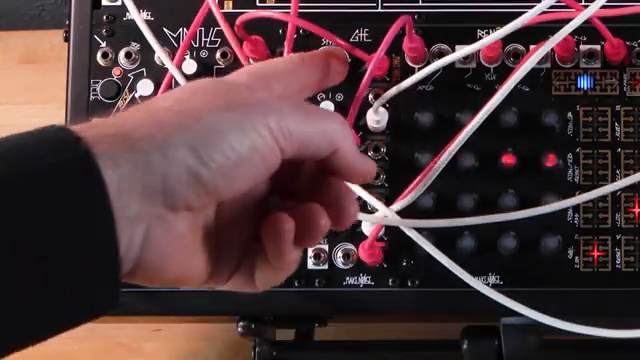
"Channel 1 is patched to the trig input on this maths channel, and its function is opening up the QPOS filter."
© Screenshot/Quote: Maken0Isemusic (YouTube)
Rhythmic Patterns and Control: GTE in Action
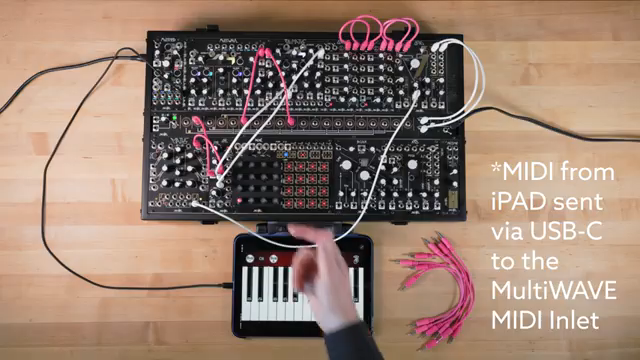
"the odds output of GTE to the spread CV input on polymaths, which is controlling the fall time."
© Screenshot/Quote: Maken0Isemusic (YouTube)
The final examples highlight GTE’s ability to generate and manipulate rhythmic patterns through strategic interconnections. By patching the evens output of GTE to the cycle input on Polymaths, and the odds output to the spread CV input, the module influences both the timing and the fall time of envelopes within the system. This dual routing enables the creation of intricate, evolving rhythms that respond to the interplay between modules.
Additionally, GTE’s main output is used to trigger a Maths channel, which in turn modulates the frequency of a QPAS filter—demonstrating how rhythmic gates can shape both timing and timbral elements. The result is a system where rhythm, modulation, and sound design are tightly interwoven. These examples underscore GTE’s role as a central timing translator, capable of driving complex modular performances with precision and flair.
For patchers who crave hands-on rhythmic control and creative gate distribution, GTE offers a toolkit for sculpting both the macro and micro timing of a Eurorack system. The video’s demonstrations make clear that GTE is not just a utility, but a catalyst for rhythmic invention.
This article is also available in German. Read it here: https://synthmagazin.at/maken0ise-gte-channel-index-translation-fuer-rhythmische-kontrolle-im-eurorack/
Watch on YouTube:
Latest articles
Watch on YouTube:
Visit the channel:
https://www.youtube.com/MAKEN0ISEMUSIC
https://www.youtube.com/MAKEN0ISEMUSIC
Links from MAKEN0ISEMUSIC:
website: https://www.makenoisemusic.com
instagram: https://www.instagram.com/makenoisemusic
twitter: https://twitter.com/makenoisemusic
facebook: https://www.facebook.com/makenoiseco
Sponsored links:
If you purchase via these links, we may earn a small commission – at no extra cost to you. The link opens an Amazon keyword search, and results may vary depending on availability.
Maths
🔗 Check price on Amazon
🔗 Check price on Amazon
Mimeophon
🔗 Check price on Amazon
🔗 Check price on Amazon
Multimod
🔗 Check price on Amazon
🔗 Check price on Amazon
Polymaths
🔗 Check price on Amazon
🔗 Check price on Amazon
QPAS
🔗 Check price on Amazon
🔗 Check price on Amazon
René
🔗 Check price on Amazon
🔗 Check price on Amazon