In this latest dispatch from MAKEN0ISE’s Asheville laboratory, the focus turns to the often-overlooked craft of organizing and categorizing sounds for modular workflows. Drawing inspiration from Terence Dwyer’s classic tape music manual, the video explores how the Morphagene module can serve as a modern-day tape reel, inviting us to rethink how we build and curate our sound libraries. Expect a deep dive into duration, timbre, and the creative quirks of sonic classification—plus a call for communal patching that’s as open-ended as the Make Noise ethos itself. If you’ve ever wondered how to wrangle your sample chaos into musical order, this one’s for you.
21. August 2025
MILES
MAKEN0ISE and the Art of Sonic Taxonomy: Organizing Sounds with Morphagene
Morphagene: The Modern Tape Reel
The video opens with a nod to the Morphagene, Make Noise’s flagship sample-manipulation module, as a contemporary tool for organizing and categorizing sounds in electronic music production. The Morphagene’s design clearly draws on the legacy of tape music, but with the added flexibility of digital file management and voltage control. Unlike the laborious process of sorting through physical tape reels, the Morphagene allows users to jump between sounds instantly, making the act of sound organization both more immediate and more experimental.
This approach is rooted in the idea that a well-organized sound library is not just a convenience, but a creative asset. By treating the Morphagene as a sort of digital tape archive, users can curate collections of samples that are ready to be manipulated, layered, and transformed at will. The video frames this as a foundational practice for anyone looking to push the boundaries of modular sampling, setting the stage for a deeper exploration of how to categorize and deploy sonic material.
"Quite a bit of emphasis is given to the process of collecting sounds and categorizing them in a way that will make them easier to work with down the line."
© Screenshot/Quote: Maken0Isemusic (YouTube)
Tape Music Wisdom: Dwyer’s Categories Revisited
Drawing from Terence Dwyer’s seminal book on tape music, the video highlights the enduring relevance of classic sound organization strategies. Dwyer’s methods, developed in an era when tape reels were the primary medium, emphasized the importance of building and maintaining sound libraries—even when searching and previewing was a far more manual affair. The video suggests that these principles remain vital, even as digital tools have made the logistics easier.
Central to Dwyer’s philosophy is the act of categorizing sounds by their duration and timbral qualities. While the Morphagene and similar modules offer unprecedented control over playback and manipulation, the underlying need to sort and label sounds thoughtfully persists. The video positions this as a bridge between historical tape practices and the voltage-controlled workflows of today’s Eurorack systems.
Shorts, Longs, Fades, and Tremolos: The Building Blocks
"This is something that we have certainly experienced when using small loops in morphagene and time stretching and so forth."
© Screenshot/Quote: Maken0Isemusic (YouTube)
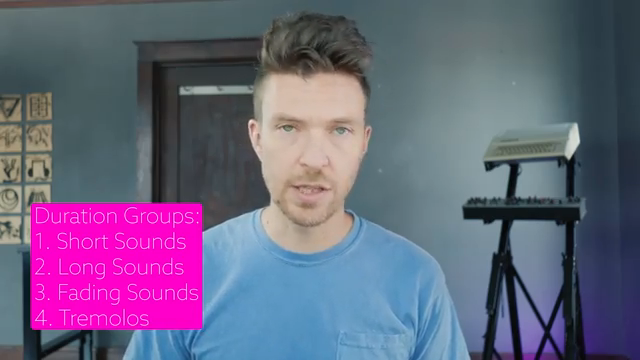
The heart of the video lies in its breakdown of Dwyer’s four primary sound classifications: short sounds, long sounds, fading sounds, and tremolos. Short sounds are described as fleeting events—think hammer taps or drum hits—while long sounds sustain for at least half a second, encompassing sources like violin notes or flowing water. Fading sounds begin with a sharp attack and decay smoothly, as with a piano or cymbal, and tremolos are rapidly reiterated textures, such as a drum roll or rattling matches.
These categories aren’t just academic; they serve practical purposes in patching and composition. The video notes that many sounds can be transformed from one group to another through repetition or processing, and that tremolos, in particular, often yield more interesting results than static long tones. For Morphagene users, understanding these distinctions can inform how samples are sliced, looped, and sequenced, opening up new creative avenues in modular sound design.
A Call for Collective Soundcraft
True to Make Noise’s collaborative spirit, the video extends an invitation to the community: submit your own sounds, complete with descriptions of their imagined musical uses. This participatory approach echoes the communal ethos of early tape music studios, where sharing and cataloguing sounds was part of the creative process. The video showcases a variety of user-submitted samples, each accompanied by notes on their potential roles within a patch or composition.
Practical instructions are provided for contributors, including guidelines on file format, naming conventions, and how to document your work in a shared spreadsheet. The emphasis is on variety and experimentation, with no penalty for duplicating sound types—only encouragement to explore the full spectrum of sonic possibilities. It’s an open invitation to join a living, evolving sound library, shaped by the collective imagination of the modular community.

"Really looking forward to see where this sound project goes next and just how many of these different sound types we can create from still this same small amount of initial material."
© Screenshot/Quote: Maken0Isemusic (YouTube)
Individuality and the Transformative Power of Sound
"What is of paramount importance is that each sound shall fascinate by its effectiveness and individuality."
© Screenshot/Quote: Maken0Isemusic (YouTube)
The video closes by reflecting on the artistic individuality of each sound and its capacity for transformation within a modular context. Drawing again from Dwyer, it’s suggested that the true value of a sound lies in its effectiveness and uniqueness, rather than its adherence to conventional musical norms. The Morphagene’s ability to morph, stretch, and reorganize audio highlights this principle, enabling even the simplest sample to become something entirely new.
Ultimately, the process of organizing and categorizing sounds is framed not as a restrictive exercise, but as a springboard for creativity. By embracing the quirks and idiosyncrasies of each sample, patchers are encouraged to discover unexpected musical outcomes. In the world of Make Noise, individuality isn’t just tolerated—it’s celebrated as the very essence of electronic music-making.
This article is also available in German. Read it here: https://synthmagazin.at/maken0ise-und-die-kunst-der-klang-taxonomie-sounds-organisieren-mit-dem-morphagene/
Watch on YouTube:
Latest articles
Watch on YouTube:
Visit the channel:
https://www.youtube.com/MAKEN0ISEMUSIC
https://www.youtube.com/MAKEN0ISEMUSIC
Links from MAKEN0ISEMUSIC:
website: https://www.makenoisemusic.com
instagram: https://www.instagram.com/makenoisemusic
twitter: https://twitter.com/makenoisemusic
facebook: https://www.facebook.com/makenoiseco
Sponsored links:
If you purchase via these links, we may earn a small commission – at no extra cost to you. The link opens an Amazon keyword search, and results may vary depending on availability.
Morphagene
🔗 Check price on Amazon
🔗 Check price on Amazon