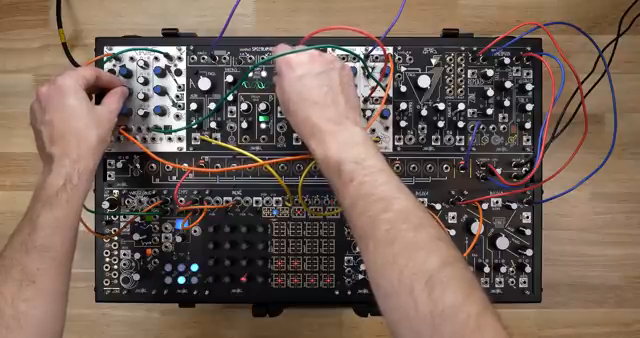
Make Noise, the Asheville-based champions of modular mischief, have dropped a fresh update for the Spectrophone, and James Cigler is here to show us what the new SpectraNoise modes can do. In this official walkthrough, Cigler explores both the chaos and noise modes, revealing their potential as sound generators and complex modulators. Expect sine waves colliding, feedback paths spiralling into noise, and a patching approach that’s as much about sculpting texture as it is about traditional synthesis. If you’re after new ways to inject unpredictability and character into your Eurorack, this video is a must-watch.
16. January 2025
MILES
Make Noise SpectraNoise Update: James Cigler Unleashes Chaos and Noise on the Spectrophone
Make Noise Bruschia, Make Noise Cupás, Make Noise Mimeophon, Make Noise Rene, Make Noise Spectrophone, Make Noise Tempi, Make Noise X-Pan
SpectraNoise Unveiled: Chaos and Noise Modes Take Centre Stage
James Cigler kicks off with a look at the SpectraNoise update for the Make Noise Spectrophone, introduced in firmware version 5.2 and later. This update brings two new sound generation modes: chaos (green) and noise (red), both designed to expand the sonic palette of the module far beyond its previous boundaries.
Cigler positions these modes as versatile tools, not just for classic noise or chaos textures, but as flexible sound sources and modulators. The walkthrough immediately sets the tone for experimentation, with a focus on how these modes can be woven into creative patches. The SpectraNoise update, as presented here, is less about polite utility and more about opening up unpredictable, evolving sound worlds—very much in line with Make Noise’s exploratory ethos.

"It added two new modes, green for chaos and red for noise."
© Screenshot/Quote: Maken0Isemusic (YouTube)
Inside Chaos Mode: Sine Waves, FM and Feedback Mayhem
"Focus creating these kind of awesome belly, FM, ring modulated kind of tones."
© Screenshot/Quote: Maken0Isemusic (YouTube)
Chaos mode is built around two paired sine waves, each with its own modulating sine wave at audio rate. The partial control determines the depth of this modulation, while focus adjusts the harmonic interval between the modulator and carrier sines. This combination produces a range of FM and ring modulated tones, from bell-like clarity to more complex, metallic timbres. The slide parameter introduces chaotic feedback between the sine waves, destabilising the sound and pushing it towards full-on noise as it’s increased. This mode isn’t just about chaos for its own sake—it’s a playground for harmonic exploration, offering both subtle and extreme results depending on how you patch and tweak.
Noise Mode: Sculpting the Sonic Spectrum
Switching to noise mode, Cigler demonstrates how the Spectrophone can morph from subtle tones to full-spectrum noise. The focus and slide controls act like high and low pass filters, letting you carve out specific frequency ranges from the noise. Partials evolve the sound from a simple sine wave up to dense, complex noise, while the interplay between these controls allows for precise sculpting of timbre.
Cigler highlights the musicality hidden within the noise, showing how careful adjustment of FM and the filter-like controls can yield unstable, howling tones as well as more restrained, textural elements. The result is a noise generator that’s anything but static—ideal for those who want their patches to breathe, shift and surprise.
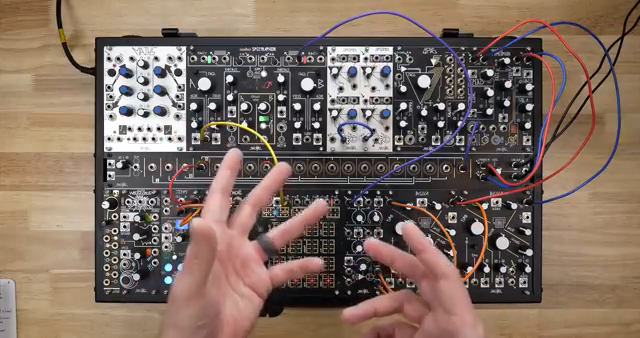
"There's some great controls between focus and slide to kind of tailor the high pass, low pass area of that noise with partials evolving that noise from super complex back down to a sine wave."
© Screenshot/Quote: Maken0Isemusic (YouTube)
Patch Integration: Chaos Meets Noise in Performance Contexts

"the A side is using chaos mode and the B side is using noise mode, both going in through low pass gates here"
© Screenshot/Quote: Maken0Isemusic (YouTube)
For the final patch, Cigler combines chaos and noise modes across the A and B channels of the Spectrophone, routing each through low pass gates for dynamic control. The envelope on the B side not only opens the gate but also modulates the slide parameter, allowing the noise character to evolve from bright and complex to more sine-like as the gate closes. There’s cross-FM from chaos to noise, adding extra brightness and texture, while pitch sequences and follow modes keep both channels musically related.
This patch illustrates how the SpectraNoise update isn’t just for wild effects; it’s a tool for nuanced performance, layering, and real-time timbral control. The integration with other Make Noise modules—Cupás, Mimeophon, Bruschia—demonstrates its potential as a centrepiece in a complex Eurorack setup, ready to inject both unpredictability and musicality into any patch.
This article is also available in German. Read it here: https://synthmagazin.at/make-noise-spectranoise-update-james-cigler-entfesselt-chaos-und-noise-auf-dem-spectrophone/
Watch on YouTube:
Latest articles
Watch on YouTube:
Visit the channel:
https://www.youtube.com/MAKEN0ISEMUSIC
https://www.youtube.com/MAKEN0ISEMUSIC
Links from MAKEN0ISEMUSIC:
website: https://www.makenoisemusic.com
instagram: https://www.instagram.com/makenoisemusic
twitter: https://twitter.com/makenoisemusic
facebook: https://www.facebook.com/makenoiseco
Sponsored links:
If you purchase via these links, we may earn a small commission – at no extra cost to you. The link opens an Amazon keyword search, and results may vary depending on availability.
Make Noise Bruschia
🔗 Check price on Amazon
🔗 Check price on Amazon
Make Noise Cupás
🔗 Check price on Amazon
🔗 Check price on Amazon
Make Noise Mimeophon
🔗 Check price on Amazon
🔗 Check price on Amazon
Make Noise Rene
🔗 Check price on Amazon
🔗 Check price on Amazon
Make Noise Spectrophone
🔗 Check price on Amazon
🔗 Check price on Amazon
Make Noise Tempi
🔗 Check price on Amazon
🔗 Check price on Amazon
Make Noise X-Pan
🔗 Check price on Amazon
🔗 Check price on Amazon