The Make Noise QMMG is back, this time in a striking Black and Gold Edition, and the Asheville innovators have chosen to revisit one of their most revered modules. In this official video, Make Noise walks us through the QMMG’s multifaceted design—four vactrol-based channels, flexible routing, and a feedback circuit that’s anything but vanilla. As always, the presentation is exploratory and patch-centric, showing how the QMMG can morph from a Buchla-inspired low-pass gate to a full synth voice or filter network. For modular enthusiasts, this is a deep dive into a module that’s as much about character as it is about utility.
15. August 2024
MILES
Make Noise QMMG Returns: Black & Gold Edition Reimagines a Classic
A Classic Reborn: Black & Gold QMMG Returns
Make Noise has reintroduced the QMMG, their quad multimode gate, in a limited Black and Gold Edition. This release positions the QMMG not just as a nostalgic callback, but as a contemporary tool for today’s modular setups. The video frames the module’s return as both a celebration of its legacy and an invitation to explore its quirks anew.
The QMMG’s design draws inspiration from the Buchla 292, but Make Noise has never been content to simply clone. Instead, they riff on the original, adding features and a distinctive visual identity. The limited nature of this edition, along with the updated aesthetics, ensures it stands out in both sound and appearance within the current landscape of Eurorack modules.

"The QMMG is returning again in a limited black and gold edition."
© Screenshot/Quote: Maken0Isemusic (YouTube)
Four Vactrol Channels: More Than Just Gates
"Each of the four channels has the same set of controls, but probably not the same sound, since the QMMG is a Vactorall-based device."
© Screenshot/Quote: Maken0Isemusic (YouTube)
At the heart of the QMMG are four independent vactrol-based channels, each capable of acting as a VCA, low-pass gate, low-pass filter, or high-pass filter. This versatility means the module can serve as a dynamic gate, a classic filter, or even a full synth voice depending on how it’s patched. The video demonstrates each mode in turn, highlighting the sonic differences and the organic response of vactrol circuits.
Each channel has its own output, but there’s also a sum out for easy mixing—borrowing a trick from the Make Noise Maths module. Individual outputs remove their channel from the sum, allowing for flexible routing. The vactrols themselves lend each channel a slightly different character, a detail that will appeal to those who value subtle variations and analogue unpredictability.
Analog Pots and Protection: Practical Upgrades
One of the key updates in this edition is the use of analog potentiometers for mode switching, replacing the rotary switches of the original. This small but significant change streamlines the user experience, making it easier to dial in modes on the fly. The tactile feel of pots also encourages more experimental, performance-oriented patching.
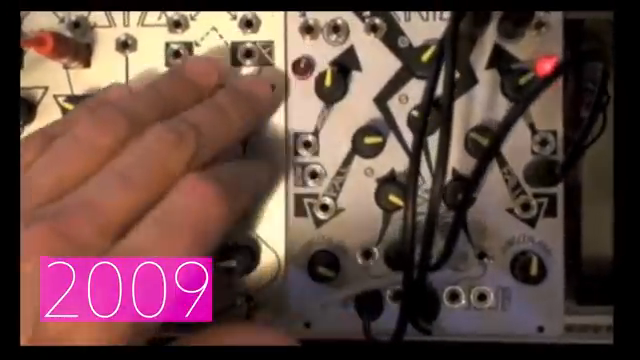
Additionally, Make Noise has added reverse power protection circuitry to the bottom board. While not the flashiest feature, it’s a practical upgrade that helps safeguard the module from mishaps during installation. These refinements ensure that the QMMG remains robust and user-friendly, even as it retains the core functionality of the 2008 original.
Normalization and Serial Patching: Creative Configurations
The QMMG’s internal normalizations are where things get especially interesting for patchers. The inner channels’ inputs are normalized to the outputs of the outer channels, enabling easy serial patching without a tangle of cables. For example, patching a signal into channel one automatically routes it through channel two, unless another input is patched—opening up multi-stage filtering or gating with minimal effort.
This setup allows for classic synth architectures: set channel one to low-pass and channel two to VCA for a traditional voice, or switch channel two to high-pass for a dual-peak bandpass filter. The control inputs are also normalized, so a single modulation source can sweep multiple filter cutoffs in tandem. For those who want more complexity, independent modulation is just a patch cable away.
The sum output further expands creative options, letting users blend outputs for multi-tab filter networks or parallel processing. The video encourages thinking of the QMMG as a modular filter playground, not just a set of gates or VCAs.
Feedback Circuit: Mode-Dependent Character
Perhaps the most distinctive feature is the QMMG’s feedback control, which behaves differently depending on the selected mode. In low-pass gate mode, feedback damps the circuit’s natural ringing, tightening and shortening the amplitude envelope—a subtle but powerful way to shape percussive sounds.
Switching to low-pass or high-pass filter modes, the feedback control instead provides voltage-controlled resonance, adding bite and character to the filter response. This duality gives the QMMG a unique voice in the modular world, allowing it to shift from smooth, organic gates to resonant, aggressive filtering with a twist of a knob.

"In low pass and high pass modes, feedback provides a voltage controlled resonance."
© Screenshot/Quote: Maken0Isemusic (YouTube)
This article is also available in German. Read it here: https://synthmagazin.at/make-noise-qmmg-kehrt-zurueck-black-gold-edition-belebt-einen-klassiker-neu/
Watch on YouTube:
Latest articles
Watch on YouTube:
Visit the channel:
https://www.youtube.com/MAKEN0ISEMUSIC
https://www.youtube.com/MAKEN0ISEMUSIC
Links from MAKEN0ISEMUSIC:
website: https://www.makenoisemusic.com
instagram: https://www.instagram.com/makenoisemusic
twitter: https://twitter.com/makenoisemusic
facebook: https://www.facebook.com/makenoiseco
Sponsored links:
If you purchase via these links, we may earn a small commission – at no extra cost to you. The link opens an Amazon keyword search, and results may vary depending on availability.
Make Noise QMMG
🔗 Check price on Amazon
🔗 Check price on Amazon