In this latest video from Make Noise, the Asheville-based modular mavericks dive deep into the MultiMod module’s knack for replicating and shifting quantized pitch CV across multiple oscillators. True to Make Noise’s exploratory spirit, the demonstration isn’t just about technical prowess—it’s a hands-on journey through phase-shifted melodies, gestural control, and creative voltage routing. If you’re curious about how MultiMod can transform your melodic sequences, or how time base and phase delays can sculpt evolving soundscapes, this walkthrough offers a patch-oriented perspective with plenty of practical examples. Expect arpeggios, rhythmic interplay, and a few classic Maths cycling tricks along the way.

Replicating CV: MultiMod in the Spotlight
The video opens with a clear focus on the MultiMod module, positioning it as a versatile tool for replicating and shifting quantized pitch control voltages across several oscillators. The presenter wastes no time in patching the René sequencer’s XCV output directly into the MultiMod, immediately distributing pitch CV to three different VCOs. This sets the stage for exploring how the module can act as a central hub for melodic control in a modular setup.
By routing the same quantized pitch information to multiple oscillators, the MultiMod enables tightly coordinated melodic lines or, with a twist of a knob, more complex phase relationships. The demonstration highlights the immediate effect of adjusting the current location control, with all VCOs initially moving in lockstep. This approach is ideal for those who want to maintain harmonic unity but also crave the option to introduce subtle or dramatic timing offsets between voices.
Phase Shifting and Direct CV Control
With the basics established, the video delves into phase shifting—a classic compositional technique that gets a modular twist here. By deliberately knocking the VCOs out of phase, each channel receives its pitch CV with a unique delay, resulting in cascading melodic movement. This is more than just a parlor trick; it’s a way to inject motion and variation into otherwise static sequences.
The presenter then shifts gears, opting for gestural and momentary control over the sequence. By engaging the add function on the MultiMod’s function page and patching in a new CV source, the module quantizes incoming voltages according to user-defined scales and octaves. This opens the door to hands-on, expressive manipulation of pitch, moving beyond clocked repetition to real-time melodic shaping—a boon for live improvisation or evolving studio patches.
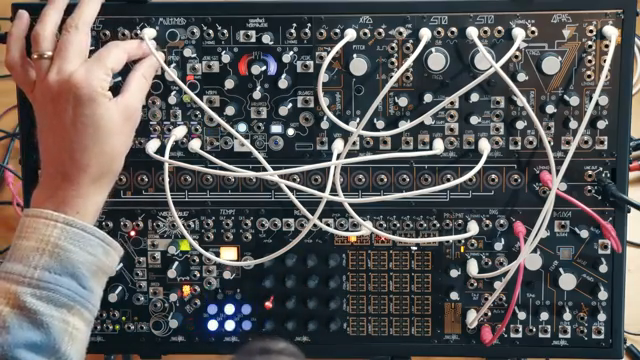
"Let's knock them out of phase, meaning that each of the channels will be delayed to a differing amount."
© Screenshot/Quote: Maken0Isemusic (YouTube)
Time Base, Phase Delays, and Creative Soundscapes
A key takeaway from the demonstration is the relationship between the time base and the available phase depth. Adjusting the time control on the MultiMod directly influences how far apart the phase-shifted CVs can be distributed to each oscillator. This parameter becomes a powerful tool for sculpting the temporal structure of melodies, allowing anything from tight, percussive interplay to languid, drifting counterpoint.
The video shows how holding gestures on the MultiMod can keep these phase relationships looping, effectively creating evolving patterns that wrap around the module’s internal logic. This interplay between time, phase, and gesture gives the user nuanced control over the density and movement of their melodic material, making the MultiMod a potent ally for those who thrive on complex, evolving soundscapes.
Quantize, Cycling Functions, and Rhythmic Exploration

"Quantize it according to the settings on the quantize page, the enabled notes and octave setting, and then send it out to multimod."
© Screenshot/Quote: Maken0Isemusic (YouTube)
The latter half of the walkthrough is a playground for rhythmic and melodic experimentation. By utilizing the quantize page, users can spill different scales and ranges into their sequences, instantly recontextualizing the melodic output. The presenter demonstrates how cycling functions from Maths channels can serve as malleable, repeating voltage sources, shaping the contour and rhythm of arpeggios sent through the MultiMod.
Layering multiple cycling functions, clocking the MultiMod, and routing summed outputs to amplitude and frequency parameters, the patch evolves into a rich tapestry of interlocking rhythms and melodies. The independence of the cycling functions means that pitch and amplitude changes don’t always coincide, resulting in unpredictable, lively patterns. It’s a compelling showcase of how the MultiMod, in concert with other Make Noise modules, can push modular sequencing into adventurous territory.
This article is also available in German. Read it here: https://synthmagazin.at/make-noise-multimod-cv-replikation-und-phasenverschiebung-im-modular-setup/
Watch on YouTube:
Latest articles
Watch on YouTube:
Visit the channel:
https://www.youtube.com/MAKEN0ISEMUSIC
https://www.youtube.com/MAKEN0ISEMUSIC
Links from MAKEN0ISEMUSIC:
website: https://www.makenoisemusic.com
instagram: https://www.instagram.com/makenoisemusic
twitter: https://twitter.com/makenoisemusic
facebook: https://www.facebook.com/makenoiseco
Sponsored links:
If you purchase via these links, we may earn a small commission – at no extra cost to you. The link opens an Amazon keyword search, and results may vary depending on availability.
CUPAS
🔗 Check price on Amazon
🔗 Check price on Amazon
Maths
🔗 Check price on Amazon
🔗 Check price on Amazon
Multimod
🔗 Check price on Amazon
🔗 Check price on Amazon
René
🔗 Check price on Amazon
🔗 Check price on Amazon