Make Noise, the Asheville-based champions of modular mischief, have unleashed the MultiMod—a module that promises to multiply your modulation possibilities from a single control signal. In their typically exploratory style, Make Noise demonstrates how MultiMod doesn’t just copy your CV, but transforms it into a flock of related signals, each with its own phase and speed. This video walks through the module’s core parameters, creative read shapes, and the philosophy behind its design, all while hinting at the untapped sonic territory it opens up. If you’re after new modulation tricks and crave more from your patch points, MultiMod might just be your next utility obsession.
13. February 2025
MILES
Make Noise MultiMod: One Signal, Eightfold Mayhem in Eurorack
From One to Many: The MultiMod Approach
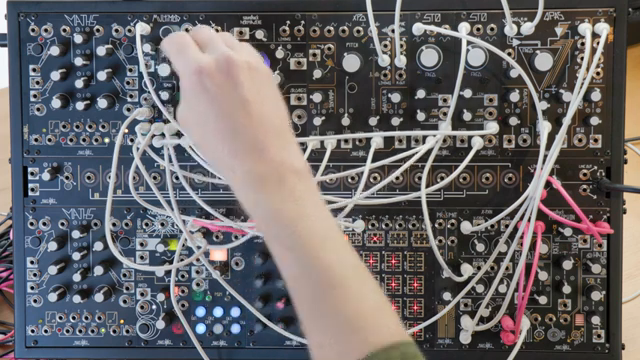
MultiMod enters the Eurorack scene as a module purpose-built for multiplying a single control signal into a host of related modulations. Rather than simply acting as a traditional multiple, MultiMod takes one incoming CV and generates eight distinct outputs, each a modified sibling of the original. The result is a set of signals that are related but not identical, offering a cascade of modulation possibilities from a single gesture.
This approach is particularly suited to those who want to inject complexity and movement into their patches without resorting to a tangle of separate LFOs or envelopes. Make Noise’s demo shows how a single press on a controller can ripple through a patch, creating evolving, interconnected modulation events. It’s a clear invitation to rethink how modulation can be distributed and transformed in a modular system.
"MultiMod takes a single control signal and copies it eight times, but further it modifies those copies by weighted adjustment of phase and speed."
© Screenshot/Quote: Maken0Isemusic (YouTube)
Time, Phase, Spread: The Modulation Trinity

"The three parameters are highly interrelated, but we'll attempt to go through one at a time."
© Screenshot/Quote: Maken0Isemusic (YouTube)
At the heart of MultiMod’s flexibility are three primary parameters: time, phase, and spread. Each shapes the relationship between the original control signal and its eight offspring. Time determines the window of input that MultiMod captures and replays, effectively setting the depth and duration of modulation available at the outputs. The further you turn the time knob, the longer the captured segment, and the more pronounced the modulation possibilities become.
Phase introduces a weighted offset across the outputs, causing each channel to replay the input at a different point in time. With phase at minimum, all outputs move in lockstep; as you increase it, the channels drift apart, with the outermost outputs reaching up to 180 degrees out of phase. This creates a staggered, cascading effect that’s ripe for polyrhythmic or spatial modulation.
Spread, meanwhile, manipulates the playback speed of each output. At noon, all channels run at the same rate, but turning spread up or down causes the top and bottom rows to speed up or slow down relative to each other. This results in outputs that can loop, overlap, or even miss certain events, opening up a playground for evolving phase relationships and rhythmic complexity.
Read Shapes: Beyond Forward Playback
MultiMod doesn’t stop at simple time-shifting. Its read shapes feature lets you choose how the captured input is traversed, with options for forward, backward, ping-pong, and more esoteric modes. The default is straightforward forward read, but switching to ring (backward) or ping-pong modes instantly flips the modulation’s direction or alternates it, creating new movement in your patch.
Other shapes, like stair step, random access, and ramplets, introduce jumps and randomness, either in a fixed sequence or at random points. These allow for creative manipulations such as extracting subsequences, generating unpredictable modulations, or creating evolving, non-repetitive patterns—all from the same original control signal.

"Orange is random access read, which also jumps from one moment to another, but not in order, instead selecting moments randomly."
© Screenshot/Quote: Maken0Isemusic (YouTube)
A New Workflow for Modulation: Creative Possibilities

"With just a single parameter or maybe a handful of parameters, in this case, with multimod, you have three parameters. But with those three parameters, you can create dramatic sweeping changes through a patch."
© Screenshot/Quote: Maken0Isemusic (YouTube)
MultiMod’s core philosophy is to generate a wealth of modulation from a single source, fundamentally changing how you might approach patching. With just three parameters, you can sculpt dramatic changes across your system, morphing everything from filter sweeps to rhythmic gates in a coordinated, yet ever-shifting manner. The module encourages experimentation, rewarding those willing to explore its more complex interactions.
Make Noise is clear that MultiMod isn’t about making modular easier—in fact, it may initially complicate your patching as you adapt to its logic. But once mastered, it becomes a powerful tool for creating modulation structures that would otherwise require a rack full of utilities. The video showcases examples like generating multiple sequenced CVs, extracting sub-patterns, and layering evolving gate streams, all from a single input or even from its internal LFO when no input is patched.
Hardware Muscle and Modular Mindset
Under the hood, MultiMod is built on a new DSP platform designed to behave like an analogue module, with I/O ranges that stretch to ±10V—matching or exceeding the limits of classic Eurorack. This means it can handle quantized pitch CV and other critical signals without the range limitations of many digital modules. The 24-bit resolution ensures high fidelity, and the 10hp footprint keeps it compact for crowded racks.
Make Noise positions MultiMod as both a utility and a creative instrument, suitable for traditional modulation duties or for venturing into uncharted sonic territory. The design philosophy is to spark new musical ideas, not just replicate old ones. As the video admits, the full range of MultiMod’s uses is still being discovered, but its robust hardware and thoughtful interface make it a compelling addition for both seasoned patchers and those chasing the thrill of the unknown.
This article is also available in German. Read it here: https://synthmagazin.at/make-noise-multimod-ein-signal-achtfache-modulationsmagie-im-eurorack/
Watch on YouTube:
Latest articles
Watch on YouTube:
Visit the channel:
https://www.youtube.com/MAKEN0ISEMUSIC
https://www.youtube.com/MAKEN0ISEMUSIC
Links from MAKEN0ISEMUSIC:
website: https://www.makenoisemusic.com
instagram: https://www.instagram.com/makenoisemusic
twitter: https://twitter.com/makenoisemusic
facebook: https://www.facebook.com/makenoiseco
Sponsored links:
If you purchase via these links, we may earn a small commission – at no extra cost to you. The link opens an Amazon keyword search, and results may vary depending on availability.
Make Noise MultiMod
🔗 Check price on Amazon
🔗 Check price on Amazon