Make Noise, the Asheville-based maestros of modular mischief, unveil the Jumbler—a six-by-six analog signal combiner and distributor for Eurorack. This module isn’t just another matrix mixer; it’s a voltage-controlled playground for rerouting, blending, and mutating signals on the fly. In their latest video, Make Noise walks through the Jumbler’s unique approach to patch rearrangement, showcasing its two-parameter control scheme and VCA-based architecture. If you’ve ever wished your patch cables could dance, this might be the closest thing yet.

Meet the Jumbler: Six-by-Six Signal Sorcery
The video opens with the introduction of the Jumbler, Make Noise’s latest foray into analog routing for Eurorack systems. This module is presented as a six-in, six-out signal combiner and distributor, designed to slot seamlessly into the New Universal Synthesizer System or any standard Eurorack setup. The focus here is on flexibility—Jumbler isn’t just about sending signals from point A to point B, but about enabling a whole new level of patch complexity and variation.
Make Noise positions the Jumbler as a tool for instant reconfiguration, allowing users to jumble their patch routings at will. The concept is to break free from static cable arrangements and inject a dose of unpredictability and creative variation into modular workflows. For anyone who’s ever tired of repatching by hand, the Jumbler promises a more dynamic approach.
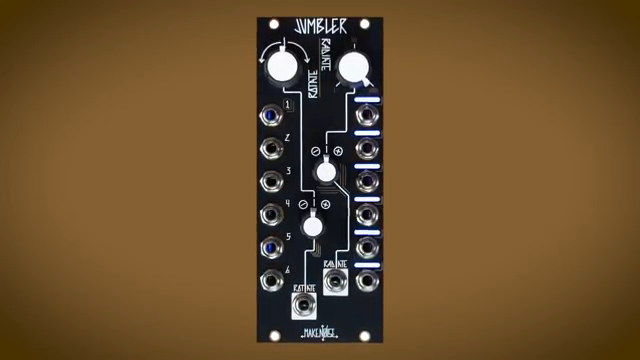
"Jumbler is one of the NUSS concepts where the routings of a patch could be reconfigured or jumbled instantly via voltage control to produce variations on a theme."
© Screenshot/Quote: Maken0Isemusic (YouTube)
Rotate and Radiate: Two Knobs to Rule the Patch
"Jumbler gives you powerful two parameter access to the rearrangement of both origins and destinations for up to six modular signals."
© Screenshot/Quote: Maken0Isemusic (YouTube)
Central to the Jumbler’s appeal are its two main controls: Rotate and Radiate. These parameters provide direct, hands-on access to the rearrangement of both signal origins and destinations. Rotate determines the order in which inputs are routed to outputs, while Radiate controls how signals are combined or spread across channels. This dual-parameter system is designed for intuitive exploration, letting users morph their patch architecture with a twist or a sweep.
Unlike traditional switch modules, which tend to be binary and abrupt, the Jumbler’s controls are tailored for smooth, continuous transitions. The video highlights how these parameters can be manipulated both manually and via CV, opening up possibilities for evolving, animated signal paths. It’s a system that encourages experimentation, making complex rerouting as immediate as turning a knob.
VCA Matrix: Smooth Moves, No Clicks
What sets the Jumbler apart from a simple switching matrix is its all-analog, VCA-based design. With 36 VCAs under the hood, the module is engineered for seamless crossfading and hybridisation of signals. This architecture allows for gradual blending between sources and destinations, rather than the hard cuts typical of digital or relay-based switchers.
The video underscores how this approach enables not just clean transitions, but also the creation of hybrid signals—where multiple sources can be merged, morphed, or subtly layered. Whether you’re working with audio, CV, gates, or clocks, the Jumbler’s matrix ensures that changes are fluid, making it suitable for everything from gentle modulation shifts to complex waveform combinations.
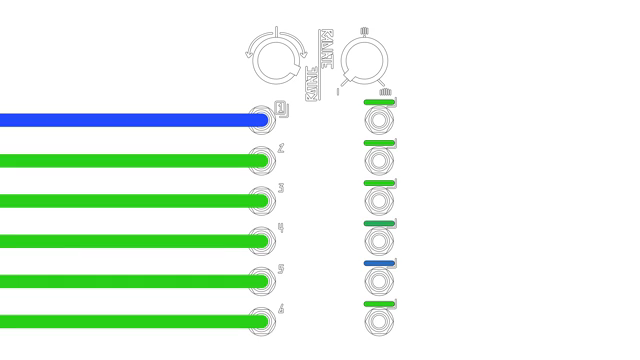
"Jumbler's analog VCA based design is specially geared for smooth transitions and hybrid signals."
© Screenshot/Quote: Maken0Isemusic (YouTube)
Creative Patchwork: From Modulation Mayhem to Rhythmic Mashups
The heart of the video lies in the patch demonstrations, where the Jumbler’s capabilities are put through their paces. First, a simple cycling function is routed to multiple destinations, with Rotate used to shift modulation targets across modules like the XPO and Spectraphon. The video shows how pressure CV can control rotation, and how exceeding the rotation limit can mute channels—handy for dynamic patch thinning.
Next, the patch complexity ramps up as additional signals—sub oscillators, random CV, and clocks—are fed into the Jumbler. By tweaking Rotate and Radiate, the relationships between sources and destinations are constantly reconfigured, resulting in evolving textures and hybrid rhythms. The ability to jumble gates and clocks is particularly highlighted, offering a playground for rhythmic experimentation.
The final demonstration explores waveform blending, with different audio sources rotated and radiated through the outputs to create complex, shifting timbres. The video also showcases feedback patching, where outputs are fed back into inputs for even more unpredictable results. Throughout, the Jumbler is presented as a tool for both subtle modulation and wild, generative soundscapes—limited only by the user’s patching imagination.
On the Market and Headed to Superbooth

"Jumbler has already started shipping to our dealers worldwide and is available right now."
© Screenshot/Quote: Maken0Isemusic (YouTube)
To wrap things up, Make Noise announces that the Jumbler is already shipping to dealers and available for purchase. They invite viewers to check their favourite modular retailers for stock and tease further content and patch ideas in the coming weeks. For those attending Superbooth 2025, the Jumbler will be on display at booth 0298, offering a chance to get hands-on with this new patch-mangling machine.
This article is also available in German. Read it here: https://synthmagazin.at/make-noise-jumbler-patch-routing-auf-den-kopf-gestellt/
Watch on YouTube:
Latest articles
Watch on YouTube:
Visit the channel:
https://www.youtube.com/MAKEN0ISEMUSIC
https://www.youtube.com/MAKEN0ISEMUSIC
Links from MAKEN0ISEMUSIC:
website: https://www.makenoisemusic.com
instagram: https://www.instagram.com/makenoisemusic
twitter: https://twitter.com/makenoisemusic
facebook: https://www.facebook.com/makenoiseco
Sponsored links:
If you purchase via these links, we may earn a small commission – at no extra cost to you. The link opens an Amazon keyword search, and results may vary depending on availability.
Make Noise Jumbler
🔗 Check price on Amazon
🔗 Check price on Amazon