Make Noise returns to their roots with a deep-dive into the art of coaxing a supersaw from the DPO, ably abetted by the modDemix and the rare megawave. In classic Make Noise fashion, this video is less about following a recipe and more about exploring the circuitous, sometimes maddening, routes that modular synthesis invites. Expect a patching odyssey through wave folding, signal inversion, and the odd historical tangent—plus a few lessons in creative problem-solving that only a decade of Eurorack obsession can provide. For those who thrive on patching outside the box, this is a masterclass in turning limitations into inspiration.

Supersaw Revisited: A Patch Challenge from the Archives
The video opens with a nostalgic nod to 2015, when Make Noise first tackled the challenge of wrangling a supersaw from their DPO oscillator. Rather than a straightforward recreation, the approach is rooted in the spirit of modular experimentation—less about emulating Roland and more about seeing what happens when you push the DPO and modDemix into unfamiliar territory. The creator admits the original goal wasn’t even a supersaw, but rather exploring how the DPO’s wave folder could modulate the megawave module, a rare and coveted bit of kit in Eurorack circles.
As the patch unfolds, we learn that the process was anything but linear. The journey meanders through attempts at wave shaping, signal inversion, and the use of slope detectors, all in pursuit of a convincing ramp waveform. The modDemix emerges as a key player, offering a shortcut to the desired result by using the DPO’s square wave to flip half the waveform and generate a sawtooth at double frequency. This kind of circuitous problem-solving is classic Make Noise: more about the process and the learning than the destination.
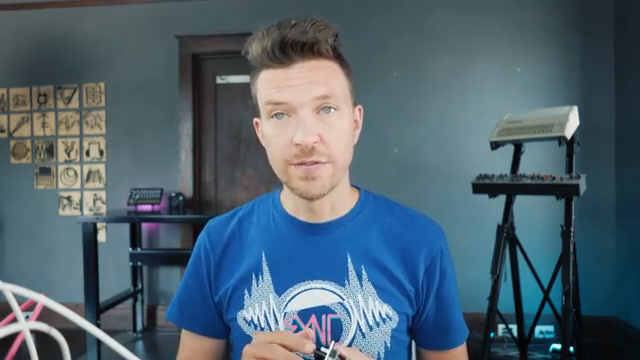
"And this finally is where the mod demix comes in, and how I ended up with a DPO super saw."
© Screenshot/Quote: Maken0Isemusic (YouTube)
DPO Anatomy: Folders, Megawaves, and modDemix Magic
"We have a couple avenues of control over the sound."
© Screenshot/Quote: Maken0Isemusic (YouTube)
The DPO’s architecture is dissected with an eye for both its quirks and its strengths. The wave folder, a signature feature, is at the heart of the patch—used not just for timbral shaping but as a source of modulation for the megawave. The megawave itself is described as a digital wave lookup module with roots in Grant Richter’s designs, capable of acting as a wavetable oscillator or as a complex wave shaper depending on the input signal.
modDemix, meanwhile, is pressed into service as a signal inverter and mixer, exploiting its ability to flip waveforms with negative CV. The patch cleverly combines the DPO’s triangle and square outputs, using the square as a phase-locked control signal to modDemix, effectively stitching together a new waveform. The result is a thick, harmonically rich sound that stands in for a supersaw—not by imitation, but by modular ingenuity.
Wave Shaping Wizardry: Signal Transformations in Action
With the basic patch in place, the video demonstrates how subtle adjustments to the DPO’s controls yield a wide palette of timbres. The angle and shape parameters are used to thicken the sound and introduce movement, while the wave folder is dialed in for maximum amplitude. Filtering is brought in to tame the harmonics, and modulation from both oscillators adds further complexity.
The interplay between analog and digital modules is highlighted throughout. By routing the DPO’s outputs through the modDemix and into the megawave, the patcher achieves unique wave shapes that would be difficult to replicate with a standard subtractive synth. It’s a testament to the power of modular synthesis: each module’s idiosyncrasies become creative opportunities, and the final sound is the sum of countless small decisions and happy accidents.
Creative Patchwork: The Modular Mindset
The video underscores the importance of creativity and lateral thinking in modular synthesis. Rather than following a fixed blueprint, the process is about embracing the unknown and letting the modules guide the outcome. This ethos is at the core of Make Noise’s approach—encouraging users to experiment, make mistakes, and discover new sounds through hands-on exploration.
DPO Reflections: Design Philosophy and Sonic Legacy
In the closing section, the video shifts to a more reflective tone, with insights from Tony Rolando on the DPO’s design evolution. He discusses the unusual saw shape, crafted with a sine wave to soften its edge for better synergy with low pass gates, and the intentionally offset square wave designed for easier blending and asymmetrical clipping. The shape circuit’s use of phase cancellation and the gradual phasing out of vactrols due to sourcing issues are also covered.
These design choices, often driven by practical limitations or the desire to evoke Buchla-inspired sonic territory, have shaped the DPO’s character and its role in the Make Noise shared system. The takeaway is clear: every small decision in circuit design accumulates, and it’s this accumulation that gives a module its unique voice. For the modular enthusiast, it’s a reminder that the quirks and constraints of a design are not obstacles, but the very ingredients of musical identity.
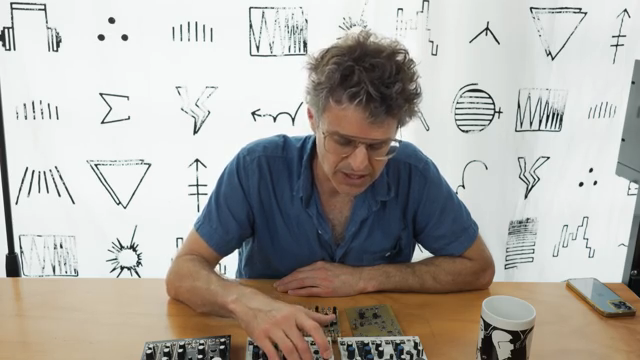
"So the saw ends up having this weird little wavy back, almost looks like a fish fin."
© Screenshot/Quote: Maken0Isemusic (YouTube)
This article is also available in German. Read it here: https://synthmagazin.at/make-noise-und-das-dpo-supersaw-redux-patch-alchemie-im-eurorack/
Watch on YouTube:
Latest articles
Watch on YouTube:
Visit the channel:
https://www.youtube.com/MAKEN0ISEMUSIC
https://www.youtube.com/MAKEN0ISEMUSIC
Links from MAKEN0ISEMUSIC:
website: https://www.makenoisemusic.com
instagram: https://www.instagram.com/makenoisemusic
twitter: https://twitter.com/makenoisemusic
facebook: https://www.facebook.com/makenoiseco
Sponsored links:
If you purchase via these links, we may earn a small commission – at no extra cost to you. The link opens an Amazon keyword search, and results may vary depending on availability.
megawave
🔗 Check price on Amazon
🔗 Check price on Amazon
modDemix
🔗 Check price on Amazon
🔗 Check price on Amazon