If you think tuning a fire organ is wild, buckle up. LOOK MUM NO COMPUTER cranks up the chaos, slapping water jackets on his infamous Fire Organ Mk3 to tame its pitch-drifting, gas-fuelled pipes. Expect copper carnage, plumbing improvisation, and a few scorched fingers along the way. This isn’t your local church organ—it’s more like a rave in a scrapyard, with extra solder smoke. Dive in if you love mad science, blaring pipes, and synth DIY that laughs in the face of health and safety.
2. September 2026
SPARKY
LOOK MUM NO COMPUTER’s Fire Organ Mk3: Water Jackets, Solder Fights & Pitch Wars
Keeping the Fire Organ in Check: Enter the Water Jackets
LOOK MUM NO COMPUTER isn’t exactly known for leaving things half-baked, so when pitch drift started turning his Fire Organ Mk3 into a musical guessing game, he went hunting for a fix with signature lunacy. The video opens with a blunt diagnosis: as the pipes heat up, pitches shoot skyward like a synth solo gone rogue. Every time he builds a fire organ, the same story—more heat, more drift, less musical sense. Clearly, something drastic is needed.
The chosen weapon? Water jackets. Forget fancy electronics or preheating schemes that would turn the organ into a nuclear hazard—Sam’s going old-school, slapping copper and plumbing know-how around the pipes to keep temperatures in check. It’s as ridiculous as it is brilliant: water flowing at ambient temperature means the pipes stay chill, and hopefully, the notes stay where they’re supposed to. No more organ that sounds like a broken smoke alarm.
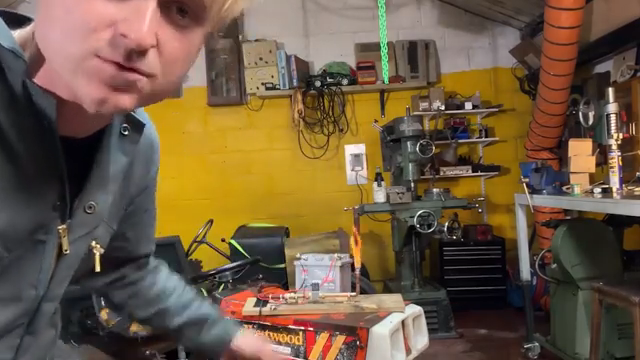
"The more you play it, the more it drifts up in pitch."
© Screenshot/Quote: Lookmumnocomputer (YouTube)
The Great Pitch Drift: Why Hot Pipes Suck
Pitch drift isn’t just an annoyance here—it’s the fire organ’s arch-nemesis. As propane and air inside those copper monstrosities heat up, the speed of sound goes up, and so does the note. In the worst cases, get the pipes hot enough and you’re suddenly two semitones sharp, which is about as musical as a car alarm at 3 a.m. This isn’t just theory either; every session ends with higher notes peeling off into the stratosphere, while the low end just gets weird.
The comments section apparently turned into a science fair, with suggestions ranging from preheating the pipes (and living dangerously close to third-degree burns) to full-on rocket engine cooling. There was talk of ceramic, asbestos, and even spiralling the fuel around the outside. But in the end, all the faff and chatter just proved one thing: simple, effective, and a little bit mad wins every time. Enter the water jacket.
Cooling Conundrums: Why Water Jackets Win
"I still think that the water jacket is the simplest to most effective ratio."
© Screenshot/Quote: Lookmumnocomputer (YouTube)
Sam doesn’t just pick water jackets out of thin air—he goes through the alternatives and shoots them down with the efficiency of a synth nerd at a gear swap. Preheat the pipes? Sure, if you want to run out of batteries every ten minutes and risk singed eyebrows. Rocket-style cooling? Overkill for a musical contraption, unless you’re planning to launch it into orbit. Ceramic and asbestos? Good luck finding a supplier who won’t put you on a watchlist.
Water jackets, though, have the magic formula: ambient temp, constant flow, and none of the faff. The idea isn’t to freeze the pipes, just to keep them from rocketing up in pitch every time you hit a note. It’s simple, cheap-ish (except for the copper bill), and doesn’t turn your studio into a hazard zone. If it works, it could be a game-changer for DIY fire-breathers everywhere.
Plumbing Mayhem: Making the Water Jackets Happen
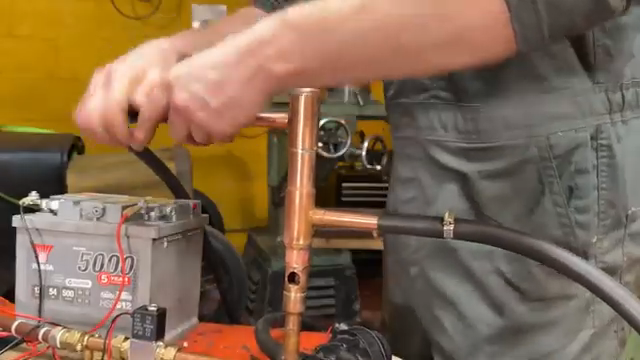
This is where the video turns into a cross between a soldering workshop and an avant-garde plumbing demo. Sam dives into the fiddly bits: reducers, elbows, T-pieces, and more copper piping than a dodgy landlord’s wet dream. He’s not just slapping stuff together; each pipe gets a custom water jacket, soldered with low-temp solder for easy removal if the tuning’s off. It’s dirty work—literally, as the flux gets everywhere and apparently so does his moustache.
The process isn’t quick: each pipe takes about an hour and a half, and you can tell by the mounting exhaustion and sarcastic asides. The smaller pipes are a pain because they heat up fast and have little room for the jackets; the big boys are easier, but unwieldy enough to need a step ladder and a prayer. Sam’s improvising on the fly, changing plans as he goes, and isn’t afraid to point out when something’s a pain or just plain daft. By the end, the organ looks like a steampunk fever dream—copper everywhere, and a build that’s more ‘Lego with hot metal’ than anything you’d find in a church loft.
And let’s be clear: if you want to see how ridiculous (and oddly beautiful) this contraption looks with all the plumbing attached, you’ll need to watch the video. Photos don’t do justice to the scale—or the chaos.
First Results: Tuning Tamed… Mostly
So, does it work? Early tests say yes—the water jackets keep the pitch way more stable, even when the pipes are itching to run away. Even dry (no water yet!), just the sheer mass of the jackets makes a difference. It’s not perfect; some pipes still want to jump fundamentals, and the whole thing needs more voicing and fiddling before Sam’s happy.
But let’s face it, nothing in LOOK MUM NO COMPUTER land is ever truly finished. The organ now sounds closer to an actual organ than ever, not just a gas-powered scream machine. There’s more tweaking to come, but the big win is clear: water jackets slap. If you want to hear the full, unhinged glory of this beast, watch the video—no article can capture the sound of propane-fuelled victory.
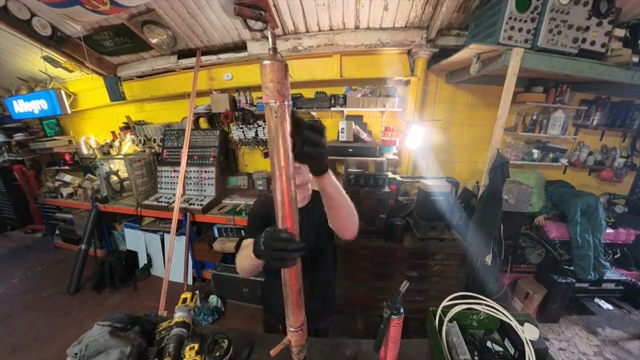
"All of the pipes have water jackets on them now and they look really cool."
© Screenshot/Quote: Lookmumnocomputer (YouTube)
This article is also available in German. Read it here: https://synthmagazin.at/look-mum-no-computers-fire-organ-mk3-wassermaentel-loet-chaos-tonhoehenkriege/
Watch on YouTube:
Latest articles
Watch on YouTube:
Visit the channel:
https://www.youtube.com/LOOKMUMNOCOMPUTER
https://www.youtube.com/LOOKMUMNOCOMPUTER
Links from LOOKMUMNOCOMPUTER:
Help us make the vids here :): https://lookmumnocomputer.com
Instagram: https://instagram.com/lookmumnocomputer
Join The Patreon: https://patreon.com/lookmumnocomputer
Sponsored links:
If you purchase via these links, we may earn a small commission – at no extra cost to you. The link opens an Amazon keyword search, and results may vary depending on availability.
Copper Pipes
🔗 Check price on Amazon
🔗 Check price on Amazon
Fire Organ Mk3
🔗 Check price on Amazon
🔗 Check price on Amazon